Energy Crisis in US Will Get Worse, Says Former Biden Advisor Hochstein
Speakers
Amos Hochstein
— Senior Advisor to the President for Energy and Investment
Summary
- Energy shock is a slow-moving global crisis originating from Iran's closure of straits, first impacting Asia, then Europe, and eventually the United States.
- Current impacts are severe: Asia is seeing stopped flights, energy conservation, and government measures like Sri Lanka's four-day workweek and Thailand's work-from-home orders.
- U.S. energy infrastructure is vulnerable due to a lack of pipelines to move products domestically; an accident like the recent one at a Valero refinery can create significant problems.
- Expect major impacts on U.S. consumers this spring: higher gasoline/diesel prices, and particularly surging jet fuel surcharges from airlines which are already being implemented.
- The primary economic threat is diesel, not gasoline, as its price directly drives up costs for food and retail goods transported by truck; prices in California are already over $6/$7 per gallon.
- The oil market is currently underpricing both the crude oil itself and the broader economic impacts of the energy shock.
- Political dynamics in Europe are fragmented, with Spain cited as a specific outlier that is anti-American and pro-China, even allowing Huawei into its intelligence systems.
- A key market risk is the cycle of "Monday/Tuesday negotiation talk" followed by a Thursday realization that no real diplomatic progress is being made to reopen straits or end the conflict.
Ideas
Speaker cited "Valero just had an accident at their refinery in Texas last week. It's still not fully back up to operation. They make jet fuel." The speaker uses this specific, recent operational failure to illustrate the broader fragility of U.S. refining infrastructure during a global supply crunch. The company is presented as a concrete example of the systemic vulnerability in a critical part of the energy supply chain, warranting close monitoring for further operational or financial impacts. The refinery returns to full operation quickly without lasting financial or reputational damage.
Speaker states "we're still underpricing oil" and "we are underpricing economic impacts of this energy shock." The energy shock from closed straits is propagating globally, supply is constrained by infrastructure limits and accidents, and diplomatic solutions are absent, leading to sustained higher physical demand and prices. The market price does not reflect the true severity and economic impact of the ongoing supply crisis, implying upward pressure. A swift, credible diplomatic resolution that reopens key shipping straits and restores normal trade flows.
Up Next
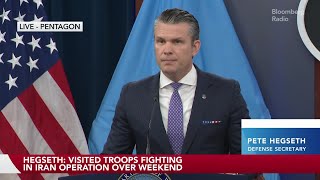
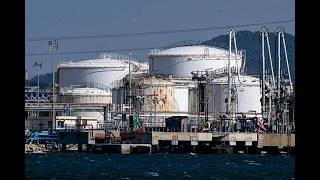


This Bloomberg Markets video, published March 31, 2026, features Amos Hochstein discussing VLO, WTI. 2 trade ideas extracted by AI with direction and confidence scoring.
Speakers: Amos Hochstein · Tickers: VLO, WTI