The Biggest Economic Crisis in History May Have Already Started w/ Rory Johnston
Speakers
Rory Johnston
— Founder, Commodity Context
John Gillen
— Co-Host, Milk Road Macro
Summary
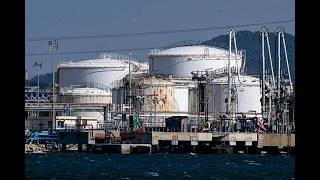
- The Strait of Hormuz has been closed for over a month, disrupting ~20 million barrels per day (mb/d) of oil supply, or roughly 20% of global supply. This is described as the largest supply shock in the history of the oil market.
- After accounting for physical rerouting (Saudi East-West pipeline, UAE pipeline, continued Iranian exports) and temporary stock draws (SPR releases, oil on water), the net ongoing supply loss is estimated at ~6 mb/d.
- The market entered this crisis with a ~2 mb/d surplus. The current deficit is rapidly drawing down global inventories, with hundreds of millions of barrels of production already lost.
- Speaker believes current Brent prices (~$115) are "too low" and a minimum of $130 is justified, as the physical scarcity has not yet hit Western markets. The shock is propagating like an "air pocket," reaching regions sequentially (Asia first, then Europe, then North America).
- The required demand destruction to balance the market will be severe, akin to COVID lockdown levels, but achieved solely through high prices. This will disproportionately impact price-sensitive emerging markets, risking fiscal crises and government bankruptcies.
- The crisis extends beyond oil to fertilizers, LNG, and helium for chip supply chains, amplifying the potential for a global recession.
- There is significant escalation risk; e.g., an attack on Qatar's LNG facility may have caused a 17% loss of export capacity for up to five years, illustrating how damage to infrastructure can create longer-term structural shortages.
- Negotiations to reopen the strait are stalled with no clear middle ground. Iran maintains a "toll gate" control, allowing only a trickle of traffic (2 tankers/day vs. a normal 60).
- Even an immediate resolution would require weeks to months to fully restore Gulf oil production, meaning significant supply is permanently lost.
- The U.S. is in a relatively privileged position due to domestic production and pipeline-sourced imports from Canada, but global marginal pricing means its consumers will not be insulated.
- The White House's jawboning and the threat of a sudden conflict resolution have temporarily suppressed paper market prices, creating a disconnect from the impending physical crisis.
- The longer the closure persists, the greater the cumulative inventory draw and the higher the likelihood of a severe global economic contraction.
Ideas
Speaker explicitly states Brent at $115 is "too low for what's going on" and a price of "$130 minimum is justified." The historic supply shock from the Strait of Hormuz closure (~6 mb/d net loss) cannot be quickly offset. The physical tightness has not yet reached Western markets, and prices must rise high enough to destroy the necessary demand to balance the market. Current prices do not reflect the severity of the structural deficit, implying significant upside as the physical shortage manifests globally. A swift, durable resolution to the conflict and reopening of the Strait of Hormuz.
Speaker states emerging markets and the global south "will bear the vast brunt of this" and that high energy prices could "morph from a consumer crisis to a full-blown fiscal crisis and government bankruptcies." These economies are highly price-sensitive and often subsidize fuel. Sustained high oil prices will force an impossible choice between passing on costs (causing severe demand destruction and social unrest) or maintaining subsidies (worsening fiscal deficits and sovereign debt sustainability). The energy crisis poses a direct and disproportionate threat to the economic and fiscal stability of emerging markets. A rapid and sustained collapse in oil prices due to conflict resolution or a deeper-than-expected global recession.
Qatar declared force majeure on LNG contracts after an attack on its facility, with the CEO stating it could mean a 17% loss of Qatari LNG export capacity for up to five years. The attack was part of the regional conflict. Damage to major liquefaction infrastructure is not quickly repairable, removing a significant chunk of global LNG supply for an extended period. This represents a structural, long-duration supply shock to the global LNG market, warranting close monitoring for sustained price impacts and supply chain dislocations. Faster-than-expected repair of the damaged facilities or a rapid de-escalation of the conflict preventing further attacks.
Up Next



This Milk Road Daily video, published March 31, 2026, features Rory Johnston discussing BRENT, EEM, LNG. 3 trade ideas extracted by AI with direction and confidence scoring.
Speakers: Rory Johnston · Tickers: BRENT, EEM, LNG