BofA’s Francisco Blanch Explains the Path to $200 Oil
Speakers
Francisco Blanch
— Head of Global Commodities and Derivatives Research, Bank of America
Unnamed Host
— Interviewer
Summary
- The disruption in the Strait of Hormuz is significantly more dangerous than Bab El Mandeb because there are no clear alternative shipping routes.
- If the conflict is not resolved by May, oil prices could spike drastically, with Brent crude potentially breaking $200 a barrel.
- The global economy is undergoing a structural shift from a "just in time" supply chain model to a "just in case" model, driven by sovereign stockpiling of commodities.
- The US is relatively insulated from a Middle East energy shock, whereas Europe and Northeast Asia (Japan, South Korea) are highly exposed to severe recession risks.
Ideas
"In the 2020s has been China's just in case strategy of inventory accumulation... I think this trend only speeds up once the war's over. And I think that provides support to long dated commodity prices sooner or later." Sovereign stockpiling creates a persistent, price-insensitive buyer in the commodities market. This structural shift from efficiency to security guarantees elevated baseline demand for raw materials and industrial metals, benefiting broad commodity indices and the companies that mine them regardless of short-term economic cycles. LONG broad commodities and miners to capitalize on the secular, global shift toward national resource hoarding. A severe global recession destroys end-user demand faster than sovereign stockpiling can absorb the excess supply, leading to a drop in commodity prices.
"If things keep going, we could see Brent breaking $200 a barrel. I think it may take a little longer to get there, but... US a little more insulated than all regions." If the Strait of Hormuz is blocked, global oil supply plummets, driving prices to extreme highs. US oil producers are geographically insulated from Middle East transit risks but will sell their unhedged production at these inflated global prices, leading to massive margin expansion and cash flow generation. LONG US energy producers as a geopolitical hedge and direct beneficiary of Hormuz disruptions. The war ends quickly, the Strait remains open, and the geopolitical risk premium evaporates, causing global oil prices to crash.
"I think in particular, Europe is very, very exposed as are many other Asian countries, particularly Northeast Asian countries." Europe, Japan, and South Korea are heavily reliant on imported energy to power their manufacturing bases. A spike to $200 oil would severely damage their trade balances, spike local inflation, and likely trigger deep industrial recessions, crushing their domestic equity markets. SHORT European and Northeast Asian broad market equities due to their acute vulnerability to energy supply shocks. A swift resolution to Middle East tensions lowers energy import costs, allowing these manufacturing-heavy economies to recover and avoid recession.
Up Next
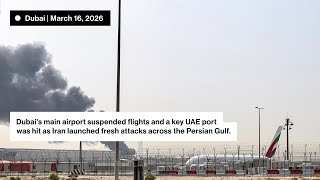


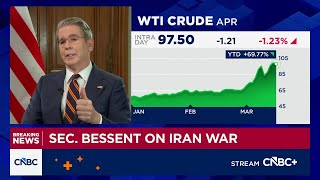
This Bloomberg Markets video, published March 16, 2026, features Francisco Blanch discussing XME, DBC, OXY, XLE, CVX, EWJ, VGK, EWY. 3 trade ideas extracted by AI with direction and confidence scoring.
Speakers: Francisco Blanch · Tickers: XME, DBC, OXY, XLE, CVX, EWJ, VGK, EWY