Iran's New Supreme Leader Says Strait of Hormuz Should Stay Closed
Summary
- Iranian state TV confirmed the Strait of Hormuz will remain closed and threatened to open new military fronts against the US and Israel.
- Iran's new Supreme Leader is likely severely injured or incapacitated, leaving the hardline Islamic Revolutionary Guard Corps (IRGC) in direct control of the country's military strategy.
- The conflict has evolved into a complex three-way war with no clear off-ramp, as US, Israeli, and Iranian incentives are misaligned, ensuring prolonged geopolitical instability and sustained high oil prices.
Ideas
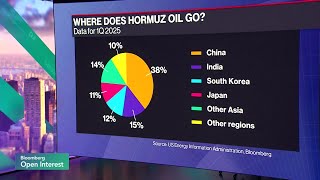
The Strait of Hormuz will remain closed. They won't forgo vengeance for those killed. The Strait of Hormuz is the world's most critical oil transit chokepoint, handling roughly 20% of global oil consumption. A sustained closure removes millions of barrels of Middle Eastern crude from the global market daily. This severe supply shock directly inflates the price of oil. US domestic producers and diversified energy majors will capture massive margin expansion as they sell into a supply-starved, high-price market without the geopolitical transit risks faced by Middle Eastern producers. LONG US-based energy majors and exploration companies, as they are direct beneficiaries of structurally higher oil prices caused by the Hormuz blockade. The US, Israel, and Iran find a sudden diplomatic off-ramp, or a coordinated global Strategic Petroleum Reserve (SPR) release artificially suppresses crude prices.
The Islamic Revolutionary Guard Corps is now running the country. They are running the military campaign... there was a threat there to expand the conflict if the US and Israel do not relent. With the IRGC in full control and threatening multi-front escalation, the geopolitical risk premium is expanding significantly. A three-party kinetic conflict involving the US and Israel requires continuous replenishment of munitions, missile defense interceptors, and advanced weaponry. Prime defense contractors will see accelerated government procurement cycles, emergency funding allocations, and expanded order backlogs to support prolonged military engagements. LONG defense prime contractors and aerospace ETFs, as prolonged Middle Eastern hostilities guarantee sustained defense spending and international arms sales. A sudden de-escalation or a shift in US political administration that drastically cuts foreign military aid and intervention.
All market participants have started to talk about this idea that there's just the incentive there for Trump to pull back because of high oil prices. The physical closure of the Strait creates an immediate shortage of deliverable crude oil. While energy equities carry broader stock market and corporate execution risks, a direct commodity ETF tracks the futures price of crude, which is mathematically forced higher by the immediate supply-demand imbalance of a blocked transit route. If the US administration is already feeling the pressure of high oil prices, the market is pricing in a sustained physical shortage. LONG crude oil via USO to directly capture the geopolitical risk premium and physical supply shock without corporate equity risk. Macroeconomic demand destruction from a global recession, or a sudden reopening of the Strait of Hormuz.
Up Next
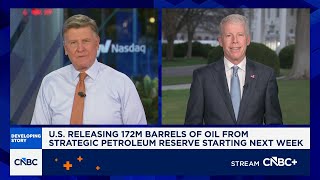
This Bloomberg Markets video, published March 12, 2026, discussing XOM, XLE, OXY, LMT, RTX, ITA, USO. 3 trade ideas extracted by AI with direction and confidence scoring.