“If Oil Doesn’t Go Down, the Market Won’t Go Up - Period.” | WAYT?
Speakers
Josh Brown
— CEO, Ritholtz Wealth Management
Michael Batnick
— Managing Partner, Ritholtz Wealth Management
Summary
- The market's primary headwind is high oil prices; a rally was triggered by headlines suggesting a potential de-escalation in Iran, which the market interprets as necessary for oil to retreat and for stocks to rise sustainably.
- The Q1 correction (nearly 10% for Nasdaq) is characterized as a typical "clean wash out" and not a bear market, driven by multiple compression (e.g., tech saw ~25% multiple contraction) while earnings estimates remain at or near all-time highs—an unusual and positive dislocation.
- Despite the index decline, market breadth was good (42% of stocks were up YTD), challenging the narrative that breadth is a prerequisite for market gains, as evidenced by strong past returns during periods of low breadth.
- Specific stock pitches were evaluated for being "fat pitches" post-decline: Software (IGV), NVIDIA, and American Express were viewed favorably, while Oracle, Paramount, Micron (for investors), Robinhood, and BlackRock were met with skepticism or seen as non-fat pitches.
- Defense is found in certain equity pockets: telecoms (AT&T, Verizon) are highlighted as defensive, high-yield plays benefiting from restructuring, deleveraging, and their essential role in broadband/AI infrastructure.
- A stark divergence is noted: the "Mag 7" contributed 75% of the S&P 500's point decline in Q1, with Microsoft down 34%, illustrating where the multiple compression was most severe.
- Historical data is cited showing high win rates (e.g., 93% over 3 years) for buying after a 10%+ monthly decline, supporting the "system is rigged to go higher" long-term bullish bias.
- A cautionary tale is presented about liquidity mismatches in vehicles like the Fundrise Innovation fund, which saw a 450% spike and 80% crash as a public proxy for hot private companies (e.g., SpaceX).
Ideas
Josh Brown explicitly bought IGV (software ETF) at the low on Friday and, when asked, stated the software stock group is in "fat pitch territory." The group was in a ~35% drawdown to critical support. The market needed to see a software rebound for psychological health, and buyers returned with strong single-day moves (e.g., Meta up 7%). LONG because the severe decline in a sector with strong underlying demand creates a high-probability, high-reward entry point for the medium to long term. A market-wide crash that breaks the established support levels.
Josh Brown called NVIDIA the "sexiest pitch" and said if he ran any type of fund, he would be buying it, but noted that if the previous day's lows don't hold, the next 10% move is lower. The stock fell from $215 to ~$170, potentially due to algorithmic selling at breakdown levels, and now trades at a historically low multiple (15x forward earnings) despite massive projected earnings growth. WATCH for a hold of the recent low ~$160s as a critical support level; a bounce from here presents a high-reward opportunity, but a break lower suggests further downside. A break below the recent low, triggering another wave of systematic selling.
Josh Brown stated he would buy AXP after a 25% decline on "no news," calling it a "fat pitch," and that you'd look back on the drop as being "for no reason." The decline is attributed to fears of "white collar displacement" from AI, not a fundamental deterioration in business, as evidenced by strong commentary from Delta Airlines about healthy high-end consumer spending. LONG because the sell-off is disproportionate to the robust underlying consumer health of its premium customer base, offering attractive valuation. A material slowdown in high-end consumer spending or credit deterioration.
Josh Brown made a case for AT&T, noting it has "a breakout coming," with $30 being obvious resistance, and that it could quickly move to $33-34 if broken. The company has transformed by shedding disastrous acquisitions (e.g., Time Warner), deleveraging, and focusing on profitable broadband and wireless businesses, making it a defensive, high-yield (~6%) play essential for AI/broadband infrastructure. WATCH for a technical breakout above $30, which would signal a new leg higher, while being paid a dividend to wait. Failure to break through $30 resistance or a return to irrational price competition in wireless.
Up Next
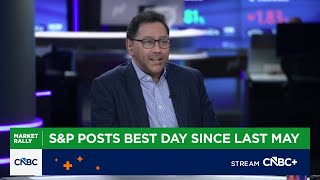

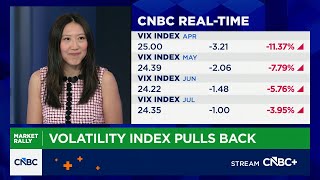

This The Compound News video, published March 31, 2026, features Josh Brown discussing IGV, NVDA, AXP, T. 4 trade ideas extracted by AI with direction and confidence scoring.
Speakers: Josh Brown · Tickers: IGV, NVDA, AXP, T