Ideas
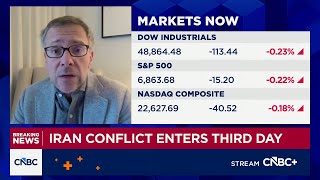
Treasury yields rose across the curve (10Y approaching 4%) despite the equity selloff. Typically, war triggers a "flight to safety" (buying bonds, yields down). However, because this conflict drives energy prices up (Qatar LNG/Oil), it is an *inflationary* shock. The Fed cannot cut rates aggressively if inflation spikes, forcing yields higher. SHORT BONDS. The "Fed Put" is constrained by rising commodity prices. The conflict causes a severe global recession, forcing the Fed to cut rates despite inflation.
Blue Owl (OWL) and other private credit names were dragging down financials. In a liquidity crunch or "risk-off" scenario, investors sell what they *can* (liquid public credit/equities). However, concerns are mounting that private credit portfolios (which don't mark-to-market daily) are holding riskier assets that will suffer from higher rates and economic slowdown. AVOID. As spreads widen in high-yield, the perceived safety of private credit is challenged. The sector proves resilient and continues to attract yield-hungry capital.
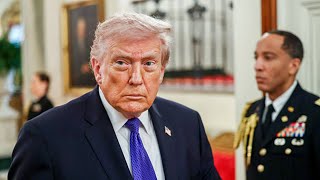
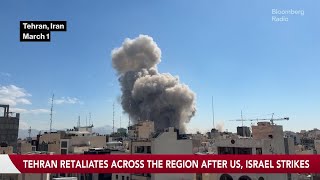
Qatar Energy has halted LNG production due to attacks. Insurance clubs are ending coverage for ships entering the Persian Gulf. President Trump stated operations could last "weeks." The market was previously priced for a glut/oversupply. The halt in Qatar (LNG) and the insurance blockade in Hormuz (Oil) removes physical supply from the market immediately. This is no longer just a "fear premium" but a structural supply shock. LONG. Energy prices must rise to ration demand if supply is physically constrained. A sudden ceasefire or rapid reopening of the Strait of Hormuz would crash the risk premium.
The U.S. launched "Operation Epic Fury," striking over 1,000 targets using B-2 bombers and massive ordnance. The objective is the total destruction of Iran's missile production and navy. This is a high-intensity kinetic conflict requiring massive replenishment of munitions and maintenance of platforms. The explicit mention of "destroying missile production" implies a long-term degradation campaign that benefits defense primes. LMT was explicitly cited as up 5%. LONG. The scale of the operation ensures sustained government spending on ordinance and platforms. Political pressure for a quick de-escalation or budget constraints.
The dollar is strengthening as yields rise and global growth concerns mount. The U.S. is energy independent relative to Europe/Asia. An energy shock hurts net-importers (Europe/Japan) more than the U.S., widening the growth differential. Higher U.S. yields attract capital to the USD. LONG USD. Specifically against low-yielders like EUR or currencies exposed to trade shocks. Coordinated central bank intervention to weaken the dollar.
United (UAL) is down 6% and Delta (DAL) is down 5%. Airspace across the Gulf is closed/restricted. Airlines face a "double whammy": soaring input costs (jet fuel tracking oil higher) and revenue disruption from the closure of key international transit hubs in the Middle East. SHORT. Margins will compress immediately due to the energy spike, while volume drops due to fear and logistical blockages. Oil prices stabilize quickly; government aid for carriers.
This Bloomberg Markets video, published March 02, 2026,
features Kathy Jones, Peter Tchir, Bob McNally, Pete Hegseth, Mark McCormick, Jonathan Ferro
discussing TLT, OWL, UNG, USO, XOM, NOC, RTX, LMT, UUP, DAL, UAL.
6 trade ideas extracted by AI with direction and confidence scoring.
Speakers:
Kathy Jones,
Peter Tchir,
Bob McNally,
Pete Hegseth,
Mark McCormick,
Jonathan Ferro
· Tickers:
TLT,
OWL,
UNG,
USO,
XOM,
NOC,
RTX,
LMT,
UUP,
DAL,
UAL