Why the War for Oil is NOT Over..
Speakers
Thread Guy
— Crypto influencer, independent
Jeff
— Head of 911 Solutions, Axon Enterprise, Inc.
Summary
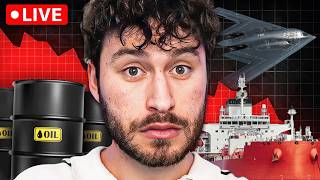
- The Strait of Hormuz has been effectively closed due to attacks on shipping, trapping approximately 20% of the world's daily oil flow (roughly 18 to 20 million barrels per day).
- The IEA and G7 agreed to release 400 million barrels from the Strategic Petroleum Reserve (SPR), but physical extraction limits from salt caverns cap the release at only 2 million barrels per day, leaving a massive daily deficit.
- The market is undergoing a structural "regime change" from asset-light technology dominance to an asset-heavy re-industrialization phase, favoring HALO assets (Heavy Asset, Low Obsolescence).
- Geopolitical weaponization of the US dollar has fundamentally changed petrodollar recycling; emerging markets and Gulf states are now funneling excess energy profits into gold rather than US Treasuries.
- The US government is highly incentivized to suppress oil prices ahead of elections, creating a dangerous dynamic for oil longs who are effectively trading against state intervention and potential price caps.
Ideas
We're moving from that world that was defined in 2014 to 2024... into a regime change. Own the hard assets, own the halos, heavy asset, low obsolescence. The global economy is shifting away from the asset-light, software-driven boom of the last decade. Geopolitical fracturing and supply chain vulnerabilities are forcing a global re-industrialization. This requires massive amounts of physical materials, structurally repricing industrial metals and mining companies higher due to years of underinvestment in the old economy. Long industrial metals and mining equities that control scarce, hard-to-replicate physical assets. A severe global recession driven by high energy costs destroys industrial demand, offsetting the supply constraints.
Ever since 2022, commodity prices spike, these emerging markets get money. What do they buy? They buy gold. They buy anything but dollar denominated assets. Historically, when oil prices spiked, Middle Eastern producers recycled their windfall profits into US Treasuries, acting as a shock absorber for the US economy. Following the freezing of Russian central bank assets, sovereign nations no longer trust US dollar-denominated assets. Therefore, any spike in energy prices will directly translate into sovereign buying of gold. Long gold as it has replaced US Treasuries as the primary vehicle for petrodollar recycling in a multipolar world. A rapid de-escalation of global conflicts restores faith in the US dollar hegemony, slowing the pace of sovereign gold accumulation.
We're currently losing 20 million a day because this straight is closed. And so there's like 18 million barrels of delta just getting lost... only 2 million barrels per day can hit the market from the reserves. The headline announcement of a 400 million barrel SPR release is a mathematical illusion. Because the oil is stored in salt caverns, extracting more than 2 million barrels a day risks destroying the storage infrastructure. This leaves a structural deficit of 18 million barrels a day that cannot be plugged by reserves, forcing the physical price of oil and oil-producing equities higher until demand is destroyed. Long crude oil proxies and energy sector equities to capture the severe supply-demand mismatch. The US government implements extreme market interventions such as strict price caps, or a sudden diplomatic breakthrough reopens the Strait of Hormuz.
You've disrupted global supply chains. This is not just a disruption oil. It's gas, it's fertilizers, it's metals, it's petrochemicals. The better trade is probably Tulip King, chemicals, fertilizer. The Middle East is a massive global exporter of petrochemicals and fertilizers. With the Strait of Hormuz closed, these critical agricultural and industrial inputs are trapped. This supply shock will force global buyers to source from North American and Western producers, driving up their margins and market share. Long Western fertilizer and agricultural chemical producers who are insulated from the Middle East transit routes. Agricultural demand drops due to broader economic stress, or alternative supply chains adapt faster than expected.