US-Iran Agree To Two-Week Ceasefire; Oil Slumps | Horizons Middle East & Africa 4/8/2026
Speakers
Joumanna Bercetche
— Anchor, Bloomberg
Stuart Livingstone-Wallace
— Bloomberg Executive Editor for Middle East, North Africa, and Russia
Patrick Sykes
— Bloomberg Middle East Breaking News Editor
Dalia Fahmy
— Associate Professor, Long Island University
Aarthi Chandrasekaran
— Head of Public Markets at Shuaa Capital
Mark MacCarley
— Retired US Army Major General and Managing Attorney at MacCarley & Rosen
Stephen Stapczynski
— Asia Energy Coverage, Bloomberg
Dan Williams
— Jerusalem Reporter, Bloomberg
Summary
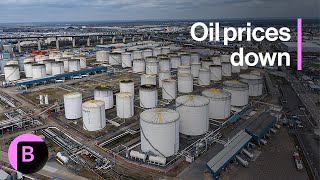
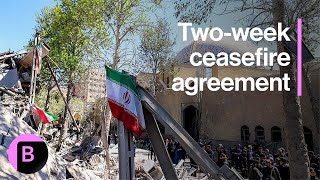
- US and Iran agree to a two-week ceasefire conditional on reopening the Strait of Hormuz, leading to a sharp slump in oil prices (Brent down 13.4% to ~$95) but prices remain $20-$25 above pre-war levels due to a lingering geopolitical risk premium.
- Global equities rally on the news: S&P futures up 2.5%, European markets up 5.2%, and emerging markets up 4.2%, reflecting market relief despite skepticism about the ceasefire's durability.
- Iran frames the ceasefire as a victory, maintaining control over Strait of Hormuz transit with coordination and potential fees, while the US claims success without achieving key military objectives like degrading Iran's nuclear capabilities.
- Israel supports the ceasefire but explicitly excludes Hezbollah in Lebanon, indicating continued conflict on that front, adding to regional uncertainty and complicating peace efforts.
- Energy infrastructure damage and supply chain disruptions will take time to repair, keeping oil and gas prices elevated in the near term, as noted by Aarthi Chandrasekaran.
- Central bank policies may diverge: ECB and Bank of England could hike rates due to inflation concerns, while the Fed may hold or cut rates later in 2026, especially with a leadership change in May.
- The US dollar weakens on ceasefire news, but its trajectory depends on Fed policy and economic growth impacts from high energy prices, with potential for further depreciation.
- China played a role in facilitating the ceasefire, potentially shifting global dynamics away from the petrodollar system and enhancing Iran's regional influence.
- Critical uncertainties include whether the ceasefire will hold, details of Strait of Hormuz transit, Iran's nuclear program, and long-term regional stability.
Ideas
Aarthi Chandrasekaran stated that oil is very unlikely to return to pre-war prices and will stay elevated in the near future. The geopolitical risk premium has faded slightly, but supply chain disruptions, import-export flows, and refining activities will take considerable time to normalize, maintaining upward pressure on prices. WATCH because oil prices are expected to remain high due to persistent logistical and operational challenges, offering potential opportunities but with significant uncertainty. A permanent ceasefire and swift resolution of Strait of Hormuz transit issues could accelerate the return to normalcy, causing prices to fall more than expected.
Up Next


This Bloomberg Markets video, published April 08, 2026, features Aarthi Chandrasekaran discussing WTI. 1 trade idea extracted by AI with direction and confidence scoring.
Speakers: Aarthi Chandrasekaran · Tickers: WTI