Ideas
Price of gasoline is up 18 percent or 55 cents. All things being equal, that is probably going to push year-over-year inflation over 3 percent for March. The Federal Reserve cannot safely cut interest rates if inflation re-accelerates above 3 percent. If the Fed attempts to ease financial conditions to save a wobbling stock market while inflation is rising, bond traders will dump long-term treasuries to protect their real returns, driving yields higher and bond prices lower. SHORT. Sticky inflation driven by energy shocks removes the "Fed Put" for the bond market. A severe economic recession or credit event outweighs inflation fears, causing a massive deflationary flight to safety in long-duration bonds.
You sell what you can, not what you want. And what you can sell is the thing that has big unrealized gains and no momentum. Despite a major geopolitical escalation and an oil price spike, gold prices dropped 400 dollars. Investors are using gold as a source of liquidity, selling their winning positions to meet margin calls on other volatile, losing assets. This liquidity-driven selling pressure overrides gold's traditional safe-haven status in the near term. AVOID. During acute liquidity panics, gold correlates to 1 with risk assets as it is sold to raise cash. The liquidity panic subsides quickly, allowing gold to resume its structural bull market driven by central bank buying and fiat debasement fears.
The tech companies are pretty good at innovating technology and deploying it quickly. I think you could see the AI industry supplying net energy to the rest of the world. Tech hyperscalers are desperate for massive amounts of electricity to power Agentic AI data centers. With the NRC recently approving the first non-water-cooled civilian nuclear reactor in 52 years, tech companies will use their massive capital to bypass traditional utilities and directly fund Small Modular Reactors (SMRs), driving a structural supercycle for uranium and nuclear technology. LONG. The convergence of AI power demands and deregulation will ignite a privately funded nuclear renaissance. The environmental lobby successfully blocks the construction of new nuclear facilities, or tech companies pivot to alternative baseload energy sources like geothermal.
The Straight of Hormuz was closed because of an insurance fiasco where EU companies canceled policies, trapping thousands of ships. The recent drop in oil prices from 119 to 88 dollars was driven by political rumors and market manipulation, not a physical resolution. Because it will take weeks to clear the shipping backlog and months to restore production even after the insurance issue is fixed, global heavy crude supply will remain severely constrained, forcing prices higher. LONG. The physical market reality of trapped oil will overpower short-term paper market manipulation. The EU immediately waives the cash solvency requirements for maritime insurance, allowing ships to transit and rapidly flooding the market with delayed supply.
33 percent of the world traded fertilizers go through the Hormuz straight. Asian nations cannot produce their own fertilizers without the natural gas and NGLs imported from the Middle East. With those supplies cut off, these countries will face immediate agricultural shortfalls and will be forced to buy fertilizers and raw agricultural products directly from North American producers. LONG. North American fertilizer producers will see a massive demand spike as the Eastern hemisphere loses access to its primary supply chain. Global demand destruction for agriculture or a swift reopening of the straight that normalizes global shipping routes.
The reputation of Qatar and the UAE got tarnished right now as a secure supplier while the United States has no problem. Asian countries rely heavily on Middle Eastern LNG and natural gas liquids. Because the Straight of Hormuz blockage has exposed the severe geopolitical vulnerability of relying on the Middle East, Asian buyers will be forced to sign long-term, premium-priced contracts with US LNG producers to secure reliable baseload energy. LONG. US natural gas and LNG exporters will capture permanent global market share due to Middle Eastern instability. A rapid and permanent peace agreement in the Middle East restores confidence in Qatari supply before long-term US contracts are finalized.
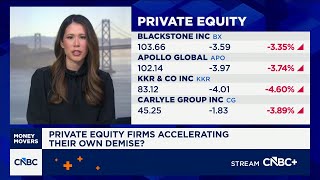
Beneath the surface, there's still structural stresses building, particularly in private credit where redemption pressures continue to surface and in the systematic space where several flow triggers are now being hit. The market's underlying foundation is fragile, and mega-cap leadership is weakening. The recent relief rally provides an optimal, cheap window to reset downside hedges. Purchasing a 95-85 downside put spread offers an asymmetric 11 to 1 payoff profile if the market rolls over into a deeper correction. SHORT. The risk-to-reward ratio for hedging left-tail risk is highly favorable given the deteriorating internal market mechanics. The geopolitical situation resolves peacefully, oil prices collapse, and the Fed cuts rates, sparking a massive risk-on rally that renders the put spreads worthless.
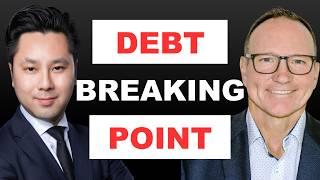
This Macro Voices video, published March 12, 2026,
features Jim Bianco, Erik Townsend, Anas Alhajji, Patrick Ceresna
discussing TLT, GLD, CCJ, SMR, URA, XLE, OXY, USO, CF, NTR, MOS, AR, LNG, EQT, QQQ, SPY.
7 trade ideas extracted by AI with direction and confidence scoring.
Speakers:
Jim Bianco,
Erik Townsend,
Anas Alhajji,
Patrick Ceresna
· Tickers:
TLT,
GLD,
CCJ,
SMR,
URA,
XLE,
OXY,
USO,
CF,
NTR,
MOS,
AR,
LNG,
EQT,
QQQ,
SPY