Congress Has War Powers, Must Use It, Says Rep. Crow
Speakers
Jason Crow
— U.S. Congressman (D-CO), Member of House Intelligence and Foreign Affairs Committees
Summary
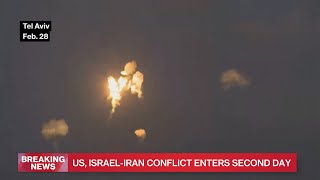
- Rep. Crow confirms an upcoming Congressional vote on the War Powers Act to potentially limit U.S. military engagement in the Middle East (specifically regarding Iran).
- He draws a direct parallel between current operations and the failures in Iraq/Afghanistan: winning tactical battles but lacking a strategic endgame, resulting in "trillions" of debt-financed spending without victory.
- Crow highlights a bipartisan alignment between Democrats and "isolationist" Republicans (Trump base) who are fatigued by "endless wars" and want resources pivoted to domestic issues (housing, groceries).
- The Congressman explicitly threatens the use of the "power of the purse" to pull funding and place guardrails on deployments if the Administration does not provide a clear strategy.
Ideas
Jason Crow
U.S. Congressman (D-CO), Member of House Intelligence and Foreign Affairs Committees
Legislative Risk to Defense Appropriations "Congress has all sorts of power... appropriations, pulling money, pulling funding, putting guardrails on deployments... We're going to force a vote on Wednesday." The Defense sector (ITA) currently prices in a "perpetual conflict" premium regarding the Middle East. Crow is signaling a bipartisan effort to actively restrict the flow of "tens of billions" in supplemental war funding. If Congress reasserts War Powers, the predictable revenue stream for munitions and operational support (benefiting RTX, LMT) faces a significant legislative hurdle. AVOID. The political momentum is shifting toward fiscal restraint and isolationism, creating headwinds for defense primes reliant on interventionist foreign policy. The resolution may fail to pass, or the President may veto it, maintaining the status quo of military spending.
Jason Crow
U.S. Congressman (D-CO), Member of House Intelligence and Foreign Affairs Committees
Geopolitical Uncertainty in the Strait of Hormuz Crow acknowledges troops are under "tremendous assault by missiles and drones" but questions if the U.S. should be engaged in "regime change" or continued conflict. The War Powers Act vote creates a binary risk event for energy markets. If the U.S. is legally forced to disengage or limit its protection of shipping lanes, the risk to oil transit (and thus supply) increases significantly (Bullish Oil). Conversely, if the U.S. remains engaged, the risk of a wider kinetic war with Iran remains (also Bullish Volatility). The *uncertainty* of the U.S. security guarantee is the tradeable event. WATCH. Monitor the vote count. A successful vote to limit power is paradoxically bullish for oil prices due to the removal of the "global policeman" from critical chokepoints. De-escalation or a diplomatic breakthrough could crush the geopolitical risk premium in oil.
Jason Crow
U.S. Congressman (D-CO), Member of House Intelligence and Foreign Affairs Committees
Pivot to Domestic Economy (The "Butter" over "Guns" Trade) "Is it making groceries cheaper? ... Is it helping them afford homes? That is the discussion and the debate that has not been happening." Crow is articulating a populist pivot common in both parties: redirecting focus from foreign military expenditure to domestic affordability. If the "endless war" cycle is broken, political capital and potentially fiscal stimulus will shift toward solving the housing supply crisis to appease angry constituents before the midterms. LONG. Homebuilders align with the political necessity of "helping them afford homes." Continued high interest rates (financed by the very debt Crow complains about) could cap homebuilder performance regardless of political rhetoric.