What's Next for Military Action in Iran
Speakers
Joel Rayburn
— Retired US Army Colonel, Former State Dept. Official & CENTCOM Planner
Host
— Interviewer
Summary
- The current military strategy against Iran utilizes a "center of gravity" analysis: targeting the support base, leadership nodes, and military capabilities (specifically air defense and missile stockpiles) to induce regime collapse from within.
- There is a strict refusal to deploy US "boots on the ground," distinguishing this operation from the Iraq conflict. The focus is entirely on air superiority, high-value target decapitation, and naval support (Fifth Fleet).
- A significant risk identified is the "power vacuum." If the regime collapses rapidly (within days), the lack of a designated successor or diplomatic channel creates a chaotic environment, potentially requiring prolonged US military "backstopping" without occupation.
Ideas
Joel Rayburn
Retired US Army Colonel, Former State Dept. Official & CENTCOM Planner
The speaker explicitly details the strategy of "taking out air defense launchers," destroying "missile stockpiles," and notes that Iranian retaliation has been largely "intercepted." This strategy relies exclusively on air superiority and missile defense systems. The high "burn rate" of interceptors (Patriot, SM-3, Iron Dome) and the need for precision munitions directly translates to replenishment contracts for the prime defense contractors. The "no boots on the ground" constraint forces reliance on expensive technology rather than manpower. LONG. The conflict is defined by aerial attrition and missile defense, the core revenue drivers for these firms. A sudden diplomatic resolution or a ceasefire would compress the valuation premium currently priced into defense stocks.
Joel Rayburn
Retired US Army Colonel, Former State Dept. Official & CENTCOM Planner
The speaker warns of a "dilemma" regarding who takes over next, citing the "power vacuum analogy" and the uncertainty of finding an individual the West can work with. Markets hate uncertainty. The transition from a known hostile regime to a chaotic failed state (the "power vacuum") creates a flight-to-safety environment. Until a clear successor emerges, capital will seek defensive assets. LONG. Gold and Treasuries act as a hedge against the geopolitical instability of a leaderless Iran. A swift, US-friendly regime change would be a "risk-on" event, causing safe havens to sell off.
Joel Rayburn
Retired US Army Colonel, Former State Dept. Official & CENTCOM Planner
The speaker highlights the "Navy's Fifth Fleet headquarters in Bahrain" as a strategic point and discusses the danger of a "power vacuum" if the leadership is removed quickly. While the speaker notes retaliation has been weak so far, the reference to Bahrain (a key Persian Gulf hub) and the potential for internal chaos (power vacuum) implies persistent risk to the Strait of Hormuz. A chaotic regime collapse could disrupt supply lines more than a stable standoff. WATCH. If the "power vacuum" scenario materializes, oil volatility will spike. If the regime transitions smoothly or the conflict remains contained to air strikes, the risk premium may fade. If the Iranian people "rise up" and overthrow the regime quickly and peacefully (as is the speaker's stated goal), oil prices could crash as the geopolitical risk premium evaporates.
Up Next


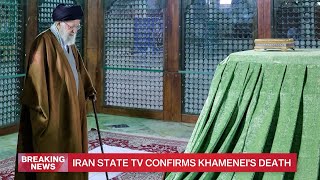


This Bloomberg Markets video, published March 01, 2026, features Joel Rayburn discussing LMT, NOC, GD, RTX, TLT, GLD, XLE, BRENT. 3 trade ideas extracted by AI with direction and confidence scoring.
Speakers: Joel Rayburn · Tickers: LMT, NOC, GD, RTX, TLT, GLD, XLE, BRENT