Bloomberg Surveillance 4/3/2026
Speakers
Priya Misra
— Portfolio Manager, J.P. Morgan Asset Management
Janno Lieber
— Chair and CEO of the Metropolitan Transportation Authority (MTA)
Paul Sankey
— Lead Analyst, Sankey Research
Veronica Clark
— Economist, Citi
Victoria Fernandez
— Representative, Crossmark Global Investments
Mike Collins
— Portfolio Manager
Aditya Bhave
— Economist, BofA Securities
Kevin Hassett
— Director, White House National Economic Council
Peter Tchir
— Head of Macro Strategy, Academy Securities
Torsten Slok
— Partner, Apollo Global Management
William Dudley
— Former President, Federal Reserve Bank of New York
Summary
- The March Nonfarm Payrolls report showed a strong upside surprise (+178k vs. +65k est.), but analysts caution about volatility, revisions, and mixed underlying components like hours worked and wage growth.
- A key debate centers on whether the U.S. economy, entering the oil shock with resilient labor market momentum, faces a greater growth shock or an inflationary shock from higher, sustained energy prices.
- Geopolitical analysis suggests Iran has effectively demonstrated control over the Strait of Hormuz, and there is no clear U.S./allied plan to reopen it without Iranian consent or a significant military escalation; the conflict is expected to last at least several more weeks.
- The physical oil market is under extreme stress, evidenced by record premiums for prompt delivery (Brent Dated), tanker shortages, and actual product shortages beginning to emerge in Southeast Asia, with risk of spreading to Europe.
- Several speakers (Collins, Sankey) express concern that prolonged high oil prices could lead to demand destruction and a growth slowdown, but the current data (payrolls, spending) does not yet show it.
- The Federal Reserve is seen as constrained ("in a terrible place" - Collins), unable to cut due to inflation risks but facing a potential stagflationary environment; the base case is for prolonged inaction.
- U.S. economic momentum is attributed to several structural tailwinds: AI/data center investment, an "industrial renaissance" of onshoring, and fiscal stimulus from tax policy (the "One Big Beautiful Bill").
- Credit markets are highlighted as a point of vulnerability; high-yield spreads are seen as tight and could widen significantly if the economic outlook deteriorates, while private credit faces redemption pressures.
- A niche but critical observation is the "K-shaped" consumer impact, where lower-income households bear the brunt of higher energy costs without commensurate wage gains, potentially widening inequality.
- Market positioning is seen as asymmetric, with many investors positioned for a growth shock and lower yields, leaving them vulnerable to an upside inflation surprise.
Ideas
Priya Misra stated that bond market technicals are improving, price-sensitive buyers are returning, and people are looking at yield backups as levels to buy. The market has deleveraged and derisked, creating a more stable base. Higher yields (e.g., 5.5-6% in credit) are attracting buyers. If the oil shock leads to a growth slowdown, it would also be supportive for Treasuries. LONG because yields at current levels are creating value and attracting buyers, with improving technicals after a period of deleveraging. A prolonged, uncontained inflationary spiral from the oil shock forces the Fed to consider hiking rates.
Lieber stated that Iran has demonstrated an unexpected capability to hold the Strait of Hormuz, fundamentally changing the rules of safe passage. The U.S. lacks a plan to reopen it except by force, and allies are reluctant to use military means without a ceasefire. Continued closure disrupts a critical chokepoint for global energy and trade, leading to higher costs, shipping insecurity, and broad economic uncertainty. AVOID exposure to assets and sectors highly dependent on secure, cost-effective transit through the Strait of Hormuz due to prolonged and unpredictable disruption. Iran capitulates or a diplomatic deal is struck, allowing for a quick normalization of traffic.
Slok argued the primary risk from the current environment is "inflation higher for longer," not a growth shock. He cites strong recent data (ISM, payrolls, retail sales) showing no demand destruction yet, combined with existing inflationary pressures from the trade war and AI-driven demand. Strong underlying economic momentum means the oil price shock is more likely to feed into persistent inflation than cause immediate recession. This supports a "watch" for ongoing energy price strength. WATCH oil and energy-related inflation because resilient demand amid supply constraints creates persistent upward price pressure. Significant, rapid demand destruction materializes in hard data, turning the shock into a pure growth problem.
The transcript news segment reported severe stress at private credit firm Blue Owl, with shares down >40% YTD and redemption requests topping 20-40% in key funds. Priya Misra earlier noted investors moving money out of private credit into Treasuries. The illiquid, mark-to-model nature of private credit is being stress-tested by redemption requests and a higher rate environment. This suggests a broken technical picture and potential for wider systemic outflows. AVOID the private credit space due to visible redemption-driven stress, illiquidity, and potential for further outflows as investors seek liquidity in public markets. A rapid decline in interest rates stabilizes valuations and halts redemption cycles.
Collins stated that high-yield credit spreads had widened to attractive levels (~35 bps) but have snapped back tighter on technical buying. He is concerned they could widen more if the oil shock lasts and the labor market weakens. All-in yields became attractive, drawing in buyers. However, the fundamental risk of an economic slowdown is high. In a stagflationary scenario where the Fed cannot ease, weaker credits with low coverage ratios will struggle. AVOID high-yield credit at these tighter spread levels due to vulnerability to economic deterioration and outflows. The Iran conflict resolves quickly, oil prices collapse, and the U.S. economic momentum continues unabated.
Up Next



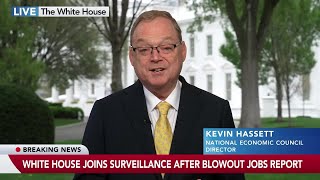
This Bloomberg Markets video, published April 03, 2026, features Priya Misra, Janno Lieber, Paul Sankey, Multiple (Transcript News, Priya Misra), Mike Collins discussing TLT, USO, WTI, BIZD, HYG. 5 trade ideas extracted by AI with direction and confidence scoring.
Speakers: Priya Misra, Janno Lieber, Paul Sankey, Multiple (Transcript News, Priya Misra), Mike Collins · Tickers: TLT, USO, WTI, BIZD, HYG