Fragile US-Iran Truce; Israel Intensifies Lebanon Attacks | Horizons Middle East & Africa 4/9/2026
Speakers
Joumanna Bercetche
— Anchor, Bloomberg
Avril Hong
— Reporter, Bloomberg Markets
Stuart Wallace
— Bloomberg Executive Editor for Middle East, North Africa and Russia
Faseeh
— Bloomberg Pakistan Bureau Chief
Alan Eyre
— Former Senior US Diplomat, Distinguished Diplomatic Fellow at the Middle East Institute
Paul Gambles
— MBMG Group, Co-founder and Managing Partner
Anthony DiPaola
— Reporter, Bloomberg (Energy)
Zeina Rizk
— Amwal Capital Partners, Co-Head of Fixed Income
Dan Williams
— Jerusalem Reporter, Bloomberg
Sam
— Senior Middle East Reporter
Summary
- The announced U.S.-Iran ceasefire is extremely fragile, with Iran citing multiple breaches; the status of Lebanon's inclusion is a major point of contention, with Israel and the U.S. saying it's excluded but Iran signaling it's included.
- Iran's strategic position is perceived by one diplomat as stronger post-war, having "weaponized and monetized" control of the Strait of Hormuz, and it enters talks with new demands, including a toll system for the strait and sanctions relief.
- Market reaction was initially euphoric (S&P bounce, regional stock surges) but turned cautious as details emerged; the continued closure of the Strait of Hormuz remains a key bullish pressure on oil prices (~$97/barrel).
- A portfolio manager is deeply skeptical of the ceasefire's durability and warns that even if resolved, underlying market cracks (private credit, AI bubble) are exposed and won't simply reset; he sees a terminal risk for these bubbles.
- The same manager states gold has failed as a traditional hedge, showing high downside correlation with tech stocks during the crisis, and is no longer viewed as a hedge.
- Fixed income analysis notes a strong relief rally in GCC credit, but maintains caution on duration due to uncertainty and the risk that high oil prices could make inflation structural, pressuring long ends.
- Israel intensified strikes in Lebanon, conducting one of its largest assaults, which Iran frames as a violation; the U.S.-Israel stance is that Lebanon is not part of the ceasefire, risking derailment of talks.
- Gulf states are wary, expressing relief but seeking clarity; a core concern is Iranian control and potential tolling of the Strait of Hormuz, which is deemed unacceptable.
Ideas
Speaker states private credit is "rolling over" and the air is going out of the AI bubble. He links them, saying the crisis "could be terminal for the private credit bubble, for the AI bubble". The geopolitical crisis and market volatility are exposing fundamental weaknesses and overvaluations that existed prior to the conflict. A resolution won't reverse this damage. These are interconnected, overvalued areas with high fundamental risk that is being unmasked; investors should avoid exposure. An unexpectedly swift and durable geopolitical resolution leading to a renewed, broad risk-on rally.
Speaker states his firm has "very much reduced" gold exposure because "gold just isn’t behaving like gold anymore." He notes it showed "an extremely high downside correlation with... the tech stocks" during the crisis. Gold's traditional role as a non-correlated hedge during geopolitical stress has broken down, making it ineffective for portfolio protection. It no longer serves its intended purpose as a hedge, so it should be avoided for that strategic allocation. A return to a macro regime where gold decouples from risk assets and regains its safe-haven properties.
Speaker is "cautious" and "underweight duration" in fixed income. She cites the risk that sustained high oil prices could turn inflation from transitory to structural, causing the long end of the curve to "twist higher." The geopolitical uncertainty and its inflationary consequences create significant risk for bond prices, particularly on the long end. The sector requires careful monitoring due to asymmetric risk from potential inflationary pressures; a defensive, short-duration stance is prudent. A rapid de-escalation and reopening of the Strait of Hormuz, leading to a swift drop in oil prices and inflation expectations.
Up Next


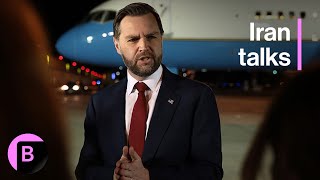
This Bloomberg Markets video, published April 09, 2026, features Paul Gambles, Zeina Rizk discussing BIZD, GOLD, TLT. 3 trade ideas extracted by AI with direction and confidence scoring.
Speakers: Paul Gambles, Zeina Rizk · Tickers: BIZD, GOLD, TLT