China Touts Efforts to Push For US-Iran Truce | The China Show 4/9/2026
Speakers
Yvonne Man
— Head of APAC, CoinDesk
David Ingles
— Anchor, Bloomberg
Laura Davison
— Washington Bureau Chief, Bloomberg
Mark Cranfield
— Cross Asset Strategist, Bloomberg
Wang Jin
— Senior Fellow, Beijing Club for International Dialogue
Jotaro Tamura
— President and CEO, Mitsui O.S.K. Lines
Jomana Versace
— Anchor, Horizons Middle East & Africa, Bloomberg
Christina Woon
— Portfolio Manager, Eastspring Investments
Anna Breman
— Governor, Reserve Bank of New Zealand
Adam Farrar
— Senior Geo-Economics Analyst, Bloomberg Economics
Marc Anderson
— Co-Head of Asset Allocation and CIO at UBS Global Wealth Management
Summary
- The US-Iran ceasefire is fragile and ambiguous, with both sides having different interpretations on key issues like the status of Lebanon and the meaning of "safe passage" vs. "free travel" through the Strait of Hormuz.
- China's role is characterized as a behind-the-scenes "secret whisperer" and rational advisor rather than a decisive intervener. Its influence stems from communication with all parties and a shared interest in regional stability, but it explicitly rejects the role of a military security guarantor.
- Markets initially saw a massive euphoric rally on ceasefire hopes but have pared gains as doubts emerged. The base case has shifted to pricing in a de-escalation path, even if non-linear, with investors now focusing on fundamentals like earnings and central bank policy.
- The Strait of Hormuz remains effectively closed, with virtually no increase in commercial vessel traffic. Shipping companies are in a holding pattern, prioritizing crew safety and verifying implementation of the high-level agreement before committing vessels.
- A key thematic investment shift is the need to adjust energy positioning, accepting that oil prices will likely stabilize at a level higher than pre-conflict norms, even with peace.
- The Asian tech hardware "picks and shovels" trade (e.g., memory chips, servers) is viewed as resilient, supported by strong earnings (e.g., Samsung's 8x profit increase) and sustained AI-related capital expenditure demand.
- Asian software stocks are under pressure from new, competitive AI model launches from Western giants like Meta and Anthropic, highlighting a catch-up race.
- The RBNZ highlights upside inflation risks from the conflict, specifically via transport and agricultural input costs (diesel), and is prepared to act decisively if these filter into core inflation and expectations.
Ideas
The speaker states the "underlying story is still very healthy" for major Asian tech companies like Samsung, TSMC, and Hynix, which were the big drivers pre-war. He cites Samsung's "fantastic profits," notes foreign investors are "heavy sellers" and have "a lot of rebuilding to do," and observes serious "dip buying" during the market weakness. The Iran war only interrupted a strong, fundamental tech hardware growth story centered on AI and semiconductor demand. As geopolitical risk recedes, capital is likely to flow back into these high-quality, fundamentally sound names to rebuild positions. LONG because the core earnings and demand thesis remains intact, the war was a temporary interruption, and there is significant pent-up institutional buying interest. A severe re-escalation of the Middle East conflict reinstating broad risk-off sentiment.
The speaker states investors must "adjust your positioning" on energy because "you can't unwind some of the things that have happened." She concludes that "oil prices, even if they come off from here with any peace, will likely land a bit higher than they were pre-conflict." The conflict has structurally altered the risk premium and supply dynamics in the oil market. A return to the previous status quo is impossible, implying a new, higher equilibrium price. WATCH because this represents a fundamental reassessment of the energy sector's valuation floor. Investors need to actively monitor for a stabilization at this new level and position accordingly, balancing conflict proxies with post-conflict winners. A rapid and sustained reopening of the Strait of Hormuz coupled with a global economic slowdown that crushes demand.
The speaker argues the AI "CapEx boom has been a bit more resilient than expected" and is "very hard to then stop." She specifically highlights the resilience of "picks and shovels" in Asia, such as memory makers and server ODMs, noting strong earnings and that this demand has "added some resilience" to Asian strategies. AI adoption at enterprise and consumer levels has passed a point of no return, embedding continued investment. Supply bottlenecks (e.g., in memory) and sustained demand support the hardware ecosystem, making it a defensive growth pillar even amidst geopolitical volatility. LONG on the Asian tech hardware ecosystem because it offers a combination of resilient structural demand and, in some cases (like Taiwanese server ODMs), attractive dividend yield for stability. A sharp, unexpected downturn in global tech capital expenditure or a faster-than-expected resolution of supply bottlenecks.
Up Next
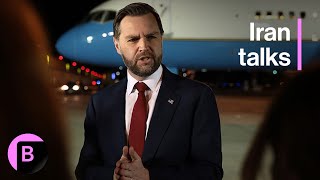



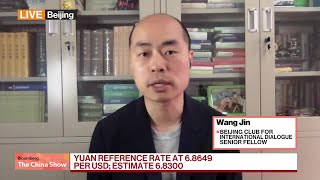
This Bloomberg Markets video, published April 09, 2026, features Mark Cranfield, Christina Woon discussing 005930.KS, TSM, XLE, XLK. 3 trade ideas extracted by AI with direction and confidence scoring.
Speakers: Mark Cranfield, Christina Woon · Tickers: 005930.KS, TSM, XLE, XLK