Ideas
"Anthony Scaramucci warning that any disruption to the straight of Hormuz, a route that carries roughly a fifth of the world's oil, could send energy prices sharply higher and ripple across global markets." A major geopolitical disruption in a critical oil chokepoint would directly reduce global oil supply. This supply shock would drive the price of crude oil higher. The United States Oil Fund (USO) tracks the price of West Texas Intermediate (WTI) crude oil and is the primary liquid ETF for this exposure. LONG on USO as a direct play on a potential supply-driven spike in oil prices due to escalated Middle East tensions. The conflict does not escalate to disrupt shipping; diplomatic resolution is reached; increased production from other regions (e.g., U.S., OPEC+) offsets lost supply.
"As of this morning, Bitcoin is inching towards a breakout and it has been outperforming equities and gold since the Middle East conflict began." In the current geopolitical shock, capital is flowing *away* from traditional safe havens like gold and *towards* Bitcoin. This suggests a potential shift in investor preference for crisis hedging, where digital, portable assets may be favored over physical commodities. This relative underperformance makes gold a less attractive hedge in the immediate term. AVOID gold (GLD) for those seeking a geopolitical hedge, as Bitcoin appears to be capturing that flow. A sharp escalation in conflict that triggers a broad flight to *all* traditional tangible assets, or a severe correction in Bitcoin that restores gold's relative appeal.
"The bigger story is the staking component... if 70 to 95% of holdings are staked, investors could earn a yield that traditional spot ETFs can't offer, potentially changing the institutional calculus around Ethereum." Institutional capital seeks yield alongside exposure. An ETF that provides "pass-through" staking yield addresses a key deficiency of standard spot ETH ETFs, making Ethereum a more compelling asset for yield-seeking portfolios. This structural advantage could drive disproportionate inflows to ETHB versus competitors. WATCH BlackRock's iShares Ethereum Staking ETF (ETHB) for signs of sustained institutional adoption driven by its yield feature. Regulatory challenges to staking rewards, underperformance of Ethereum versus Layer 2 networks, or lower-than-expected yield uptake by institutions.
"The bigger story is the staking component... if 70 to 95% of holdings are staked, investors could earn a yield that traditional spot ETFs can offer, potentially changing the institutional calculus around Ethereum." The launch of spot Ethereum ETFs with a staking feature (like BlackRock's ETHB) provides institutional investors with a new, yield-bearing asset class within a regulated wrapper. This yield advantage over non-yielding Bitcoin ETFs and traditional assets could drive significant new institutional allocation into Ethereum. LONG on ETH. The ability to earn staking yield through a familiar ETF structure is a fundamental positive shift in Ethereum's value proposition for institutions. Ethereum's base layer faces competitive pressure from Layer 2 networks, reducing fee revenue and staking appeal; technical issues with staking; regulatory uncertainty around staking rewards.
"Since this recent war started a few weeks ago, equities down 3 to 5%, gold down 3 to 5%, Bitcoin up nearly 20%... when monetary policy starts printing a lot of money and we're already $40 trillion in debt, it sure looks like an inflation-proof asset like Bitcoin sure looks a lot more attractive." Historical performance shows BTC appreciates during periods of geopolitical instability and associated monetary expansion (war financing), diverging from traditional safe havens (gold) and risk assets (equities). This behavior strengthens its narrative as "digital gold" and a sovereign debt hedge, which can attract more capital during crises. LONG on BTC as a hedge against geopolitical risk and the inflationary fiscal policies that often accompany conflict. BTC reverts to trading as a pure risk asset and sells off with equities; regulatory crackdowns; the geopolitical situation de-escalates quickly, reducing safe-haven demand.
"I watch all of the major smart contract platforms because I think that's the future of finance, right? Whether it's Solana, Sui, Aptos, Ethereum, they all matter to me... I'm chairman of Algorand, so obviously I'm biased there... I'm convinced that smart contracts are having their day now." The speaker, a CEO in digital asset wealth management, observes strong client interest moving beyond simple holdings into DeFi-based yield and lending products. This utility is built on smart contract platforms (Layer 1s). Increased adoption of DeFi implies greater demand and value accrual to the underlying blockchain platforms beyond just Ethereum. WATCH the group of major smart contract platform tokens (SOL, SUI, APT, ALGO) as proxies for the growth of decentralized finance (DeFi) and on-chain utility. They represent a "second wave" of institutional crypto interest. High volatility and correlation within the altcoin sector; one platform experiences a critical failure or security breach; regulatory action specifically targets DeFi or smart contract tokens.
"IQMM... is the first ETF that complies with the FIT21 Act... that means that the stable coin guys can use it for reserves. It's $250 billion dollars of stable coins out there." The FIT21 Act sets specific rules for assets that can back stablecoins. The ProShares IQMM ETF is structured to be compliant with these rules, making it a simple, off-the-shelf solution for stablecoin issuers seeking yield on their reserve assets. Capturing even a fraction of the $250B stablecoin reserve market represents massive potential inflows for this ETF. LONG on IQMM. It is a first-mover, regulatory-compliant instrument positioned to absorb a significant new source of demand from the growing stablecoin ecosystem. The FIT21 Act's rules are modified or challenged; stablecoin adoption grows slower than expected; competitors launch similar compliant products.
This CoinDesk video, published March 16, 2026,
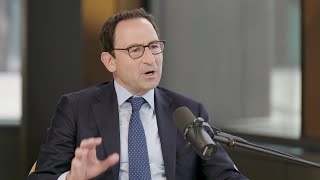
features Anthony Scaramucci, Jennifer Sanasie, Andrew McCormick, Bill Barhydt, Simeon Hyman
discussing USO, GLD, ETHB, ETH, BTC, SOL, ALGO, SUI, APT, IQMM.
7 trade ideas extracted by AI with direction and confidence scoring.
Speakers:
Anthony Scaramucci,
Jennifer Sanasie,
Andrew McCormick,
Bill Barhydt,
Simeon Hyman
· Tickers:
USO,
GLD,
ETHB,
ETH,
BTC,
SOL,
ALGO,
SUI,
APT,
IQMM