Long Airport Security Lines Become Flashpoint in DHS Shutdown Debate
Speakers
Pete Gaynor
— Acting Deputy Secretary of Homeland Security (context implied)
John Smith
— President and CEO, FedEx Freight
Summary
- A partial government shutdown is hitting TSA, causing agent call-outs and creating regional airport security line hotspots with 30-180 minute waits, though flights are operating normally.
- The speaker warns of a potential crisis if the shutdown continues, with a critical point potentially reached around Memorial Day if airport disruptions escalate or oil prices spike.
- A second, separate geopolitical risk is highlighted: conflict in the Middle East threatens oil supply via the Strait of Hormuz, which could cause jet fuel prices to rise 50-100%, impacting airline costs.
- The airline sector is described as deflationary, with average ticket prices down 3% since 2019, but this is threatened by potential oil price shocks in the coming months.
Speakers
Brian McGuire
— Former DHS Chief of Staff
News Anchor
— Interviewer
Summary
- A partial government shutdown is impacting TSA, with underpaid agents going without pay for four weeks, creating "hotspots" of 30-60 minute security lines and the potential for a larger "crisis" if unresolved.
- Geopolitical tensions in the Middle East threaten the security of oil shipping lanes (Strait of Hormuz), which could lead to significant increases in jet fuel prices with a lag effect.
- Despite potential headwinds, domestic air travel demand remains robust, with average ticket prices in 2026 below 2019 levels, making it "the most affordable thing you can do."
- The political stalemate is characterized by a lack of negotiation, with no clear deadline to force a resolution, creating uncertainty for the traveling public.
Ideas
"The number one cascading effect is the price of oil... If we don't get the Strait of Hormuz really secure, I'm going to give it till about mid-May before Memorial Day... you could be looking at some long term price increases... the price of oil, you know, goes up 50 to 100% on jet fuel..." The speaker directly links Middle East instability to a specific, near-term catalyst (Memorial Day) for a potential surge in jet fuel costs, which are a primary input cost for airlines. Simultaneously, the TSA shutdown creates operational friction for travelers, which could dampen demand sentiment or cause localized travel disruptions. This dual pressure of potentially rising costs and operational headaches presents a headwind for the airline sector in the short to medium term. Given the combined, near-term risks of rising input costs from geopolitics and operational disruption from domestic politics, an AVOID stance on the airline sector is prudent until these uncertainties are resolved. The government shutdown could be resolved quickly, removing the operational overhang. Geopolitical tensions could de-escalate, preventing an oil price spike. Strong summer travel demand (e.g., for the FIFA World Cup) could outweigh these negative factors.
"If we don't get the Strait of Hormuz really secure, I'm going to give it till about mid-May before Memorial Day... you could be looking at some long term price increases. Right now, the price increases could be... bumps in the road... as we hit those summer months... Then it could be a little more of a long term impact." The speaker, a former Homeland Security official, provides a specific, time-bound geopolitical risk assessment. He identifies the security of the Strait of Hormuz (a chokepoint for 20% of global oil supply) as the key variable and pinpoints mid-to-late May (around Memorial Day) as the deadline for securing the supply chain before "long term price increases" become likely. This is a clear macro catalyst for a potential oil price spike. The speaker's analysis points to a defined catalyst window (next 6-8 weeks) for a significant oil supply risk. Positioning for higher oil prices via the USO ETF is a logical inference from this macro warning. The Strait of Hormuz remains secure, or other global suppliers increase production to offset any disruption. A recession could significantly reduce oil demand, countering supply shocks. The conflict could de-escalate sooner than expected.
Up Next

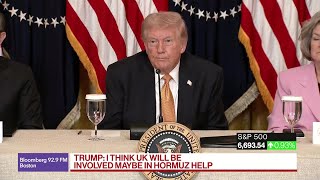
This Bloomberg Markets video, published March 16, 2026, features Pete Gaynor discussing JETS, USO. 2 trade ideas extracted by AI with direction and confidence scoring.
Speakers: Pete Gaynor · Tickers: JETS, USO