Ideas
US stocks grind higher in 2026.
2026 US equity market is likely to grind higher with S&P 500 targets around 7,500-7,600, supported by stable GDP growth, 12% EPS growth, liquidity injections, and still-positive investor confidence, though the rally may be bumpy.
Defense drones see geopolitical investment.
Defense, especially drones, is a 2026 theme due to US-China drone competition and actual US drone strikes; commercial competition in drones, humanoids, and robotaxis should keep investment flowing.
Nuclear and rare earths are strategic.
Nuclear and rare earths remain security-policy themes with supply-chain and policy support, likely keeping investor interest in 2026.
Crypto may improve on stablecoin buildout.
Crypto prices disappointed in 2025, but stablecoin infrastructure investment continued and long-term holders returned to net inflow, suggesting 2026 could be different for Bitcoin and Ethereum.
AI capex cycle remains irreversible.
AI capex is becoming irreversible; hyperscalers and AI companies keep spending despite funding concerns, with SoftBank-OpenAI commitment and Meta acquisition showing urgency; this supports AI infrastructure and semiconductor supply chains through 2026.
Physical AI remains a long-cycle theme.
Physical AI and robotics are a long-cycle theme with US-China competition in humanoids and robotaxis, and continued investment is likely in 2026.
Wearables are physical AI's data key.
Wearable AI devices, especially smart glasses from Apple, Meta, and Alphabet, are a key 2026 data-collection bridge to physical AI, making the category increasingly investable.
Optical networking demand keeps growing.
As data centers move toward light-speed/optical interconnect, demand should persist for optical components and networking names including Coherent, Lumentum, Corning, Cisco, and Arista.
Semiconductors remain AI's clearest winner.
Semiconductors remain the clearest AI beneficiary; memory, foundry, and equipment are strong, TSMC continues to gain, Samsung and SK hynix hit new highs, and Nvidia's H200 China orders signal robust demand.
Tesla correction is an opportunity.
Tesla is a must-watch 2026 name because Musk is confident on robotaxi, Optimus, Neuralink, and SpaceX; the delivery pre-announcement resets expectations, and Michael Burry's denial of shorting makes the recent correction look like an opportunity.
Nike insider buying attracts attention.
Nike is a potential 2026 catch-up trade after insider buying by Tim Cook and the CEO, with shares reacting positively and laggard consumer discretionary names possibly performing.
Lee Nam-woo
Professor, Yonsei University Graduate School of International Studies
59:03
TSMC should stay in portfolios.
TSMC remains highly attractive and should be owned in portfolios; it has gained versus Samsung, shows strong market position, and benefits from AI semiconductor demand.
Lee Nam-woo
Professor, Yonsei University Graduate School of International Studies
63:35
USD/KRW likely ranges 1400-1500.
The won is unlikely to strengthen below 1,400 per dollar; USD/KRW is more likely to range between 1,400 and 1,500 due to Korea's external funding burden and dollar strength in East Asia, so aggressive won-strength bets should be unwound.
Lee Nam-woo
Professor, Yonsei University Graduate School of International Studies
70:40
Japanese trading houses have strong capital allocation.
Warren Buffett's investments in Japan's five major trading houses are justified by their clear capital-allocation philosophy: invest in long-term competitiveness, respect cost of capital, and return excess cash; these remain quality holdings.
Lee Nam-woo
Professor, Yonsei University Graduate School of International Studies
72:15
Meritz leads Korean capital allocation.
Meritz Financial is the rare Korean company that executes capital allocation well, a key long-term quality criterion and a reason to favor it.
Lee Nam-woo
Professor, Yonsei University Graduate School of International Studies
74:03
M&A boom favors US banks.
The M&A renaissance is driven by deregulation and corporate strategic deals, creating a strong environment for US investment banks and financial holding companies such as JPMorgan, Goldman, Citi, BofA, and Wells Fargo, and this can continue in 2026.
KOSPI can reach 4500 in Q1.
Korean fund managers expect KOSPI to reach 4,500 in Q1 2026; they plan to increase domestic equity weight because Korea remains cheap at 0.9x PBR versus Taiwan, China, and Japan, and policy support is improving.
Korean robotics are attractive but volatile.
Korean robotics should be good again in 2026 because physical AI keeps drawing attention, but the sector lacks mature fundamentals and will be volatile and theme-driven.
Space themes keep drawing interest.
Aerospace and space should attract repeated events in 2026, especially SpaceX-related news and the theme of AI data centers in space, keeping the sector in focus.
KOSDAQ bio can lead in 2026.
Large drug patent expirations and companies' preparations should make Korean bio/biotech a KOSDAQ leader in 2026.
Defense orders support the sector.
Defense has solid order backlogs and earnings, with potential upside from unexpected new orders, though it also appears among sectors at risk of correction.
Memory upcycle lasts over ten quarters.
Morgan Stanley expects the memory upcycle to last more than 10 quarters, unlike past 7-8 quarter cycles, because AI data-center demand is less economy-sensitive and inference demand will be much larger than training; DRAM prices are rising sharply and Samsung/SK hynix/Micron have further upside.
Export winners include chips, ships, beauty.
Korean exports hit a record on semiconductors, ships, bio-health, and SSD/computers; K-food, K-beauty, and electrical equipment are promising next export drivers.
Weak export sectors may stay weak.
Displays, auto parts, petrochemicals, steel, textiles, and secondary batteries remain structurally weak export categories, unlikely to improve dramatically in 2026.
Policy and pension flows support KOSDAQ.
Pension funds have bought KOSDAQ for eight straight days and government KOSDAQ-support policies are emerging, so KOSDAQ may be supported into early 2026.
China reopening favors Korean entertainment.
China's Hallyu ban easing and Lee Jae-myung's state visit should benefit Korean entertainment, with SM and DearU/Noomers most China-levered while HYBE and JYP have global fan bases and lower relative valuation.
Samsung foundry supply chain improves.
Samsung foundry is improving from a weak base, and related supply-chain names such as Auros Technology and FNS Tech are attracting interest.
Silver supply deficit supports prices.
Silver demand is structurally tight due to industrial use and Chinese export controls; although CME margin hikes hit speculative flows, the supply-demand deficit should keep silver supported after correction.
Korea Zinc leverages silver supply tightness.
Korea Zinc is the world's largest silver producer, giving it direct leverage to tight silver supply and prices.
KOSPI favors first-half exposure.
Korean equities should be better in the first half, but after three consecutive strong years the second half may lose momentum; KOSPI is seen around 5,000-5,500 rather than 7,000.
Chinese tourism can lift Korea consumption.
Chinese tourist inflows could add around 0.9% to GDP and revive Korean cosmetics, entertainment, hotels, and duty-free; the exact beneficiary is hard to predict, so watch incoming demand.
Optimus news may mark robotics peak.
When Optimus commercialization news becomes mainstream, robotics may mark a thematic peak, so investors should treat robot rallies cautiously.
Semis are top Q1 pick.
Semiconductors are the top pick; Q1 semiconductor exposure should be aggressive, with 60% portfolio weight seen as acceptable because memory pricing and earnings are accelerating into January and February.
Robot foundry talk can lift Hyundai/Kia.
If Hyundai and Kia begin to be discussed as robot foundry or humanoid manufacturing partners, automakers could re-rate higher.
Stablecoin policy could signal liquidity.
Simultaneous stablecoin policy discussion in Korea and the US could signal a liquidity explosion, supporting Bitcoin and KOSDAQ/theme stocks.
Bet on semiconductors in Q1.
2026 will be less strong than 2025, but the first quarter is the time to bet; Samsung and SK hynix remain the strongest, with estimates of 100-130 trillion won operating profit making valuation still cheap, and at least half the portfolio should be in semiconductors.
Treasury-share rule favors holding companies.
Commercial Act amendments on treasury shares benefit holding companies and companies with high treasury-share ratios, including Mirae Asset Securities; this is a Q1 legislative catalyst.
Weak won boosts export earnings.
A weak won hurts the economy but helps exporters; export companies such as Hyundai Motor, Hyundai Glovis, cosmetics, shipbuilders, and entertainment can see earnings revaluation in January and April reporting.
MSCI DM watch aids Korea multiple.
MSCI developed-market inclusion watch could create a multiple-expansion window for Korea if regulatory changes progress.
January events favor existing positions.
January Korean equities should be driven by year-start flows, strong export data, and events including CES, JP Morgan Healthcare, China visit, metals, and Ukraine/Russia; existing semiconductor, AI, and bio positioning should be maintained.
January rally needs AI, bio, FX.
A January rally needs AI, bio, and stable FX together; if those conditions hold, semiconductors led by Samsung and SK hynix should stay the core holding.
Buy Samsung dips into earnings.
Samsung Electronics has strong news flow: HBM supply to Broadcom, Q4 operating profit expected near 20 trillion won, and a likely upward revision cycle into the January 8 earnings release; dips should be bought.
SK hynix remains supported by cycle.
SK hynix Q4 operating profit may be 16-17 trillion won, below Samsung due to base and bonus effects, but 2026 semiconductor momentum remains intact and near-term downside is limited.
China trade is tactical, semis better.
Lee Jae-myung's China state visit creates a China-reopening event for entertainment, cosmetics, hotels, and duty-free, but many names have already rallied and semiconductors have better risk-reward; only small tactical exposure is warranted.
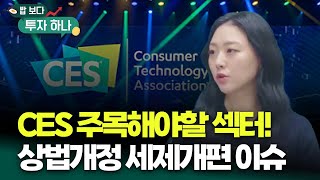
CES keeps physical AI in focus.
CES 2026 should focus on physical AI and Nvidia's comments, with Samsung and Hyundai making robot-related announcements, keeping robotics and physical AI in focus.
Healthcare conference boosts Korean biotech.
JP Morgan Healthcare Conference should provide catalysts for Korean biotech names such as Samsung Biologics, Celltrion, Alteogen, ABL Bio, and HanAll BioPharma, making biotech a key January theme.
Korean robotics theme stays strong.
Korean robotics is a major 2026 theme: US policy is likely to restrict Chinese robots, government and private investment are rising, and large-cap/major component names such as Robotis, SPG, and Hyundai Motor should benefit.
Robot actuators leverage auto supply chain.
Robot actuators are mostly Chinese now, but the US will want alternatives, and Korea's automotive precision-casting supply chain can win; Hyundai Motor, HL Mando, and SL are leverage points.
Robot sensors favor Korean chip makers.
Robot sensors are shifting to compact solid-state lidar and chip-based modules, where Korea can compete on cost and scale; Samsung Electro-Mechanics, LG Innotek, and SOS Lab are key exposures.
AI hardware demand broadens.
AI hardware is becoming a policy-supported theme, with China's 15th five-year plan including AI glasses and subsidies shifting toward AI hardware, cameras, and substrates.
KOSDAQ policy supports the index.
KOSDAQ support policy is becoming concrete: pension funds may buy more, institutional participation should increase, and large-cap KOSDAQ names are being favored.
ESS is the battery trigger.
In batteries, the EV theme remains weak, but ESS is the real upside trigger as AI data centers adopt ESS for backup power; Samsung SDI and EnSol are preferred bottom-fishing candidates.
Korean semis remain top pick.
Korean semiconductors remain the top pick; Q1 memory pricing and earnings momentum are strong, Samsung has more valuation room than SK hynix, and an aggressive semiconductor allocation is justified.
Hyundai affiliates offer robot leverage.
If Hyundai Motor becomes the most capable robot manufacturer, value can migrate from legacy autos to Hyundai Motor and affiliates such as Hyundai Glovis and Hyundai AutoEver, which offer more robot-related leverage.
Memory demand broadens beyond HBM.
Memory semiconductors are the best AI exposure because they combine revenue growth and profitability improvement and are most sensitive to AI service traffic; Samsung, SK hynix, and Micron should stay in portfolios.
Tech and AI stay best.
For most investors, the best 2026 strategy remains staying in AI and tech rather than diversifying into lagging sectors, because the earnings-momentum cycle is strongest there.
AI PCB faces shortage.
AI server architecture changes, including Rubin CPX and new midplane infrastructure, increase PCB content per server, while Chinese suppliers are being excluded; AI PCB makers face a shortage-driven upcycle.
800V shift boosts power semiconductors.
AI data centers will move to an 800V DC architecture from 2027, eliminating multiple AC/DC conversions and requiring SiC/GaN power semiconductors; Infineon and other non-Chinese power semi suppliers should benefit.
Space aerospace is a first-half theme.
Aerospace and space should be a first-half theme: SpaceX is expected to list in the first half, Korean launch attempts are restarting, and space data-center expectations remain strong.
Robotics faces CES profit-taking.
Robotics may see profit-taking as CES begins, making the sector less attractive tactically even if the long-term theme remains intact.
Healthcare conference supports Korean biotech.
The JP Morgan Healthcare Conference and KOSDAQ support policy create a stable opportunity in Korean biotech, with Samsung Biologics, Celltrion, Alteogen, and ABL Bio as key names.
Samsung earnings beat can lift shares.
Samsung Electronics should surprise on Q4 operating profit, with consensus around 15 trillion won but actual results potentially above 20 trillion won, supporting further upside into earnings.
Semi equipment orders will improve.
Samsung's Pyeongtaek line resumption, accelerated equipment move-ins, and Yongin supplier cluster should drive semiconductor equipment and materials orders; Hanmi Semiconductor, Jusung Engineering, and SNS Tech are beneficiaries.
China reopening lifts cosmetics and entertainment.
China reopening and Hallyu-ban easing should lift Korean entertainment and cosmetics, with HYBE and JYP among the liquid expressions and cosmetics as a direct beneficiary.
Secondary batteries remain unattractive.
Energy and battery sectors are being recommended as underweight; lithium export data does not confirm a sustained rebound, and market attention is absorbed by semiconductors, robots, and aerospace.
Financials may improve on trading volume.
Financials may improve later if first-quarter earnings reflect strong trading volume and market activity, even though the sector was weak on the first trading day.
Focus on semiconductors first half.
The market should favor first-half exposure and selective concentration in semiconductors, with KOSDAQ supported by policy and tax/legislative changes.
This 3PRO TV (삼프로TV) video, published January 02, 2026,
features Park Myung-sung, Lee Nam-woo, Kwon Soon-woo, Jang Woo-jin, Yoon Ji-ho, Ha Chang-wan, Kim Jang-yeol, Kim Jung-hyun, Lee Hyuk-jin, Jeong Hee-seok, Jeong Hae-min
discussing SPY, ITA, URA, REMX, BTC, ETH, AIQ, ROBO, AAPL, META, GOOGL, COHR, LITE, GLW, CSCO, ANET, 005930.KS, 000660.KS, TSM, NVDA, TSLA, NKE, USD/KRW, MSBHF, MITSY, SSUMY, 138040.KS, JPM, GS, MS, C, BAC, WFC, EWY, Korean Robotics, Korean aerospace/space, Korean bio/biotech, Korean Defense, MU, Korean export beneficiaries, Korean export laggards, KOSDAQ, 041510.KQ, 035900.KQ, 352820.KS, 376300.KQ, Noomers, 083500.KQ, 322310.KQ, SILVER, 010130.KS, Korean cosmetics, Korean entertainment, Hotels/duty-free, 005380.KS, 000270.KS, 006800.KS, Korean holding companies, 086280.KS, Korean shipbuilders, 207940.KS, 068270.KS, 196170.KQ, ABL Bio, 009420.KS, 108490.KQ, 058610.KQ, 204320.KS, 005850.KS, 009150.KS, 011070.KS, SOS Lab, AI Hardware, 006400.KS, 373220.KS, 307950.KS, AI-SECTOR, AI PCB, IFX.DE, SiC/GaN power semiconductors, 012450.KS, INNOSPACE, 042700.KS, 036930.KQ, SNS Tech, LIT, Korean financials.
67 trade ideas extracted by AI with direction and confidence scoring.
Speakers:
Park Myung-sung,
Lee Nam-woo,
Kwon Soon-woo,
Jang Woo-jin,
Yoon Ji-ho,
Ha Chang-wan,
Kim Jang-yeol,
Kim Jung-hyun,
Lee Hyuk-jin,
Jeong Hee-seok,
Jeong Hae-min
· Tickers:
SPY,
ITA,
URA,
REMX,
BTC,
ETH,
AIQ,
ROBO,
AAPL,
META,
GOOGL,
COHR,
LITE,
GLW,
CSCO,
ANET,
005930.KS,
000660.KS,
TSM,
NVDA,
TSLA,
NKE,
USD/KRW,
MSBHF,
MITSY,
SSUMY,
138040.KS,
JPM,
GS,
MS,
C,
BAC,
WFC,
EWY,
Korean Robotics,
Korean aerospace/space,
Korean bio/biotech,
Korean Defense,
MU,
Korean export beneficiaries,
Korean export laggards,
KOSDAQ,
041510.KQ,
035900.KQ,
352820.KS,
376300.KQ,
Noomers,
083500.KQ,
322310.KQ,
SILVER,
010130.KS,
Korean cosmetics,
Korean entertainment,
Hotels/duty-free,
005380.KS,
000270.KS,
006800.KS,
Korean holding companies,
086280.KS,
Korean shipbuilders,
207940.KS,
068270.KS,
196170.KQ,
ABL Bio,
009420.KS,
108490.KQ,
058610.KQ,
204320.KS,
005850.KS,
009150.KS,
011070.KS,
SOS Lab,
AI Hardware,
006400.KS,
373220.KS,
307950.KS,
AI-SECTOR,
AI PCB,
IFX.DE,
SiC/GaN power semiconductors,
012450.KS,
INNOSPACE,
042700.KS,
036930.KQ,
SNS Tech,
LIT,
Korean financials