Wave of Optimism Sweeps Through Global Markets | The Close 4/8/2026
Speakers
Scott Chronert
— Managing Director, Citi
Gautam Mukunda
— Lecturer, Yale School of Management and Bloomberg Opinion contributor
Ed Morse
— Energy Expert / Analyst
Billy Hult
— CEO, Tradeweb
Liz Ann Sonders
— Chief Investment Strategist, Charles Schwab
Neil Atkinson
— Visiting Fellow, National Center for Energy Analytics
Yelena Shulyatyeva
— Senior U.S. Economist, The Conference Board
David Sambur
— Co-Head of Private Equity, Apollo
Jason Waugh
— President, Coldwell Banker Affiliates
Summary
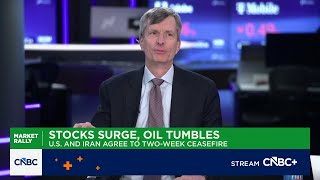
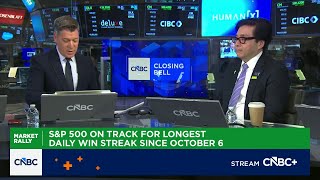
- The day featured a powerful "relief rally" in equities (S&P +2.5%, Russell 2000 +2.8%) driven by a U.S.-Iran ceasefire announcement, interpreted as a reduction in tail-risk.
- Multiple speakers framed the rally as a classic, headline-driven short-covering event, fueled by a high proportion of short-term, tactical capital in markets, questioning its sustainability.
- Oil prices plunged ~15% on the ceasefire news but remain ~40% higher than pre-war levels. A central uncertainty is the immediate reopening of the Strait of Hormuz, with 425 tankers reportedly trapped.
- Energy analysts warn of prolonged physical supply disruptions and inventory drawdowns for both crude and refined products, suggesting price relief may be temporary and peak pressure could hit mid-summer.
- The bond market's muted reaction (yields unchanged after volatility) and persistent high equity trading volume (SPY turnover records) underscore a disconnect and ongoing macro uncertainty.
- A key investment theme discussed was the potential for a "broadening trade" into small/mid-caps and cyclicals if geopolitical fears recede, though this is contingent on the inflation path post-oil shock.
- Private equity dealmaking is seen as paused by volatility, with a specific warning of a looming reckoning in middle-market software investments due to valuation dislocations and AI disruption.
- The U.S. consumer faces a squeeze from higher energy prices, with economists forecasting damage to GDP growth and a shift in spending away from discretionary categories.
- The housing market is entering a "hyper-local" spring season with tempered demand, defined by discerning buyers and sellers needing clear reasons to transact amid mortgage rate and economic uncertainty.
- Geopolitical analysis was starkly negative, characterizing the conflict as a strategic defeat for the U.S., exposing military logistical weaknesses and severe damage to American diplomatic credibility and alliances.
Ideas
Chronert states the "first place we go" for a broadening trade is "down cap into U.S. small mid-cap," which is more economically sensitive and had a great start to the year. The ceasefire allows a shift away from a worst-case "black swan" outcome, potentially reestablishing a framework for a broadening trade that benefits cyclically sensitive areas of the market. WATCH because the setup for small/mid-caps is for "notably improving earnings progression" through 2026, but the trade depends on inflation data post-conflict and requires a lower interest rate environment for sentiment. A prolonged spike in oil prices (higher for longer) poses the most risk to this economically sensitive segment.
Chronert explicitly says, "We would emphasize ongoing overweight in our banks outlook" as part of the cyclical setup for a broadening trade. Banks are a classic cyclical sector that would benefit from a market rotation away from concentrated tech leadership and towards areas leveraged to economic growth, a rotation that was paused by the Iran conflict. WATCH as part of a potential broadening, cyclical rotation, but its success is tied to the same economic and inflation conditions as the small/mid-cap trade. The "Goldilocks" soft-landing scenario is still under question, and a deterioration in the economic outlook would negatively impact banks.
Morse states oil prices are in for "even more volatility than in the past" and that the underlying bearish supply/demand fundamentals (excess supply, falling oil intensity of GDP) "will almost certainly come back to the market." While current disruptions are severe, the fundamental market structure is bearish due to non-OPEC supply growth and declining demand intensity. A resolution to the conflict would allow these fundamentals to reassert themselves. SHORT on a long-term view, as the bearish fundamentals are expected to resurface, "more likely by January, almost certainly by the end of 2027." The key risk is a failure to resolve the conflict, leading to sustained physical supply disruptions and inventory drawdowns that keep prices elevated in the near-to-medium term.
Sambur describes a "multicar pileup" about to happen on the "software investing highway," noting 60% of middle-market buyouts in recent years were in tech/software, creating massive sector concentration. Valuations are disconnected from cash flow, companies borrowed based on future growth projections, and the explosion of AI is creating extreme uncertainty about terminal value and competitive durability. This will lead to a reckoning as capital structures mature. AVOID the middle-market software sector due to failed risk management (over-concentration), unresolved valuation debates, and impending distress as "weaker hands" are forced to sell or restructure. A rapid, broad-based reacceleration of software growth that validates previous high valuations could delay or mitigate the shakeout.
Sambur describes a "multicar pileup" about to happen on the "software investing highway," noting 60% of middle-market buyouts in recent years were in tech/software, creating massive sector concentration. Valuations are disconnected from cash flow, companies borrowed based on future growth projections, and the explosion of AI is creating extreme uncertainty about terminal value and competitive durability. This will lead to a reckoning as capital structures mature. AVOID the middle-market software sector due to failed risk management (over-concentration), unresolved valuation debates, and impending distress as "weaker hands" are forced to sell or restructure. A rapid, broad-based reacceleration of software growth that validates previous high valuations could delay or mitigate the shakeout.
Waugh states the spring housing market is "unlikely to reach the level of performance that earlier momentum suggested," with demand tempered by recent geopolitical and economic uncertainty. Higher mortgage rates and broader economic uncertainty (fueled by the oil shock) are making buyers more discerning and patient, while sellers are hesitant. The market is returning to a "traditionally normal" and "hyper-local" state, implying a lack of broad-based tailwinds. AVOID a broad-based bullish view on residential real estate services, as the market is cooling, facing affordability challenges, and becoming increasingly dependent on local conditions without a strong, unifying upward catalyst. A swift and sustained drop in mortgage rates could re-energize buyer demand broadly.
Up Next

This Bloomberg Markets video, published April 08, 2026, features Scott Chronert, Ed Morse, David Sambur, Jason Waugh discussing SMALL-CAP, MID-CAP, XLF, WTI, XLE, IGV, XLY. 6 trade ideas extracted by AI with direction and confidence scoring.
Speakers: Scott Chronert, Ed Morse, David Sambur, Jason Waugh · Tickers: SMALL-CAP, MID-CAP, XLF, WTI, XLE, IGV, XLY