How Do You Prepare for Market Uncertainty?
Speakers
Ben Carlson
— Director of Institutional Asset Management, Ritholtz Wealth Management
Bill Sweet
— Partner & CFP, Ritholtz Wealth Management
Summary
- The future is inherently unpredictable; financial plans should focus on durability across a wide range of outcomes rather than specific forecasts.
- "Box Spread" ETFs are highlighted as a superior alternative to traditional money market funds for high-income taxable accounts due to tax treatment (capital gains vs. ordinary income).
- A strong warning is issued against high allocations (40%+) to illiquid alternative assets (Private Equity, Private Credit) for individuals near retirement due to tax complexity (K-1s), high fees, and lock-up periods.
- Publicly traded small and micro-cap stocks are presented as a more liquid, lower-cost alternative to capture the "private equity" factor premium.
Ideas
"Instead of paying tax on dividends you pay capital gains tax on BOX when you sell the fund... It's considered a 1256 contract... 60% long-term, 40% short-term regardless of the holding period." Traditional cash instruments (like T-Bills or HYSA) generate ordinary income, which is taxed at the highest marginal rate. BOXX utilizes options strategies to replicate the risk-free rate but delivers returns via price appreciation. For high-net-worth investors in taxable accounts, the tax-equivalent yield of BOXX is significantly higher than standard money markets because it leverages the 60/40 tax rule and defers taxes until sale. LONG as a cash-management tool for high-tax bracket investors. Regulatory risk (IRS closing the loophole), counterparty risk in the options market (though collateralized), or rising interest rates affecting the spread mechanics.
"If you own T bills or the BIL ETF... you're paying ordinary income tax on the distributions of the fund." While `BIL` is the standard for risk-free exposure, it is tax-inefficient for wealthy investors compared to the `BOXX` strategy discussed. It remains valid for IRAs where tax drag is irrelevant, but in taxable brokerage accounts, it is mathematically inferior to tax-optimized alternatives. NEUTRAL (Switch to BOXX in taxable accounts; hold in tax-deferred accounts). None (risk-free asset), other than opportunity cost of lower after-tax yield.
"Liquidity premium, I think, is what you're paying, what you're getting, right, in most of these funds [Private Equity]... You can look at micro cap, you can look at smaller caps. You just don't have to go into these private vehicles and take in all the cost." Private Equity returns are often correlated with size and value factors found in public markets. Investors seeking high growth or "private-like" returns should buy public Micro Caps (IWC) or Small Caps (IWM) instead of locking money into illiquid PE funds. This avoids the "2 and 20" fee structure, K-1 tax headaches, and 10-year lockups while targeting similar underlying business dynamics. LONG public small/micro caps as a liquid proxy for Private Equity exposure. Small caps are highly volatile and sensitive to interest rates; they lack the "volatility laundering" (smoothing) effect of private valuations.
Up Next


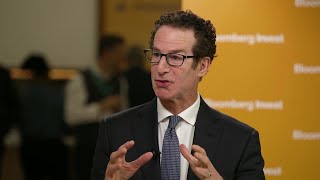
This The Compound News video, published March 04, 2026, features Bill Sweet, Ben Carlson discussing BOXX, BIL, IWM, IWC. 3 trade ideas extracted by AI with direction and confidence scoring.
Speakers: Bill Sweet, Ben Carlson · Tickers: BOXX, BIL, IWM, IWC