Ideas
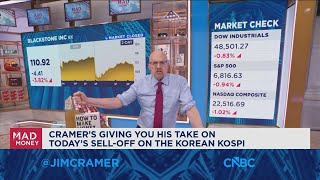
Panic selling is sweeping Korean stocks. Micron (MU) and SanDisk (WDC) lost ~8% overnight. Foreign investors offloaded $3.7 billion in KOSPI shares in a single day. South Korea is heavily dependent on imported energy. A Middle East conflict squeezes their margins from both sides: higher input costs (energy) and risk-off sentiment hitting high-beta tech stocks. The "panic" described suggests momentum is currently to the downside. SHORT. Momentum trade fading the semiconductor sector exposed to Asian energy insecurity. Kerry Craig notes the structural AI thesis remains intact; retail investors are buying the dip, which could trigger a squeeze if the war de-escalates quickly.
The US is expending high-cost interceptors (Patriots) and cruise missiles (Tomahawks) to counter cheap Iranian drones. Adam Farro notes that Qatar and other allies could run out of munitions in "a couple of days." This consumption rate necessitates an immediate and massive replenishment cycle for defense prime contractors. The economic asymmetry (expensive missiles vs. cheap drones) guarantees sustained government spending on these specific platforms regardless of the war's outcome. LONG. Order books for missile defense systems will expand significantly. Supply chain bottlenecks preventing rapid production ramp-up; political pressure to negotiate a ceasefire reducing immediate demand.
President Trump explicitly stated he would "cut off all trade with Spain" and could impose a "full embargo" because Spain denied military base access. Even if a full embargo is difficult to enforce within the EU framework, the headline risk and diplomatic freeze will hurt Spanish multinationals with significant US exposure. Santander (SAN) was specifically highlighted in the context of trying to bridge this divide. AVOID. Political risk is currently unquantifiable for Spanish assets. The threat turns out to be purely rhetorical negotiation tactics by Trump.
DFI Retail Group reported a 35% increase in bottom-line profits and a return to full-year profit. They are pivoting to value/convenience in China (1,000 stores) and seeing double-digit growth in Indonesia. The company has successfully restructured costs (rents, sourcing) and is resilient to inflation ("people are going to eat and shower"). The CEO explicitly states they are not seeing material impact from energy spikes yet due to intra-Asia sourcing. LONG. A defensive play with proven turnaround execution in a volatile macro environment. prolonged consumption slump in China; currency headwinds in Southeast Asia.
Rowan warns of a coming "shakeout" in the private credit industry, specifically citing defaults on loans to software companies. He notes this will not be a short-term event. As the "easy money" era ends and defaults rise, the private credit sector (which has grown to trillions) faces a structural stress test. Firms with poor underwriting standards will suffer. AVOID. The sector faces a 12-24 month period of pain and consolidation. Top-tier managers (like Apollo/Blackstone) may actually gain market share during the shakeout, making a blanket short dangerous.
Oil markets have shown a "muted" reaction to the conflict, assuming a quick resolution. Hynes states the market is "under-evaluating the risks" and is more fragile than in the past. The assumption that US shale can instantly "fill the breach" is flawed; producers need months of elevated prices to ramp up. If the Strait of Hormuz (20% of global supply) faces actual disruption rather than just threats, the current risk premium is insufficient. LONG. Betting against market complacency regarding a major supply choke point. Trump's promised naval escorts successfully maintain flow; demand destruction from a global recession.
This Bloomberg Markets video, published March 04, 2026,
features Avril Hong, Peter Jennings, Tyler Kendall, Scott Price, Mark Rowan, Daniel Hynes
discussing EWY, WDC, MU, LMT, NOC, RTX, EWP, SAN, DFIHY, PSP, USO.
6 trade ideas extracted by AI with direction and confidence scoring.
Speakers:
Avril Hong,
Peter Jennings,
Tyler Kendall,
Scott Price,
Mark Rowan,
Daniel Hynes
· Tickers:
EWY,
WDC,
MU,
LMT,
NOC,
RTX,
EWP,
SAN,
DFIHY,
PSP,
USO