Ideas
Stablecoins expand dollar dominance and Treasury demand.
The GENIUS Act and stablecoin framework can expand dollar dominance, increase global demand for dollar-denominated assets like US Treasuries, reduce systemic risk, and support economic growth.
Big bank deregulation raises bailout risk.
Deregulation and reduced supervision boost big bank profitability and CEO pay but increase systemic risk and make another taxpayer bailout more likely.
Private credit is a ticking time bomb.
The private credit market looks like a ticking time bomb; Moody's found banks had $300 billion of exposure and the risk is growing, while FSOC ignores it.
Lower mortgage rates support housing market.
Mortgage rates are at the lowest level in almost three years and the spread between the 10-year and mortgage securities is at multi-year lows; deficit reduction and GDP growth should bring rates down further, supporting housing.
Deposit insurance reform supports community banks.
Community banks are Main Street; overregulation and deposit flight to too-big-to-fail banks have halved their number, and targeted deposit insurance for payroll accounts would stop deposit volatility and support lending.
Stablecoins can fund US government, keep innovation.
Stablecoins backed by high-quality liquid assets can be an important source of funding for the US government, draw new funding, and keep digital asset innovation onshore.
World will choose US dollar stablecoins.
The world will choose the US dollar and well-regulated US private stablecoins over central bank digital assets abroad, supporting dollar dominance.
Tariffs and rhetoric hurt US tourism.
Tariffs and hostile rhetoric toward allies are damaging US tourism, with 12 straight months of declining Canadian visitors, a 20% drop for Nevada, and a near $70 billion travel trade deficit.
Farm bankruptcies and trade deficit worsen.
Farm bankruptcies have doubled, barely half of farms are profitable, and the US runs a historic agriculture trade deficit with higher input costs and tariff uncertainty.
US soybean export share is collapsing.
The China trade war has cut the US share of world soybean exports from 47% to 24.4%, and on-again-off-again tariffs are destroying markets.
China commitments stabilize soybean market.
China has bought 12 million tons of soybeans since October and committed to 25 million tons over three years, which should stabilize the soybean market, alongside a $12 billion support package.
US manufacturing boom is beginning.
There are beginnings of a manufacturing boom with factory groundbreakings and high build intentions; pro-business policies should continue the boom.
Tariffs are causing manufacturing recession.
US manufacturing is in retreat; 72,000 manufacturing jobs were lost after Liberation Day tariffs, manufacturers shed workers for eight months, and small businesses face tariff chaos and higher costs.
Trump accounts boost long-term equity demand.
Trump accounts will seed $1,000 for newborns, allow family and employer contributions, and use low-cost broadly diversified index funds, bringing 38% of households without equity exposure into the US equity market.
Treasury market resilient with strong foreign demand.
The Treasury market has been resilient with some of the best auctions in a long time and strong foreign demand; reducing the deficit-to-GDP ratio toward 3% should bring rates and inflation down.
Non-bank mortgage servicers pose systemic risk.
FSOC and GAO warned that weaknesses at non-bank mortgage servicers, which handle most US mortgages, could disrupt federally backed mortgage markets, and Treasury has not addressed the risk.
Housing delinquencies and foreclosures are rising.
Housing stress is visible with foreclosures up 21% and mortgage delinquencies at a four-year high, even as Treasury calls the mortgage market healthy.
Gasoline prices will continue declining.
Gasoline prices are down substantially and are expected to continue falling due to more supply and pro-energy policies, which also helps bring down broader inflation.
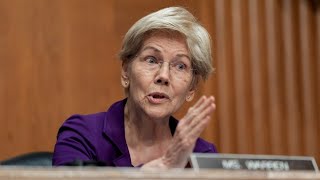
This CNBC video, published February 05, 2026,
features Tim Scott, Elizabeth Warren, Scott Bessent, Catherine Cortez Masto, Tina Smith, Jon Ossoff, Lisa Blunt Rochester
discussing USD, TLT, KBWB, BIZD, US Housing, KRE, STABLECOINS, US travel/tourism, DBA, SOYB, US manufacturing, SPY, Non-bank mortgage servicers, UGA.
18 trade ideas extracted by AI with direction and confidence scoring.
Speakers:
Tim Scott,
Elizabeth Warren,
Scott Bessent,
Catherine Cortez Masto,
Tina Smith,
Jon Ossoff,
Lisa Blunt Rochester
· Tickers:
USD,
TLT,
KBWB,
BIZD,
US Housing,
KRE,
STABLECOINS,
US travel/tourism,
DBA,
SOYB,
US manufacturing,
SPY,
Non-bank mortgage servicers,
UGA