Ideas
Yuan direction is key FX risk.
China's nominal effective exchange rate shows yuan strength while the real effective rate remains undervalued, supporting capital inflows to China and an export advantage. The US is unlikely to ignore this, and the April Beijing US-China summit plus a possible FX-market agreement or Plaza-style risk make yuan direction a key macro risk to watch.
Lee Nam-woo
Professor, Yonsei University Graduate School of International Studies
10:47
Fed independence risk threatens markets.
Ahead of the November midterms, Trump faces a K-shaped economy and will likely try to break through by undermining Fed independence—installing a compliant chair and pressuring aggressive rate cuts. This is negative for the US and global economy and could shock both bond and stock markets, especially in Q2/H1.
Lee Nam-woo
Professor, Yonsei University Graduate School of International Studies
12:16
Global equity momentum is broadening.
In 2025, ex-US markets rose about 30% while the US rose about 17%, reversing a decade of US outperformance. This shows global equity momentum is broadening beyond the US, a trend investors should recognize.
Lee Nam-woo
Professor, Yonsei University Graduate School of International Studies
13:52
Alphabet re-rated on talent and data.
Alphabet's entry into the top 3 global market caps is notable because it has the best talent and data base; its early-2025 valuation of 17-18x earnings was an abnormal discount versus the market, implying the market re-rated its AI strengths.
Lee Nam-woo
Professor, Yonsei University Graduate School of International Studies
15:23
TSMC is a must-hold portfolio stock.
TSMC remains highly attractive for US retail investors and should be held in portfolios. It has solidified its top-10 global market-cap position, and although Samsung has narrowed the gap, TSMC's strategic scale and position remain superior.
Lee Nam-woo
Professor, Yonsei University Graduate School of International Studies
19:44
USD/KRW stuck in high range.
The won should appreciate in line with global flows as semiconductors improve Korea's trade balance and the Fed cuts rates, but USD/KRW is unlikely to fall sharply and should trade in a high range. Heavy US investment commitments, unrealistic domestic AI investment plans, and governance concerns keep the won from strengthening.
Lee Nam-woo
Professor, Yonsei University Graduate School of International Studies
23:35
M&A boom benefits US banks.
Big M&A deals rose about 50% last year, driven by easy funding and deregulation, and 2026 should remain a flood of M&A absent a major shock. This benefits investment banks and financial holding companies through advisory, financing, and lending, supporting names like JPMorgan, Citi, Goldman Sachs, Bank of America, and Wells Fargo.
Lee Nam-woo
Professor, Yonsei University Graduate School of International Studies
26:48
Japanese trading houses excel at capital allocation.
Japan's five major trading houses are attractive long-term investments because their boards and management have a clear capital-allocation philosophy: invest to strengthen long-term competitiveness, attract talent and technology, focus on returns above cost of capital, and return excess cash via dividends and buybacks. Warren Buffett recognized this and owns about 10%.
Lee Nam-woo
Professor, Yonsei University Graduate School of International Studies
28:37
Meritz is Korea's best capital allocator.
Meritz Financial is the only Korean company that properly applies the same disciplined capital-allocation principles as the Japanese trading houses—investing for long-term competitiveness, earning above cost of capital, and returning excess cash via dividends/buybacks—making it a standout for long-term investors.
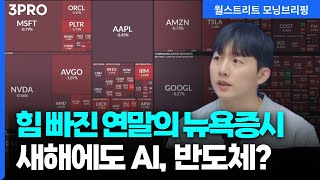
This 3PRO TV (삼프로TV) video, published January 01, 2026,
features Vincent, Lee Nam-woo
discussing USD/CNY, SPY, US bond market, ACWX, GOOGL, TSM, USD/KRW, JPM, C, GS, BAC, WFC, Japanese trading houses, 138040.KS.
9 trade ideas extracted by AI with direction and confidence scoring.
Speakers:
Vincent,
Lee Nam-woo
· Tickers:
USD/CNY,
SPY,
US bond market,
ACWX,
GOOGL,
TSM,
USD/KRW,
JPM,
C,
GS,
BAC,
WFC,
Japanese trading houses,
138040.KS