CalPERS 'Not Too Concerned' About Software Exposure, CEO Frost Says
Speakers
Marci Frost
— CEO, CalPERS
Summary
- CalPERS (largest US public pension fund) is significantly underweight Private Credit (currently ~4% allocation vs. 8% target), implying a massive structural bid for the asset class over the next 4-6 years.
- The fund explicitly dismisses the "AI will kill Software" narrative, stating they are "not too concerned" about software exposure in their private credit book.
- A $100B commitment to climate solutions by 2030 is underway, with a pragmatic approach that includes holding Oil & Gas majors investing in carbon capture/transition, rather than a blanket divestment.
- CalPERS is re-entering Venture Capital aggressively, targeting 10-15% portfolio exposure, signaling institutional confidence in early-stage innovation despite current market headwinds.
Ideas
Marci Frost
CEO, CalPERS
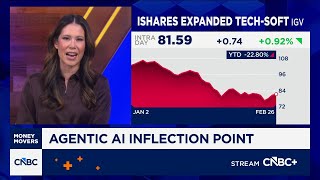
Regarding the fear that "AI is going to eat software's lunch," Frost explicitly says the team is "really not too concerned about the software exposure." She also notes the "huge energy drain" required to run data centers for AI. The market has been fearful that legacy SaaS (Software as a Service) is dead. CalPERS' refusal to panic-sell their software credit exposure suggests institutional stability for the sector. Furthermore, her comment on data centers reinforces the "picks and shovels" trade (NVDA/Hyperscalers) required to build the infrastructure. LONG Software (IGV) as a contrarian stability play and AI Infrastructure (NVDA) as a growth play. AI actually does displace legacy software faster than anticipated, eroding cash flows for SaaS companies.
Marci Frost
CEO, CalPERS
Frost states CalPERS has a target allocation of 8% for Private Credit but is currently "hovering around 4%." She affirms "a lot of conviction" in the asset class and a willingness to buy secondary stakes if terms are right. When a massive capital pool ($400B+) is 50% underweight in a specific asset class, it creates a multi-year structural tailwind. The "Big 4" alternative asset managers (Blackstone, KKR, Apollo, Ares) are the primary beneficiaries of these institutional flows, specifically in direct lending and specialty finance. LONG the asset managers collecting these fees. A severe recession causing a spike in default rates within private credit portfolios.
Marci Frost
CEO, CalPERS
CalPERS has committed to $100B in sustainable investments by 2030. Frost clarifies they still hold Oil & Gas exposure because they "think that some of the oil and gas companies are investing appropriately around reduction in greenhouse gas emissions or investing in nothing [carbon] capture." This nuance is critical. It is not a pure ESG divestment strategy; it is a transition strategy. This supports a "barbell" trade: buying pure-play renewables (ICLN) while simultaneously supporting legacy energy majors (XLE/CVX) that are pivoting, as they will remain in massive institutional portfolios. LONG the Energy Transition theme (both old and new energy). Political shifts changing ESG mandates or a collapse in oil prices reducing capex budgets for transition projects.
Marci Frost
CEO, CalPERS
CalPERS has decided to "reenter" Venture Capital, targeting "10%, maybe up to 15% of the portfolio" focused on emerging managers and venture. Institutional re-entry into VC signals a belief that valuations have reset and the vintage years ahead (2024-2026) will be strong. While retail cannot easily buy VC funds, they can buy Listed Private Equity (PSP) or high-growth tech proxies (QQQ) to front-run this capital deployment. LONG Innovation/Growth proxies. Higher-for-longer interest rates compressing valuation multiples for non-profitable tech.
Up Next




This Bloomberg Markets video, published February 26, 2026, features Marci Frost discussing NVDA, IGV, MSFT, BX, KKR, APO, ARES, CVX, XOM, ICLN, XLE, QQQ, PSP. 4 trade ideas extracted by AI with direction and confidence scoring.
Speakers: Marci Frost · Tickers: NVDA, IGV, MSFT, BX, KKR, APO, ARES, CVX, XOM, ICLN, XLE, QQQ, PSP