RBC’s Lori Calvasina on the Iran war’s impact on different market sectors
Speakers
Lori Calvasina
— Head of U.S. Equity Strategy, RBC Capital Markets
Host
— Anchor
Summary
- RBC's stress test for $100 oil, assuming 3.6% inflation and 4.5% 10-year Treasury yields, puts the S&P 500 fair value at 6600-6900.
- Small caps (Russell 2000) are currently trading at a 16.1x forward P/E, which is above the historical recession pricing of 11-13x, indicating more downside risk.
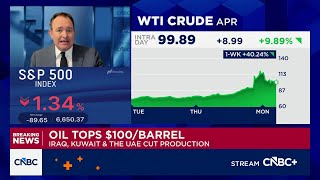
- Post-COVID data shows a -40% inverse correlation between stocks and oil prices.
- Energy is the only sector that historically rises and outperforms the broader market during post-COVID oil spikes.
- Healthcare (Pharma, Equipment, and Services) shows resilience during oil shocks due to a lack of direct earnings impact.
Ideas
"What I came up with was basically 6600 to 6900 is fair value... If you want to take the bear side on my model, that was my strongest model. It had been forecasting over 8000 over the next 12 months. So you lop 1000 points off of that." A sustained $100 oil price scenario introduces stagflationary impacts, lowering the fair value of the broader market and capping upside potential compared to previous bullish forecasts. WATCH. The S&P 500 may face significant headwinds and multiple compression if oil prices remain elevated. Oil prices normalize quickly, or corporate earnings growth outpaces the drag of higher inflation and yields.
"Small caps are down to 16.1. The average is 15.2... 11 to 13 times is recession pricing... there's still some wood to chop there." Small caps are highly sensitive to economic stress. Because their current valuation is still well above historical recessionary troughs, they have not fully priced in the downside risk of a macro shock. AVOID. Small caps have further room to fall before reaching a true "washed out" valuation level. The economy achieves a soft landing, preventing small caps from compressing to recessionary multiples.
"The only industry that tends to rise in the post-COVID environment and outperform the market is energy." Broader equities have a -40% inverse correlation to oil prices. In a scenario where oil spikes to $100 due to geopolitical conflict, energy equities act as the sole structural beneficiary and a direct hedge against market underperformance. LONG. The energy sector is positioned to capture the upside of sustained high oil prices while the rest of the market struggles. Geopolitical tensions ease rapidly, leading to a sharp drop in crude oil prices.
"You can find areas like health care, you know, both the pharma side and the health care equipment and services side, not really direct impacts to earnings. And you do see some resilience in those stock prices." Healthcare companies have minimal direct revenue exposure to the Middle East and their cost structures are less sensitive to energy spikes. This makes them a defensive safe haven during oil-driven market volatility. LONG. Healthcare offers relative outperformance and capital preservation when broader indices are dragged down by energy shocks. Broad market panic selling could drag down defensive sectors regardless of their fundamental insulation.