Energy Shock May Impact Consumer Spending, George Says
Speakers
Jonathan
— Interviewer
Esther George
— Former President, Kansas City Fed
Summary
- A new energy price shock (gasoline and diesel) is threatening U.S. consumer spending and broader economic growth.
- The U.S. is experiencing a "K-shaped" economy where weaker household balance sheets are reaching a breaking point after enduring post-pandemic inflation and tariffs.
- The Federal Reserve faces a dual-mandate dilemma: rising headline inflation from oil prices versus a tentative, weakening labor market.
- The Fed is likely to abandon near-term rate cuts and enter a "pause mode" to maintain credibility on their inflation target.
- Headline unemployment remains low, but underlying labor dynamics are softening due to hesitant corporate hiring and shifting immigration policies.
Ideas
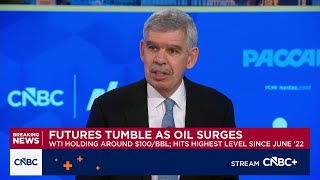
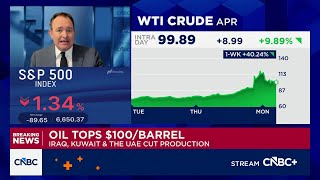
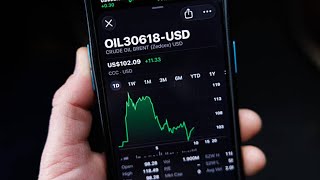
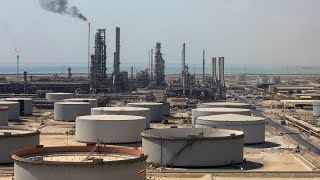
"Now, we have added a new shock, this gasoline price at the pump. We understand that diesel prices will be affected..." A sudden spike in gasoline and diesel prices directly translates to higher revenues and expanded profit margins for oil producers and broad energy sector equities. As the commodity price rises, these companies capture the upside of the supply/price shock. LONG large-cap energy producers and energy sector ETFs to capitalize on rising prices at the pump. Severe demand destruction if the consumer completely breaks, or geopolitical resolutions that rapidly flood the market with new oil supply.
"You hear a lot about the K-shaped economy... you can only stress weaker household balance sheets... there is a breaking point." Lower-income consumers are disproportionately impacted by rising non-discretionary costs like gas and diesel. As their disposable income evaporates to cover basic transportation and energy needs, retailers that specifically cater to this demographic (like dollar stores) will experience severe foot traffic declines and earnings contraction. SHORT discount retail equities exposed to the lower-end consumer's breaking point. The Fed aggressively cuts rates to save the consumer, or wage growth at the lower-income tier unexpectedly outpaces headline inflation.
"It stays their hand on being able to suggest that they are looking to rate cuts, but may be in a pause mode... inflation target has to be credible." The market has been pricing in a dovish Federal Reserve. If the Fed is forced to pause expected rate cuts due to sticky, energy-driven headline inflation, the bond market will have to re-price the yield curve higher. Long-duration Treasury bonds lose value as yields rise. SHORT long-duration Treasuries as the "higher for longer" interest rate narrative returns to combat inflation. A sudden, severe recession forces the Fed to panic-cut rates regardless of headline inflation, causing a flight to safety and a massive rally in long bonds.
Up Next

This Bloomberg Markets video, published March 09, 2026, features Esther George discussing XOM, XLE, CVX, DLTR, DG, TLT. 3 trade ideas extracted by AI with direction and confidence scoring.
Speakers: Esther George · Tickers: XOM, XLE, CVX, DLTR, DG, TLT