Bloomberg Surveillance 3/11/2026
Speakers
Jonathan Ferro
— Anchor, Bloomberg Television
Lisa Abramowicz
— Anchor, Bloomberg Television and Radio
Annmarie Hordern
— Reporter, Bloomberg
Joumanna Bercetche
— Anchor, Bloomberg
Stephen Auth
— Chief Investment Officer, Auth Capital
Tobin Marcus
— Senior US Policy and Politics Strategist, Wolfe Research
Lizzy Burden
— Crypto Reporter, Bloomberg News
Mandeep Singh
— Senior Analyst, Bloomberg Intelligence
Angelo Zino
— Senior Equity Analyst, CFRA Research
Michael Reid
— Economist, RBC Capital Markets
Jeff Currie
— CSO Energy Pathways, Carlyle Group
Jim Bullard
— Former St. Louis Fed President
David Kelly
— Chief Global Strategist, J.P. Morgan Asset Management
Deepak Puri
— Chief Investment Officer Americas, Deutsche Bank Private Bank
Samantha Dart
— Head of Digital Assets, Bitwise
Stephanie Wilding
— Macro Analyst / Economist
Michael McKee
— International Economics & Policy Correspondent, Bloomberg
David Rubenstein
— Financial Executive / Former Government Official
Summary
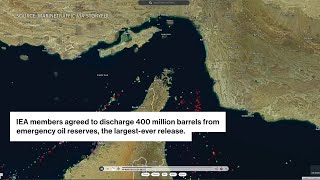
- Global markets are grappling with a severe geopolitical energy shock as disruptions in the Strait of Hormuz have pushed Brent crude above $90 per barrel, effectively removing over 15 million barrels a day of supply from the region.
- The IEA is proposing an unprecedented release of 300 to 400 million barrels of strategic oil reserves to combat the deficit. However, commodity experts warn that physical flow constraints (max 2.5 million barrels/day) mean the release will only partially offset the massive supply loss.
- US CPI data came in line with expectations (Headline +0.3% MoM, Core +0.2% MoM), but economists warn this data precedes the recent oil spike. The energy shock is expected to push future headline inflation higher, severely complicating the Federal Reserve's ability to cut interest rates.
- A structural macro shift is underway, transitioning from an "asset-light" tech boom to an "asset-heavy" physical economy. Strategists are advising a rotation out of expensive US mega-cap growth stocks and into hard assets, commodities, defensive value sectors, and international equities.