Iran’s Cheap, Plentiful Weaponry Puts US Military Under Strain
Speakers
Interviewer
— Host
Jerry
— Geopolitical/Defense Analyst
Summary
- The US military is struggling to achieve air supremacy in Iran due to highly mobile, easily hidden air defense systems.
- An extreme cost asymmetry exists in the conflict: Iran is utilizing mass-produced drones costing $20,000 to $50,000, while the US is defending with interceptors like the PAC-3 that cost $4 million each.
- US stockpiles of expensive, hard-to-replace air defense and cruise missiles are running dangerously low, alarming US allies.
- The US may be forced into ground operations (boots on the ground) as conventional airstrike targets are depleted and the Strait of Hormuz remains contested.
- Iran is executing a predictable but highly disruptive strategy of striking oil installations across the Middle East and Gulf Arab states.
Ideas
The US has used a significant amount of expensive and hard to replace air defense missiles defending against Iranian ballistic missiles and drone attacks. And those things do put a strain on the stockpile. The extreme cost asymmetry of using $4 million interceptors to shoot down $50,000 drones is rapidly draining US munitions. Regardless of how the conflict ends, the Department of Defense will be forced into a massive, multi-year procurement cycle to replenish depleted stockpiles of Patriot missiles, cruise missiles, and radar systems. Prime defense contractors who manufacture these specific munitions will see guaranteed backlog expansion and revenue growth. LONG prime defense contractors due to the inevitable and urgent government replenishment cycle for high-end munitions. Congressional budget impasses could delay procurement funding, or the DoD could aggressively pivot future contracts toward cheaper, unproven counter-drone startups, bypassing legacy primes.
If they want to certainly at this point open the Strait of Hormuz, it might require ground operation... Iran's strategy of hitting military bases and oil installations across the Middle East. The Strait of Hormuz is the world's most critical chokepoint for global oil transit. Kinetic strikes on Gulf Arab oil infrastructure combined with a contested Strait will create a severe global supply shock. This will drive up the price of crude oil significantly, expanding profit margins for Western oil producers who have production assets safely outside the Middle Eastern conflict zone (e.g., the Permian Basin). LONG Western oil majors and domestic producers who will capture the upside of surging crude prices without the geopolitical risk of their own infrastructure being bombed. A sudden diplomatic de-escalation, a coordinated release of global Strategic Petroleum Reserves (SPR), or a severe global recession destroying oil demand.
Up Next
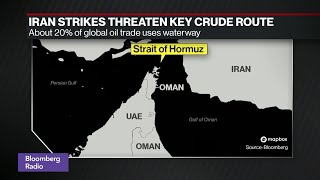




This Bloomberg Markets video, published March 11, 2026, discussing RTX, LMT, NOC, XOM, CVX, OXY. 2 trade ideas extracted by AI with direction and confidence scoring.