Trump Encourages Oil Companies to Use Strait of Hormuz
Speakers
Donald Trump
— President of the United States
News Reporter
— Anchor/Journalist
Summary
- The US military has allegedly executed a massive strike against Iran, effectively neutralizing its navy, air force, and anti-aircraft capabilities.
- The administration is actively encouraging oil companies to route vessels through the Strait of Hormuz, claiming the threat of Iranian mine-laying ships has been eliminated.
- Despite official assurances that the maritime route is safe, the reality of recent kinetic military action in the world's most critical oil chokepoint introduces extreme geopolitical volatility.
Ideas
"They've lost their navy. They've lost their air force. They have no anti-aircraft apparatus at all... we took out just about all of their mind ships in one night." Executing a military operation comprehensive enough to wipe out a sovereign nation's naval and air assets requires the massive expenditure of precision-guided munitions, cruise missiles, and advanced weaponry. The immediate depletion of US military stockpiles will force the Department of Defense to issue emergency replenishment contracts, directly benefiting the prime defense contractors that manufacture these systems. LONG large-cap defense primes, as active kinetic conflict and stockpile depletion guarantee near-term order backlog expansion and revenue visibility. Political gridlock in Congress delays supplemental defense funding, or the conflict de-escalates faster than anticipated, limiting long-term procurement.
"Are you talking to the CEOs of various oil companies, encouraging them to use the Strait of Hormuz? I think they should... every one of their ships, just about all of their navy, is gone." The Strait of Hormuz handles roughly 20% of global oil consumption. Even if the primary state-sponsored naval threat is neutralized, the residual risk of unexploded sea mines and asymmetric warfare in a fresh conflict zone will cause maritime insurance premiums to skyrocket. Oil tanker operators will pass these elevated insurance costs onto charterers, resulting in massive spikes in daily freight rates (war risk premiums) and expanding their profit margins. LONG crude and product tanker equities, which historically generate massive free cash flow during periods of Middle East maritime disruption and elevated risk premiums. The Strait is deemed completely safe by insurers, causing the war premium to collapse; or the waterway becomes entirely impassable, halting all vessel traffic and revenue generation.
"I think they should use this. Look, we took out just about all of their mind ships in one night." The administration is attempting to project stability in the global energy markets by declaring the Strait of Hormuz safe for commercial transit. However, the underlying reality is that a major military conflict is occurring at the world's most vital energy chokepoint. If oil companies hesitate to send vessels through the Strait despite government encouragement, or if a rogue mine damages a tanker, global oil supply chains will face immediate, severe bottlenecks. WATCH crude oil prices for extreme volatility. The market is currently balancing the administration's claims of safety against the reality of an active warzone. Any disruption to physical supply will cause a violent upside spike. Oil flows continue uninterrupted, causing the geopolitical risk premium currently priced into crude to evaporate, leading to a sharp sell-off.
Up Next


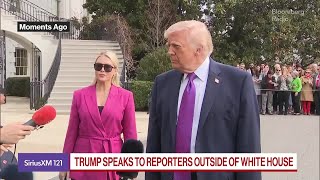
This Bloomberg Markets video, published March 11, 2026, features Donald Trump discussing GD, RTX, LMT, FRO, STNG, USO. 3 trade ideas extracted by AI with direction and confidence scoring.
Speakers: Donald Trump · Tickers: GD, RTX, LMT, FRO, STNG, USO