Iran War: Canada To Push For De-escalation at G7 in France | The Pulse 3/26
Speakers
Derek Halpenny
— Head of Research, MUFG Bank
Giulia Pellegrini
— Allianz Global Investors, Emerging Markets Portfolio Manager
Sebastian Mallaby
— Senior Fellow, Council on Foreign Relations
Anita Anand
— Minister of Foreign Affairs, Canada
Dean Forbes
— Forterro, CEO
Rachel Ellehuus
— RUSI, Director-General
Summary
- The US dollar is attracting safe-haven flows from the Iran conflict, triggering a sharp sell-off in EM currencies and local bonds, exacerbated by the unwinding of large investor positions that had built up in the asset class.
- If the conflict is prolonged, energy-importing EM countries will suffer significant economic damage from higher energy costs, while oil-exporting nations like Colombia, Ecuador, and Nigeria could see relative benefits.
- Oil price risk is asymmetric: high global crude stockpiles (estimated at 8.2B barrels) are containing prices for now, but a protracted closure of the Strait of Hormuz could force a dramatic surge to a $120-$160 range.
- AI is framed as the most significant technological shift since the advent of human cognition, with Google's merger and integration of DeepMind serving as a case study in rapid, successful corporate adaptation to overtake rivals like OpenAI.
- China's AI capabilities are assessed as only a few months behind the US, but geopolitical tensions are delaying essential US-China dialogue on AI safety, creating a key uncertainty.
- Former Goldman Sachs CEO Lloyd Blankfein warns the private credit market is showing signs of overvaluation, with an accumulation of unsold private assets on balance sheets acting as "kindling" for a potential widespread markdown.
- Forterro's CEO views AI as an efficiency-enhancing opportunity for its midmarket manufacturing clients rather than a disruptive threat, citing resilient end-demand and the company's growth trajectory.
- Diplomatic efforts to de-escalate the Iran war are fragile; Iran has rejected US overtures and issued its own maximalist terms, including claiming sovereignty over the Strait of Hormuz.
- European nations, while reluctant, are being drawn into the conflict due to energy security interests and alliance obligations, with the UK having a particularly strong stake in regional stability.
Ideas
The speaker stated that if the Iran conflict lasts beyond a few weeks and the Strait of Hormuz remains closed, it is "inevitable we will get another lurch higher" in crude oil prices, targeting a range of "$120 to $160". A prolonged closure would drastically restrict global energy supply. While high crude stockpiles (8.2B barrels) are currently containing the price reaction, this buffer would be overwhelmed. WATCH due to the high-consequence, conditional nature of the thesis. The setup is not a immediate long, but a critical risk that warrants close monitoring for escalation. A swift diplomatic de-escalation and reopening of the Strait of Hormuz would alleviate supply fears and likely cap prices.
Up Next
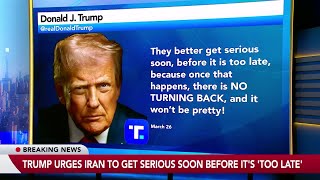




This Bloomberg Markets video, published March 26, 2026, features Derek Halpenny discussing WTI. 1 trade idea extracted by AI with direction and confidence scoring.
Speakers: Derek Halpenny · Tickers: WTI