Markets Weekly February 14, 2026
Speakers
Joseph Wang
— Author, Central Banking 101 / ex-Senior Trader, Federal Reserve
Summary
- Market Technicals Breaking Down: The S&P 500 has lost its 50-day moving average and is threatening the 100-day. The speaker predicts a test of the 200-day moving average (around 6500), citing a loss of momentum similar to the dot-com bust era.
- AI as a Deflationary Force: Contrary to the "AI boom" narrative, the speaker argues AI is deflationary and demand-destructive. By replacing human labor (editors, artists, junior lawyers) with cheaper software, AI increases unemployment and reduces aggregate demand, even if it boosts short-term corporate margins.
- The "Ultimate AI Trade" is Bonds: The speaker concludes that the economic fallout of AI—higher unemployment, lower GDP contributions from services, and eventual demand destruction—will force the Fed to cut rates aggressively. This makes bonds the primary beneficiary, not equities.
Ideas
Joseph Wang
Author, Central Banking 101
"This past week, we saw the S&P 500 lose the 50-day moving average... I'm getting the sense just a guess that we we probably have to test the 200 day moving average around 6500." Technical momentum is broken. Fundamentally, while AI boosts margins initially (by firing people), the secondary effect is "demand negative" (unemployed people don't buy things). If aggregate demand shrinks, corporate revenues eventually fall, leading to lower stock prices. Short/Underweight Equities due to technical breakdown and macro headwinds. The market ignores macro data and continues to bid up tech stocks on hype; the 200-day moving average holds as support.
Joseph Wang
Author, Central Banking 101
"We saw huge amounts of selling and the SAS stocks and even some wealth management stocks... perceived to be disrupted by AI." The speaker validates the market's fear by confirming that AI *does* replace service jobs (editing, legal research, wealth advising). If AI can perform "white collar" tasks (like tax efficiency strategies or contract editing) cheaper than humans or legacy software, these specific sectors face margin compression and revenue loss. Avoid sectors where AI is a direct substitute for the core service product. These companies successfully integrate AI to upsell rather than being replaced by it.
Joseph Wang
Author, Central Banking 101
"I'm beginning to think that AI is going to be very good for bonds... you're going to have a lot more rate cuts, lower employ un un higher unemployment." The speaker observes that AI (specifically Cloud/Claude) allows him to replace human freelancers ($$$) with a cheap subscription ($). While efficient, this removes income from the economy (the freelancer's wages). Multiplied across the economy (law firms, creative services), this leads to higher unemployment and lower aggregate demand. A slowing economy with rising unemployment forces the Federal Reserve to cut interest rates, which drives bond prices up. Long Bonds as a hedge against AI-induced economic slowdown. AI creates new industries/jobs faster than it destroys old ones, keeping demand high.
Up Next


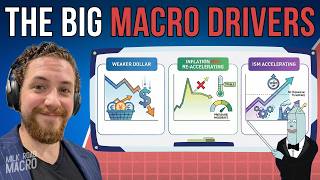


This Joseph Wang video, published February 14, 2026, features Joseph Wang discussing SPY, IGV, SCHW, TLT. 3 trade ideas extracted by AI with direction and confidence scoring.
Speakers: Joseph Wang · Tickers: SPY, IGV, SCHW, TLT