Why The AI Boom Might Be A Bubble?
Speakers
Thread Guy
— Crypto influencer, independent
Summary
- The current AI market structure is analyzed against the 2000 Dotcom bubble. The key distinction is financial substance: 2000 was defined by companies with zero revenue (Pets.com spending 6x revenue on ads), whereas today's leaders (Nvidia, Google) are "cash cow behemoths" with massive earnings.
- Valuation metrics suggest we are far from a 2000-style top. The NASDAQ peaked at 103x P/E in 2001; today it trades around 24.8x. Cisco peaked at 150x P/E; Nvidia currently trades at ~46x.
- A bifurcation exists in the "AI Trade": The "Mag 7" provide safety through cash flow, while the "Bleeding Edge" (Crypto x AI intersection) offers a decoupled growth thesis that the speaker believes will persist even if the broader market (SPY/NVDA) corrects.
Ideas
"The other side of that barbell for where we are right now is Google and Nvidia and these [__] cash cow behemoths that are printing... Nvidia right now is trading at 46x. Cisco [in 2000] was trading at 150x PE." The "AI Bubble" narrative is mathematically flawed when comparing P/E ratios to the Dotcom era. Unlike the speculative mania of 2000 (companies with no product/revenue), the current AI infrastructure leaders have "infinite money" and real earnings support. The market is not as expensive as sentiment suggests. LONG. The fundamentals of the leaders justify the price action compared to historical bubbles. Concentration risk; if one of the few leaders falters, it could drag the whole index down.
Thread Guy
Crypto influencer, independent
"In 2001... NASDAQ was trading at 103 PE... NASDAQ in February 2026 is trading at 24.8x PE. And so the entire NASDAQ could do a 4x right now with zero revenue growth... and it would still be lower than the mania we were at in 2001." The broad tech index is statistically cheap relative to the previous major tech bubble. The "top" is likely much higher if history (2000 mania) is the benchmark for irrational exuberance. LONG. The ceiling for valuation expansion is significantly higher than current levels. Macroeconomic shifts (rates) that compress P/E multiples regardless of historical comparisons.
Up Next

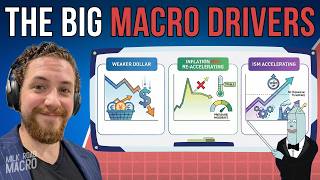



This Thread Guy video, published February 14, 2026, features Thread Guy discussing NVDA, GOOG, FNGS, QQQ. 2 trade ideas extracted by AI with direction and confidence scoring.
Speakers: Thread Guy · Tickers: NVDA, GOOG, FNGS, QQQ