Iran Refutes Trump Talks Claim & Gulf Weighs Joining War: WSJ | Daybreak Europe 3/24/2026
Speakers
Vonnie Quinn
— Anchor, Bloomberg
Joumanna Bercetche
— Anchor, Bloomberg
Mark Cudmore
— Executive Editor, Bloomberg Live / Macro Strategist
Hetal Mehta
— Chief Economist, St. James's Place
Toby Rice
— CEO of EQT
Summary
- Markets are grappling with highly volatile and conflicting signals regarding de-escalation in the Iran war, swinging between optimism and renewed caution.
- Iran's deputy parliamentary speaker explicitly denied direct negotiations with the U.S., contradicting President Trump's claims of "productive conversations," creating skepticism about a near-term resolution.
- The Strait of Hormuz remains closed, with analysts stressing that its reopening is the single most critical factor for oil markets and global economic stability; a protracted closure implies sustained high prices.
- Senior macro strategist Mark Cudmore is explicitly bearish on equities, arguing there is no logical base case for a positive view as neither Iran nor Israel shows interest in ending the conflict, and risks are likely to worsen.
- The closure of the Strait of Hormuz and attacks on energy infrastructure are causing refining margins for products like diesel and jet fuel to spike even faster than crude oil prices, with severe knock-on effects.
- Higher energy and fertilizer prices are creating a grim outlook for farmers, forcing decisions to cut inputs (reducing yields) or pass on costs, which threatens food inflation and security in 6-12 months.
- Central banks are in a difficult position, needing to signal commitment to inflation credibility while recognizing that supply-side oil shocks are hard to address with rate policy and can be disinflationary longer-term.
- Private credit faces specific stress: Apollo Global Management is curbing redemptions from a retail credit fund, and Moody's downgraded a Blackstone/GSO fund due to asset quality challenges.
- The EU and Australia finalized a major free-trade deal, positioned as a strategic move to deepen ties and counter the U.S. and China's use of tariffs and supply chains as leverage.
- Natural gas pipeline constraints, especially in New England, are cited as a self-inflicted cause of high electricity prices in the U.S., with calls for permit reform to boost infrastructure.
Ideas
The speaker states the war is not over, the Strait of Hormuz is closed, and attacks on key oil/gas/refining infrastructure are causing damage that takes months or years to repair. A prolonged closure of the Strait of Hormuz and continued attacks directly constrain global oil supply and damage the infrastructure needed to bring supply back online, creating a structural deficit. The direction is WATCH because the price path is highly sensitive to geopolitical developments; the fundamental setup is for sustained higher prices, but the near-term volatility is extreme based on conflicting headlines. A swift and credible diplomatic resolution that reopens the Strait and halts attacks would break the supply constraint thesis.
The speaker states he remains "very bearish stocks," argues things are likely to get worse, and believes equity investors are complacent about geopolitical risks. With no clear path to reopening the Strait of Hormuz and no logical off-ramp for Iran, the conflict is expected to worsen, creating a negative shock to global growth and corporate earnings that equities have not priced in. The direction is AVOID due to an expected deterioration in the fundamental backdrop (higher oil, slower growth) and the speaker's conviction that current prices do not reflect the escalating risk. A rapid and credible de-escalation that opens the Strait of Hormuz would alleviate the major supply and inflation shock, potentially supporting equity markets.
Apollo Global Management is curbing redemptions from one of its credit funds for retail investors, grappling with a surge in withdrawal requests. Restricting investor exits is a clear sign of underlying liquidity stress or asset-liability mismatch within a fund, damaging investor confidence and signaling potential wider issues in the private credit sector. The direction is AVOID because this action highlights operational and liquidity risk in Apollo's credit platform, making it an unattractive area for capital until stability returns. The fund successfully manages liquidity without significant losses, and redemption pressures subside, allowing normal operations to resume.
The host notes that renewed Middle East caution is correlating with a stronger US Dollar and lower gold prices, breaking a potential "safe-haven" narrative. In the current market reaction function, geopolitical tension is strengthening the dollar, which is a key headwind for dollar-denominated gold prices, outweighing any flight-to-quality bid. The direction is AVOID because the asset is exhibiting counterintuitive, negative price action in the face of rising geopolitical risk, suggesting it is not capturing the intended hedge. A dramatic escalation that triggers a broad-based flight from the US dollar could reverse this dynamic and cause gold to rally.
Up Next
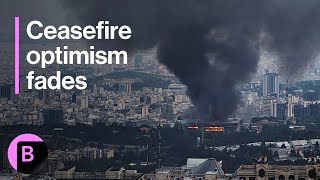



This Bloomberg Markets video, published March 24, 2026, features Joumanna Bercetche, Mark Cudmore, Vonnie Quinn discussing BRN, SPY, APO, GOLD. 4 trade ideas extracted by AI with direction and confidence scoring.
Speakers: Joumanna Bercetche, Mark Cudmore, Vonnie Quinn · Tickers: BRN, SPY, APO, GOLD