Markets Weigh Fragile Iran De-Escalation Hopes | The Asia Trade 3/24/2026
Speakers
Shery Ahn
— Anchor, Bloomberg Television
Haidi Stroud-Watts
— Anchor, Bloomberg
Romy
— Editor, Bloomberg
Garfield Reynolds
— Markets Reporter/Editor, Bloomberg
Daan Struyven
— Head of Oil Research, Goldman Sachs
Erica
— Tokyo Economy Reporter, Bloomberg
Randa Slim
— Director, Conflict Resolution, Stimson Center
David
— Bureau Chief, Bloomberg
Finbarr
— Reporter, Bloomberg
Laura Davison
— Washington Bureau Chief, Bloomberg
Nick Burns
— Former U.S. Ambassador to China
David Meale
— Head of China Practice, Eurasia Group
Christopher Hui
— Secretary for Financial Services, Hong Kong
Suresh Tantia
— Head of CIO for Asia Equity Strategy, UBS Global Wealth Management
Summary
- Markets are reacting to fragile hopes of U.S.-Iran de-escalation after President Trump delayed strikes and set a 5-day negotiation deadline, causing a sharp drop in oil and a risk asset rally. However, Iran denies talks are happening, labeling Trump's claims "psychological warfare."
- Goldman Sachs' Daan Struyven outlines a structurally higher oil price regime due to the largest-ever supply shock from the Strait of Hormuz closure, raising the year-end Brent forecast to $80. Two structural changes are faster strategic stockpiling and a long-term security premium.
- The immediate oil price drop reflects a reduced probability of a lengthy disruption, but the physical market is extremely tight in Asia and the Middle East. This tightness will eventually spread globally as barrels are shipped from the U.S. to Asia.
- UBS's Suresh Tantia sees a short-term relief rally in Asian stocks but advises reducing cyclical equity exposure, keeping cash on the sidelines, and using gold and short-dated investment grade bonds as hedges due to high ongoing geopolitical risk.
- China's equities are viewed as more resilient to the oil shock due to existing reserves and low inflation, while Eurozone and Indian equities are downgraded due to higher vulnerability. Japanese equities are seen as oversold, presenting a buying opportunity on a medium-term view.
- The conflict has exposed the limitations of U.S. unilateral power, with allies warning against destroying Iranian energy infrastructure and domestic U.S. political pressure mounting from high fuel prices and munitions shortages.
- Hong Kong is positioning itself as a financial safe haven amid the turmoil, leveraging its stability and pursuing regulatory reforms to attract capital and family offices, particularly from the Middle East.
- Private credit faces significant liquidity stress, with Apollo capping redemptions at 5% after 11% requests, highlighting the risks of interconnectedness and potential for a prolonged period of investor withdrawals.
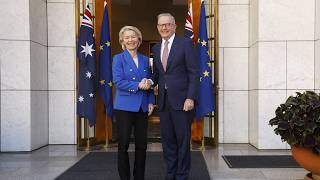
- A breakthrough EU-Australia free trade deal, after eight years of negotiation, is seen as a signal of commitment to open trade amidst global fragmentation, though its market impact is currently overshadowed by the Iran crisis.
Ideas
The speaker explicitly raised Goldman Sachs' year-end Brent crude price forecast to $80 (from a pre-conflict base in the $60s), citing the "largest oil supply shock ever" from the Strait of Hormuz closure. This shock will lead to two structural changes: faster government strategic stockpiling and a lasting security premium in longer-dated prices, damaging global inventories. Higher prices are justified by fundamentals (counting barrels) and structural shifts, not just short-term risk premiums. A faster-than-expected resolution to the Strait of Hormuz disruption or significant, coordinated global policy action to offset the supply loss.
The speaker explicitly stated, "at this level, it makes sense to buy gold," referring to its ~10% pullback, and that it is "still a very good hedge." The recent sell-off was partly a liquidation event where investors sold profitable assets like gold for cash. The fundamental case for gold remains intact due to expected Fed rate cuts and a weaker dollar. Gold is attractive after its correction and is recommended as a portfolio hedge against ongoing geopolitical and monetary policy uncertainty. The Fed delays rate cuts more persistently than expected, supporting the U.S. dollar and reducing gold's appeal.
Up Next


This Bloomberg Markets video, published March 24, 2026, features Daan Struyven, Suresh Tantia discussing BRN, GOLD. 2 trade ideas extracted by AI with direction and confidence scoring.
Speakers: Daan Struyven, Suresh Tantia · Tickers: BRN, GOLD