Ideas
Long-end bonds face persistent pressure
Three forces are pressuring bond markets: persistent commodity and geopolitical inflation, rising government spending as a share of GDP globally, and massive debt supply tied to data centers and technology. This keeps pressure on the long end of yield curves.
Rate hikes support financials early cycle
At the start of a telegraphed rate-hike cycle tied to economic events, higher front-end policy rates can help financial services by putting a ceiling on or subduing volatility in long-end bond yields; he cautions that this relationship can change later in the cycle.
AI selloff is buying opportunity
AI infrastructure, chip makers, and memory providers are the obvious initial losers if development-pacing headlines persist, but she views that weakness as an opportunity to add to quality infrastructure, chip, and memory names where Laffer Tengler does not have full positions; she just does not want to chase the down trend.
Google remains an AI leader
Among hyperscalers, Google will continue to be an AI leader, making it a quality name to favor as AI spending and model development normalize.
Nissan turnaround driven by US localization
US tariffs were initially tough but forced Nissan to accelerate localization; it has nearly doubled US production in eighteen months, 60% of US sales are made without tariffs and the target is 80%. The new third-generation hybrid Rogue should boost competitiveness against Toyota RAV4, and North America is over half of Nissan's volume and significant for global profitability, supporting the turnaround.
AI hyperscalers insensitive to rate hikes
The AI and hyperscaler space is probably immune to a 25 or 50 basis point Fed rate increase because those companies are earning much more in profit; the bigger risk to the economy and markets is an AI development slowdown, not modestly higher rates.
Mark Carney
Former Governor of the Bank of England/Bank of Canada, Canadian Politician
62:04
Underweight Canada no longer makes sense
Major pools of capital have historically treated US and Canadian assets together, ending up overweight the US and underweight Canada, but that allocation makes less sense as the global trading environment changes; Canada is diversifying trade and seeking deeper ties with the EU and other partners.
Gold has bullish structural tailwinds
Gold and copper retain bullish structural tailwinds, but tactically higher yields and oil-driven inflation hedging are pressuring metals; for gold, the structural bid remains intact even though it is not shining despite the yield spike.
Copper vulnerable to tactical pullback
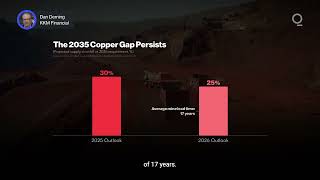
Copper has bullish structural tailwinds, but positioning is near the 100th percentile and the market is vulnerable to a pullback as higher yields, fading tariff rhetoric, and any struggle in the AI buildout become headwinds. He calls it a perfect storm for a copper pullback.
This Bloomberg Markets video, published September 14, 2026,
features CS Venkatakrishnan, Nancy Tengler, Christian Meunier, Kathy Bostjancic, Mark Carney, Frank
discussing Long-end government bonds, XLF, AIQ, SMH, SOXX, GOOG, NISSAN, SKYY, EWC, GLD, COPPER.
9 trade ideas extracted by AI with direction and confidence scoring.
Speakers:
CS Venkatakrishnan,
Nancy Tengler,
Christian Meunier,
Kathy Bostjancic,
Mark Carney,
Frank
· Tickers:
Long-end government bonds,
XLF,
AIQ,
SMH,
SOXX,
GOOG,
NISSAN,
SKYY,
EWC,
GLD,
COPPER