Gas Prices & Airfare Spike as Iran War Drags On
Speakers
Interviewer
— Host
Patrick
— Energy/Gas Price Analyst
Summary
- Gas stations now pass wholesale price increases to consumers in just 12 to 24 hours due to centralized pricing technology.
- Geopolitical escalations involving Iran (specifically threats to Kharg Island and the Strait of Hormuz) are expected to keep oil prices elevated for months.
- The national average for gasoline is projected to hit $4 per gallon, with some states nearing $5, just as the summer travel season begins.
- The combination of seasonal demand and Middle East supply risks creates a structural headwind for consumers and travel-heavy industries.
Ideas
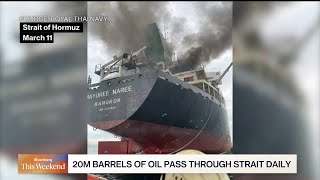
Every day that we keep going and seeing the escalations with the president now, putting Card Island at risk certainly will likely change the calculus as markets reopen Sunday... tied to the Strait Of Hormuz and any escalations that develop. "Card Island" is a phonetic mistranscription of Kharg Island, Iran's primary oil export terminal. Threats to this infrastructure, combined with risks to the Strait of Hormuz (where roughly 20% of global oil consumption passes), introduce a massive geopolitical risk premium. Because summer driving demand is highly inelastic, crude oil and energy producers will capture the upside of these supply-side shocks. LONG oil commodities and major energy equities as supply threats and seasonal demand drive prices higher over the coming months. A sudden diplomatic de-escalation in the Middle East or a severe macroeconomic shock that destroys global energy demand.
Not really any good news here for consumers... the national average certainly, as I mentioned, could hit the $4 mark. In some states, it could near $5. Rapidly rising gas prices act as a highly visible, regressive tax on the consumer. When it costs significantly more to fill up a vehicle, lower- and middle-income households immediately pull back on discretionary spending (dining out, retail, entertainment) to balance their budgets. WATCH the Consumer Discretionary sector for weakness, as the "gas station tax" will likely lead to downward revisions in retail earnings over the next quarter. Wage growth outpaces inflation, or consumers take on more credit card debt to maintain their current lifestyle and spending habits.
Gas prices now at this point could be affected starting into the summer travel season... looking at months of elevated prices, not weeks. Jet fuel is one of the largest operating expenses for airlines. While the video title notes airfares are spiking, airlines often struggle to pass 100% of rapid fuel cost increases onto consumers without causing demand destruction. Higher ticket prices, combined with consumers having less disposable income due to $5 gas at the pump, will likely compress airline margins during their most critical revenue season. SHORT airlines as soaring input costs and a squeezed consumer threaten profitability heading into the summer travel season. Airlines successfully pass all fuel costs to consumers without losing booking volumes, or corporate travel surges enough to offset leisure travel declines.
Up Next



This Bloomberg Markets video, published March 14, 2026, features Patrick De Haan discussing USO, XLE, XOM, XLY, JETS, UAL, DAL. 3 trade ideas extracted by AI with direction and confidence scoring.
Speakers: Patrick De Haan · Tickers: USO, XLE, XOM, XLY, JETS, UAL, DAL