Fed Must Untangle AI’s Job Market Impact | Presented by CME Group
Speakers
Narrator
— CME Group
Summary
- March 6 non-farm payrolls came in significantly lower than expected, initially sparking bets on a dovish Federal Reserve.
- Higher oil prices are acting as an immediate inflationary headwind, complicating the Fed's ability to lower rates.
- AI is potentially decoupling economic growth from job growth, allowing the economy to expand and become more productive without traditional hiring.
- If the Fed cuts rates to address labor weakness that is actually just AI-driven efficiency, the market may view it as a policy mistake, causing long-term yields (and mortgage rates) to rise due to inflation fears.
Ideas
The more immediate story is the potential inflationary effects of higher oil prices. If higher oil prices are a primary factor standing in the way of lower interest rates, energy commodities and the companies that extract them will capture that pricing upside. Buying the underlying commodity ETF (USO) alongside a diversified energy producer ETF (XLE) provides a direct hedge against this specific inflationary pressure. LONG because oil and energy equities benefit directly from the rising energy prices currently spooking the Fed. A broader macroeconomic recession could destroy global energy demand, causing oil prices to collapse regardless of supply dynamics.
What if the economy is expanding and becoming more productive without job growth? The speaker notes that AI is hampering normal job creation while simultaneously making the economy more productive. The companies providing the AI infrastructure, compute, and enterprise software are the direct enablers of this trend. They will capture massive enterprise spend as businesses pay for AI tools to expand margins without hiring human labor. LONG because mega-cap tech companies are the primary arms dealers in the AI productivity boom. AI monetization could take longer than expected to show up in enterprise earnings, or regulatory crackdowns could slow down AI deployment.
Longerterm loans like mortgages could possibly move higher in this scenario if the market thinks that the Fed is committing a misstep and inflation may follow. If the Fed cuts short-term rates to fix a "weak" labor market that is actually just experiencing AI-driven efficiency, the market will price in a resurgence of inflation. Inflation expectations cause long-term bond yields to rise. Because bond prices move inversely to yields, long-duration Treasury bonds will lose value. SHORT because long-duration government bonds will sell off if the market believes the Fed is making a dovish policy error that will reignite inflation. The labor market weakness might actually be a real recession rather than an AI productivity miracle, which would trigger a flight to safety, driving long-term bond yields down and TLT prices up.
Up Next



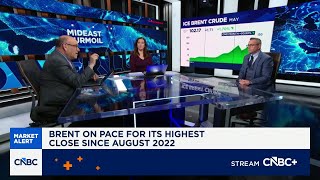

This Bloomberg Markets video, published March 13, 2026, discussing USO, XLE, MSFT, NVDA, GOOGL, TLT. 3 trade ideas extracted by AI with direction and confidence scoring.