Ideas
Old energy sideways; avoid oil and gas.
The core old-energy/oil and gas world is likely to stay sideways and is not exciting: the Trump administration wants more production and lower prices, creating a headwind for energy companies, and there is ample oil and gas supply. Venezuela is not the biggest macro event.
Nuclear benefits from reliable data-center power demand.
Companies need to lean into electricity, not just energy, because hyperscaler/AI demand requires both more power and high industrial reliability. Data centers cannot go down, so reliability is underappreciated and benefits nuclear. VanEck's nuclear ETF has already seen performance/inflows and, after correcting from nosebleed levels entering Q4, is now more attractive.
Broad power transition ETF with nuclear exposure.
The power transition is essential and long-duration; all energy sources are needed for data centers, manufacturing, and growth. TCW's broad, actively managed POWR ETF is positioned to hold old-economy companies plus nuclear and power-efficiency names, with active managers selecting winners as the theme evolves.
Vistra gains from reliable nuclear power demand.
Vistra is a portfolio company that benefits from hyperscaler power demand; Meta is contracting with it over the next decade to add as much power as New York City uses. Nuclear/reliable power companies like Vistra are important because they provide regular power without the intermittency gaps of newer technologies.
Broad AI ETF captures infrastructure and power.
For broad thematic exposure, an investor could take 10% out of large and midcap allocations and put it into TCW's power and AI ETFs (POWR and AIFD). This lets investors stay invested in the big themes while relying on active portfolio managers to manage risk, overlap, valuation, and fundamental analysis.
NODE offers crypto-linked electricity transition exposure.
The energy ETFs VanEck likes in this space are actively managed. NODE, which has a crypto background, is now about half exposed to the electricity transition: roughly 30% bitcoin miners pivoting into AI transformation and hyperscaler deals, and 20% power producers like Vistra. This offers leveraged exposure but with high volatility and drawdown risk.
Solar and wind unsuitable for hyperscaler reliability.
Hyperscalers need highly reliable, non-intermittent power for data centers, and solar and wind are not suited to that demand. This makes them less attractive within the power-demand theme relative to nuclear/reliable sources.
Vertiv leads in data-center cooling efficiency.
Vertiv is a data-center cooling company that has moved up the cap table because it is one of the few providers capable of meeting the desperate need for greater data-center efficiency. She looks for companies that are one or two in their field or best at a technology.
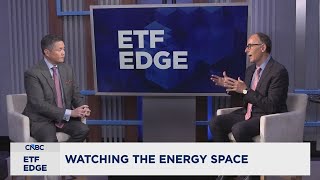
This CNBC video, published January 12, 2026,
features Jan van Eck, Jennifer Grancio
discussing XLE, NUCLEAR, POWR, VST, AIFD, NODE, ICLN, VRT.
8 trade ideas extracted by AI with direction and confidence scoring.
Speakers:
Jan van Eck,
Jennifer Grancio
· Tickers:
XLE,
NUCLEAR,
POWR,
VST,
AIFD,
NODE,
ICLN,
VRT