'Deep Financial Crisis' In U.S. Could Make China The World's Largest Economy | Shaun Rein
Speakers
David Lin
— Founder & Host, The David Lin Report / ex-Anchor, Kitco News
Shaun Rein
— Founder & Managing Director, China Market Research Group
Summary
- Shaun Rein is structurally bullish on China, citing a multi-year de-risking and "independence" strategy across energy, technology, and food security that insulates it from global shocks.
- He argues China's energy security is improving due to massive domestic investment in solar (380 gigahertz added in 2024, more than the rest of the world combined) and wind, reducing the impact of Middle East oil disruptions.
- He is bullish on Chinese New Energy Vehicles (NEVs), noting over 50% of new auto sales in 2025 were NEVs. The Middle East conflict is seen as a catalyst for further adoption, to the detriment of legacy automakers slow to transition.
- He is explicitly bullish on Chinese semiconductor and AI companies, citing indigenous innovation, state bank lending, and growing demand from the "global majority" (e.g., Saudi Arabia, Malaysia) seeking to avoid U.S. sanctions and technology dependence.
- He posits a significant and growing risk of a "deep financial crisis" in the U.S., worse than 2008, driven by high debt, alienated allies, and questionable leadership, which could accelerate China becoming the world's largest economy.
- He notes a shift in institutional capital, with investment bankers reporting a doubling of commissions as money moves from Japan, Korea, and the U.S. back into Hong Kong/Chinese equities.
- He downplays the immediate threat of a Chinese invasion of Taiwan, citing disarray in the military leadership (7 of 9 Central Military Commission members under investigation) and a preference for peaceful, Hong Kong-style integration.
- He presents a contrarian view that India, under Modi, is isolating itself by alienating both Russia (a 50-year partner) and China, jeopardizing its superpower potential, whereas China is not as isolated as perceived.
- He emphasizes that China's relationship with Iran and Russia is one of "survivability," not a deep ideological alliance, forced by U.S. containment policies.
Ideas
Stated "that's why investors should be looking at NIO" after noting over 50% of new auto sales were NEVs. Said BYD sales are expected to go up due to new models and a new 10-minute full-charge battery technology. Middle East tensions will push Chinese consumers to adopt NEVs even more, benefiting domestic leaders. BYD's new technology is a competitive advantage. Positive view on specific Chinese NEV leaders due to strong market adoption trends and technological innovation. Failure of new models or battery tech; broader Chinese consumer downturn.
Stated over 50% of new auto sales in China are NEVs and that Middle East tensions will push adoption "even more." Said this will be "even worse for the Toyotas, the Nissan, the General Motors of the world who've been really slow at adopting NEV technology." The rapid shift to NEVs in the world's largest auto market structurally disadvantages legacy, foreign automakers who are behind in the transition. Implied bearish view on legacy automakers' prospects in China, which translates to a relative LONG view on the Chinese NEV sector (consumer durables) capturing that market share. Legacy automakers rapidly catching up in NEV technology and production within China.
Explicitly stated "we're very bullish on the Chinese semiconductor companies." Said China doesn't need Nvidia's H200 chips because they have great chips from Huawei and other Chinese companies. Later emphasized booming optimism in the sector and that Chinese tech is being adopted globally to avoid U.S. sanctions. China's drive for technological independence, coupled with state bank lending and demand from the "global majority" for non-U.S. tech, creates a powerful tailwind for domestic semiconductor and AI companies. Bullish on the Chinese semiconductor/AI sector due to policy support, successful indigenous innovation, and a structural shift in global demand. Severe escalation of U.S. tech sanctions that China cannot circumvent; failure to maintain technological parity.
Expresses deep worry about a U.S. financial crisis "worse than 2008" due to $39-40 trillion debt, alienated allies, and perceived unstable leadership. Believes this could cause China to become the largest economy due to U.S. "implosion." A deep financial crisis would involve a drop in equity markets, stress in private credit and labor markets, and likely a loss of confidence in U.S. fiscal management and the dollar. The speaker's primary concern is a U.S. macroeconomic collapse, implying a high-risk view on U.S. financial assets, including the dollar and sovereign debt. U.S. political and economic stability is maintained, and the debt burden is managed without crisis.
Up Next
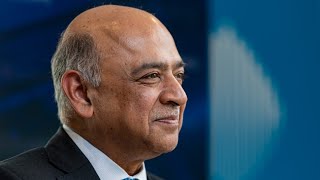
This The David Lin Report video, published March 17, 2026, features Shaun Rein discussing 1211.HK, NIO, XLY, XLK, USD, TLT. 4 trade ideas extracted by AI with direction and confidence scoring.
Speakers: Shaun Rein · Tickers: 1211.HK, NIO, XLY, XLK, USD, TLT