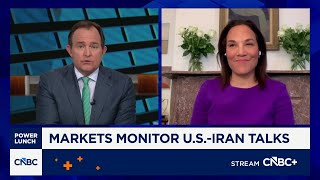
Markets are 'in for some volatility' this year, says Nuveen's Saira Malik
Speakers
Saira Malik
— Chief Investment Officer at Nuveen
Summary
- Markets face four key volatility drivers this year: Trade policy, AI sector rotation, Middle East tensions, and Central Bank actions.
- A distinct rotation is underway within technology: Capital is moving from Semiconductors to Software. Software is currently underweight in portfolios by approximately 100-150 basis points.
- Historical data for midterm election years suggests significant intra-year volatility, with markets seeing an average decline of 18% at some point during such years.
- Contrarian View on AI: The market has prematurely punished "AI Losers" (Software, Healthcare, Financials) fearing displacement. Malik argues these sectors are actually "AI Winners" because they possess the proprietary data required to train and utilize AI models effectively.
- Geopolitical risks in the Middle East (specifically the Strait of Hormuz) pose a direct upside risk to oil prices due to potential supply disruptions (25% of oil exports).
Ideas
Malik notes that despite Nvidia's "terrific" results, they were "not good enough for the markets," and capital is shifting "from semiconductors to software." When excellent earnings result in flat or negative price action, it indicates a crowded trade and exhausted sentiment. The macro rotation out of hardware and into software creates a headwind for this sector. AVOID or trim exposure to fund the rotation into Software. AI hardware demand accelerates beyond current massive expectations; new chip breakthroughs.
"The more tension that is created in the Middle East is causing oil prices to rise." She specifically highlights the "Strait of Hormuz, which accounts for 25% of oil exports." Geopolitical instability in critical transit chokepoints creates a risk premium for energy. If tensions escalate, supply constraints will drive crude prices significantly higher. LONG Oil/Energy as a hedge against geopolitical escalation. Ceasefire negotiations succeed; global demand weakens due to recession.
Malik observes a "shift from semiconductors to software" and notes that software is "quite under owned in portfolios across the board," specifically "about 100 to 150 basis points underweight." As the initial AI hardware hype (Semis) cools or meets incredibly high bars, investors are rotating into the application layer (Software). The underweight positioning suggests significant dry powder available to drive prices higher as this rotation accelerates. LONG Software to capture the rotation and mean reversion in portfolio allocations. AI spending slows down generally; software companies fail to monetize AI features quickly.
The market has adopted a "shoot first and ask questions later" mentality, selling off sectors like Financial Services and Healthcare on fears they will be "replaced by AI." Malik argues this is a mispricing. These sectors are actually the beneficiaries of AI because "AI really accelerates tons of data," and these companies own the proprietary data. They will use AI to increase productivity rather than being destroyed by it. LONG these sectors as a contrarian value play against the "AI displacement" narrative. Regulatory hurdles in using data; slower than expected AI integration.