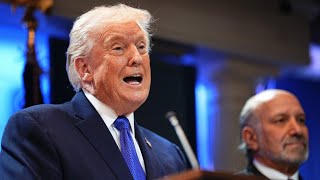
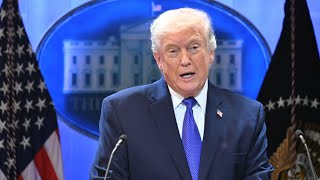
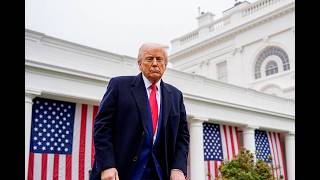
Trump to Impose 10% Global Tariff After SCOTUS Ruling

Watch on YouTube ↗  |  February 20, 2026 at 18:52  |  1:09  |  Bloomberg Markets

Summary

  • President Trump announces an immediate 10% global tariff on all imports under Section 122, which will be applied "over and above" existing rates.
  • Existing tariffs under Section 232 (National Security, typically Steel/Aluminum) and Section 301 (China/Unfair Trade) are confirmed to remain in "full force and effect."
  • The administration is initiating new Section 301 investigations into unfair trading practices, signaling a continued hawkish trade stance.
  • This policy is explicitly inflationary and protectionist, aiming to shift leverage to domestic producers while penalizing importers and foreign trading partners.
Trade Ideas
Donald Trump President of the United States
"Effective immediately all national security tariffs under Section 232... Remain in place... impose a 10% global tariff... over and above." Section 232 specifically protects the domestic steel and aluminum industries. By keeping these in place AND adding a 10% global surcharge, foreign competitors become significantly more expensive. This gives domestic manufacturers pricing power and market share dominance. LONG US Steel producers and Domestic Manufacturing (Industrials). Retaliatory tariffs from other countries could hurt US manufacturers who export finished goods; global economic slowdown reducing demand for raw materials.
Donald Trump President of the United States
"Protect our country... charge more tariffs." A global tariff reduces imports (improving the trade balance) and likely forces the Fed to maintain higher interest rates to fight inflation. Both factors (improved trade balance + higher yield differentials) typically drive the domestic currency higher against trading partners. LONG US Dollar. Other nations may devalue their currencies competitively or dump US assets in retaliation, creating FX volatility.
Donald Trump President of the United States
"Today I will sign an order to impose a 10% global tariff under Section 122, over and above our normal tariffs already being charged." The retail sector relies heavily on global supply chains and imported goods. A blanket 10% tariff directly increases the Cost of Goods Sold (COGS). Retailers face a "lose-lose" dilemma: either absorb the cost (crushing margins) or pass it to consumers (crushing demand). SHORT US Retailers and Consumer Discretionary stocks with high import exposure. Companies may successfully pass costs to consumers if demand remains inelastic; potential exemptions for specific consumer goods.
Donald Trump President of the United States
"Impose a 10% global tariff... effective immediately." Tariffs are structurally inflationary (one-time price shock). To combat the resulting rise in CPI, the Federal Reserve will be forced to keep interest rates higher for longer or potentially hike rates. Higher rates correlate with lower bond prices. SHORT Long-duration US Treasuries (expecting yields to rise). If the tariffs cause a severe recession (demand destruction), deflationary forces could take over, causing yields to fall (bond prices to rise).
Donald Trump President of the United States
"Initiating several Section 301 and other investigations to protect our country from unfair trading practices of other countries." The US is the primary consumer market for many export-driven economies (China, Europe, Emerging Markets). A 10% barrier to entry makes their exports less competitive, hurting their GDP growth and corporate earnings. SHORT International Equities and Emerging Markets. These markets may already trade at a discount, pricing in trade war risks; domestic stimulus in China or Europe could offset export losses.
Up Next

This Bloomberg Markets video, published February 20, 2026, features Donald Trump discussing X, NUE, STLD, XLI, DXY, XRT, NKE, TGT, WMT, BBY, TLT, IEF, EEM, EZU, FXI. 5 trade ideas extracted by AI with direction and confidence scoring.

Speakers: Donald Trump  · Tickers: X, NUE, STLD, XLI, DXY, XRT, NKE, TGT, WMT, BBY, TLT, IEF, EEM, EZU, FXI