Ideas
Credit-card cap threatens issuers
Credit-card interest-rate caps are a growing political risk for card issuers before the midterms; if competition legislation or a cap passes, even below 10%, having credit-card exposure is a risk this year.
Stocks to outperform bonds
He remains constructive on traditionally risky asset classes and expects stocks to continue outperforming bonds. Consensus is still too bearish on growth and too overzealous on inflation; consumers are hanging in and corporations have recalibrated to tariffs. Pulled-forward returns mean returns may be more subdued, but he is still incrementally positive on stocks over bonds.
Stocks to outperform bonds
He remains constructive on traditionally risky asset classes and expects stocks to continue outperforming bonds. Consensus is still too bearish on growth and too overzealous on inflation; consumers are hanging in and corporations have recalibrated to tariffs. Pulled-forward returns mean returns may be more subdued, but he is still incrementally positive on stocks over bonds.
Watch 10-year yields hitting 5%
The biggest risk is the Fed losing control of the long end, with unfunded fiscal stimulus or tariff refunds driving the 10-year Treasury yield toward 4.75%-5%; that would challenge the equity narrative and make Treasuries riskier.
Stay tech, add laggards
He favors a broadening equity market rather than abandoning technology: stay exposed to tech and AI picks-and-shovels companies but use more balanced or equal-weight exposure and add lagging areas, because returns were pulled forward but the broadening trade is now underway.
Small caps catch-up trade continues
Russell 2000 small caps can continue to catch up because the 10-year versus fed funds curve has steepened, the index has financials exposure and lower-quality/momentum characteristics that benefit from that setup, even though returns may be subdued.
Nuclear power demand is returning
Tech companies' need for power and federal/state pressure for diverse electricity generation should bring nuclear power back into favor after years out of favor.
Venezuela barrels pressure oil
The Venezuela interdiction is putting new barrels of oil on the market, which should keep energy and oil costs low and is a central affordability theme for the administration.
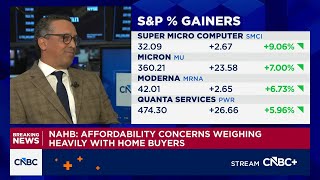
Memory chips ride AI demand
Memory chip stocks are the real strength, continuing to fly on AI-driven demand translating into memory demand after TSMC's results, with SanDisk and Micron leading.
Own capital markets banks
Financials are the place for 2026, and the market is favoring pure-play capital markets exposure over money-center banks because it avoids interest-income/curve and credit-card rate-cap complications; Morgan Stanley and Goldman Sachs are the cleanest expressions.
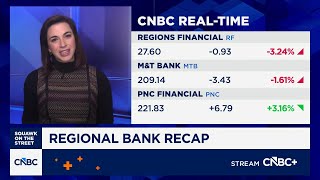
Regional banks are next leg
The next leg of bank EPS growth may be more Main Street than Wall Street as small and medium-sized enterprises expand; she would look to regional banks.
Capital One oversold on rate cap
Credit-card rate-cap headlines have beaten up consumer finance names too much; a 10% cap is a low-probability extreme outcome and would hurt the U.S. consumer before midterms. Capital One is an example of a beaten-up name that does not deserve to be as punished.
JPMorgan best credit-card defensive
If Washington actually acts on credit-card interest-rate caps, JPMorgan is the best big bank to weather the storm because its diversified businesses mean card exposure hurts less; current management's macro commentary is more important than the headline numbers.
Bank of America execution lags JPMorgan
She lacks the same faith in Bank of America: valuation may attract value investors but execution is not as strong as JPMorgan, and messaging has frustrated the investor base. It needs to use conference season to clearly convey revenue growth and expense control.
S&P 500 bull case 8,200
He has an S&P 500 bull case of 8,200 by year-end because AI remains the defining market force and the rally is broadening beyond hyperscalers and semiconductors into utilities, software and infrastructure; 2026 is about broadening, with cyclical recovery, stabilizing labor market and easing policy.
Favor hyperscalers and semiconductors
Within tech, he prefers hyperscalers and semiconductors over software because the market is uncertain about AI's impact on software, while hyperscalers and chipmakers are the lower-ambiguity way to play AI infrastructure; software applications remain a longer-term theme.
Buy strategic industrials and utilities
National champions and strategic industries are a 2026 theme as governments and the U.S. commit to domestic security, defense, infrastructure and AI power; he would invest in industrials, utilities and AI-power-related companies because massive public and private investment supports fundamentals.
Oil under supply pressure
He is conservative on the energy story: oil remains under pressure from huge oversupply, and Venezuela coming back online would add supply, making energy less compelling despite being part of the AI power narrative.
Oil under supply pressure
He is conservative on the energy story: oil remains under pressure from huge oversupply, and Venezuela coming back online would add supply, making energy less compelling despite being part of the AI power narrative.
Consumer discretionary benefits from stimulus
He likes consumer discretionary because lower energy prices, fiscal stimulus/tax refunds and labor market stabilization should boost the consumer as part of the broadening cyclical story.
Ample oil supply caps crude
Venezuela's next strategic move is more oil supply in coming years, a moderating force on global oil prices; global fundamentals are well supplied or loose with an overhang relative to demand and OPEC+ adding supply, so there are adequate cushions.
Iran risk could spike Brent
There is a high likelihood of some disruption to Iran's 1.5 million barrels per day of exports, which would create upside potential for Brent; the market will discount volume, size and duration of disruption.
Russell 2000 earnings recovery
She expects Russell 2000 small caps to lead this year because the long-awaited earnings recovery is finally arriving: management guidance is more optimistic, analysts' estimates are too low, and small-cap earnings growth usually outpaces large caps when growth accelerates. Fed cuts and potential IEEPA tariff relief are additional supports, though lower-quality index composition requires selectivity.
Like financials across the board
She likes financials across the board, with mid-cap financials ranking near the top on valuation and estimate revisions; regional banks benefit from better GDP expectations, M&A pickup and deregulation, and financials are seeing productivity improvement.
10-year yields to 4.75-5%
His base case is the 10-year Treasury yield around 4.75%-5% in 2026 because policy is focused on better U.S. growth and inflation is slow but steady, with geopolitical and Fed complications; that keeps Treasuries unattractive at current levels.
Japan yields rise on hikes
Japan has a deliberate hiking policy with inflation seeping into wage calculations and a structural economic change after decades; they are on a path toward a 2.5% neutral rate in three to four years, implying higher JGB yields.
Buy long-end high-grade credit
He likes the long end of high-quality investment grade credit because high overall yields are the best predictor of forward returns, demand is robust and steeper curves make fixed income more compelling as cash moves off the sidelines; the sector must absorb AI data-center supply but balance sheets can handle it.
Small-cap rotation finally sticky
This small-cap rotation is stickier than prior false starts because forward earnings revisions are up and to the right; Russell 2000 earnings revisions are up almost 25% versus 14% for the S&P 500, and fiscal, monetary and deregulatory stimulus support 2026. The S&P 600 is higher quality.
Housing activity troughing and improving
Housing activity may improve as mortgage rates and financing costs fall; existing home sales appear to be troughing near 4 million annualized, the lowest since 1995, and recovery in activity would lift the housing investment and labor parts of the economy even before affordability returns to pre-pandemic levels.
AI demand outpaces supply
AI demand is still significantly outpacing supply; Q4 consumption and LLM revenue growth at OpenAI, Anthropic, Gemini and xAI are at all-time highs and consumer behavior is changing. Near-term margin pressure from power costs is outweighed by a generational technology shift that should create trillions in market cap.
Magnificent 7 durable on AI spend
The Magnificent 7 remain durable because they are actively investing in AI and hiring AI talent; leadership may rotate week to week among models and platforms, so diversification and a long-term lens are warranted.
Legacy workflow software is vulnerable
The vulnerability in AI is in software companies dependent on workflows or user interfaces, which face competition from model providers and AI-native startups; that is where the three-way AI war could pressure incumbents.
Diversify beyond AI into cyclicals
After three years of AI/tech dominance, 2026 is a year when diversification matters: own AI exposure but blend it with cyclicals, value, international and emerging-market equities and some fixed income, because steady growth, Fed cuts on the margin and accelerating earnings support broadening.
Fed independence risk lifts long yields
If the market senses Fed independence is being challenged, volatility rises and long-end Treasury yields rise as a risk premium is priced in; that would be counterproductive to the administration's desire for lower rates. Markets have so far signaled independence is important.
This Bloomberg Markets video, published January 16, 2026,
features Annmarie Hordern, Eric Freedman, Janno Lieber, Dani Burger, Erica Najarian, Stephen Parker, Clayton Siegel, Jill Carey Hall, Vishal Khanduja, Matt Stanley, Momei Qu, Mona Mahajan
discussing Credit card issuers, SPY, TLT, IEF, XLK, RSP, IWM, URA, WTI, SNDK, MU, MS, GS, XLF, KRE, COF, JPM, BAC, SKYY, SMH, XLI, UTILITIES, AI-SECTOR, XLE, XLY, BNO, Japanese government bonds, IGLB, IJR, HOUSING, MAGS, Legacy workflow software, ACWX, EEM, Value Equities, US long-end Treasuries.
34 trade ideas extracted by AI with direction and confidence scoring.
Speakers:
Annmarie Hordern,
Eric Freedman,
Janno Lieber,
Dani Burger,
Erica Najarian,
Stephen Parker,
Clayton Siegel,
Jill Carey Hall,
Vishal Khanduja,
Matt Stanley,
Momei Qu,
Mona Mahajan
· Tickers:
Credit card issuers,
SPY,
TLT,
IEF,
XLK,
RSP,
IWM,
URA,
WTI,
SNDK,
MU,
MS,
GS,
XLF,
KRE,
COF,
JPM,
BAC,
SKYY,
SMH,
XLI,
UTILITIES,
AI-SECTOR,
XLE,
XLY,
BNO,
Japanese government bonds,
IGLB,
IJR,
HOUSING,
MAGS,
Legacy workflow software,
ACWX,
EEM,
Value Equities,
US long-end Treasuries