Ideas
The U.S. is considering "naval escorts to vessels" in the Strait of Hormuz due to the threat of a "vast armada of small craft" and mines. Oil prices are "elevated above where they were four or five days ago." Even if the U.S. achieves air supremacy, asymmetric naval warfare (mines/small boats) in the Strait of Hormuz creates a massive risk premium for shipping. This benefits the commodity price (USO) due to supply fear, but specifically benefits Oil Tankers (FRO/DHT) as shipping rates spike when routes become dangerous or require longer diversions. LONG. The conflict is shifting to a naval/chokepoint phase. U.S. Navy successfully neutralizes all threats immediately, removing the risk premium.
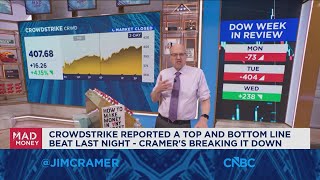
Broadcom (AVGO) reported earnings: "$0.7 billion of its revenue will be directly tied to AI chips, about 16% higher than what the street was looking for." Shares up 4%. Despite the macro war backdrop, the AI capex cycle is undeterred. Broadcom is explicitly beating expectations on AI-specific revenue, confirming that infrastructure spend remains robust regardless of geopolitical noise. LONG. Strong fundamental catalyst isolated from war risk. Broader market sell-off due to war escalation dragging down high-beta tech.
Rick Perry
Former U.S. Secretary (Context suggests Energy/State discussion)
24:39
Former Secretary Perry warns, "We so deplete our arsenal. It takes a long time to rebuild." Rep. Salazar confirms, "The President has indicated he would like to go up about $500 billion in additional expenditures... I'm willing to vote for it." The conflict is described as "missile-heavy" (taking out ballistic missile launchers). This necessitates immediate and massive replenishment of interceptors and offensive munitions. A potential $500B budget increase is a massive tailwind for the prime defense contractors, specifically those focused on missile defense (RTX/Lockheed) and naval assets (General Dynamics/Huntington Ingalls) due to the naval nature of the conflict (sinking warships). LONG. The political will for funding is bipartisan enough (resolution failed) to ensure contracts flow. Sudden ceasefire or diplomatic resolution (though described as "unlikely" by guests).
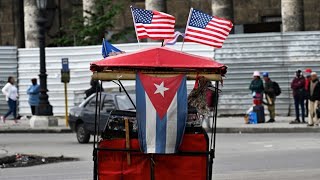
When asked if the U.S. should intervene elsewhere, Rep. Salazar explicitly stated: "Now Cuba is next... That is exactly what the President needs to do." While this is currently just rhetoric from a Florida Rep, the administration's recent actions in Venezuela and Iran suggest a highly interventionist foreign policy. If the market begins to price in a "regime change" scenario for Cuba, the Herzfeld Caribbean Basin Fund (CUBA) often trades as a proxy for opening/changing relations or reconstruction speculation. WATCH. High risk, but the "America First" definition is shifting toward active interventionism. Pure political rhetoric with no actual military/policy follow-through.
This Bloomberg Markets video, published March 05, 2026,
features Dana Stroul, Romaine Bostick, Rick Perry, Maria Elvira Salazar
discussing DHT, FRO, USO, AVGO, GD, NOC, RTX, LMT, CUBA.
4 trade ideas extracted by AI with direction and confidence scoring.
Speakers:
Dana Stroul,
Romaine Bostick,
Rick Perry,
Maria Elvira Salazar
· Tickers:
DHT,
FRO,
USO,
AVGO,
GD,
NOC,
RTX,
LMT,
CUBA