Ideas
Global equity bull market is broadening.
The market is in a global bull market, with about 40 countries tracked above their 20-day moving averages and 10 of 11 U.S. sectors up this year. This is not just a U.S. trade; broadening global participation and a modest U.S. equity uptick support the bull market remaining intact.
Energy and materials lead on resource demand.
Energy and materials are leading U.S. sectors this year and play into a global resource-heavy demand theme, tariffs, and currency debasement.
Tech valuation reset improves earnings setup.
Tech has reset expectations after a three-month consolidation. Relative valuation premium to the S&P has fallen from 38% at the October high to about 17%, while comparative earnings trends make new highs, lowering the bar for positive surprises.
Semiconductors remain dominant AI bull-market theme.
Semiconductors are at all-time highs while software is down, and ASML's strong news shows the AI theme may have been pushed back but remains the dominant theme of this bull market.
AI fears keep software from leadership.
Software faces concern that AI is eating software; new AI coding tools like Gemini make the market nervous about future demand and license counts. Even if numbers are okay, it is hard to disprove, so software is unlikely to reclaim leadership soon.
Gold signals inflationary risks from stimulus.
Policy is highly stimulative—negative real rates, $40B/month QE, fiscal stimulus, a weak dollar—creating an inflationary boom. Gold at $5,300 and rising is an inflationary signal investors should not ignore.
Geopolitical risk supports gold toward $5,500.
Gold's rally is driven by persistent geopolitical risk and central-bank buying since the Ukraine invasion, with gold retaining gains from each risk event. It has hit $5,000 and could reach $5,500, though the near-parabolic move invites volatility and profit-taking.
Silver expensive without gold-like support.
Silver is very expensive after the gold/silver ratio compressed to around 45 versus the historical 70-80 range, and it lacks the same geopolitical and other reasons to buy. He would not chase silver here.
Watch white metals as precious-metals canary.
White metals are much smaller and have moved up quickly; they may be the canary in the coal mine for precious metals and are worth keeping an eye on to see if the tail wags the dog.
Small caps and cyclicals are growth trades.
With the Fed data-dependent and likely not cutting this year, small caps have shifted from a rate trade to a growth trade. He favors underowned traditional cyclicals and the consumer side as tax refunds and a decent economy support growth.
M&A targets benefit from deregulation.
Citi's M&A targets basket has been strong, supported by a powerful deregulatory push and a more active deal calendar.
Materials preferred over banks tactically.
If choosing between materials with gold and banks, he would go with materials. Large-cap banks have a political target on their back and are exposed to unpredictable policy headlines, while the trade can be held through tax-refund data and then closed.
Materials preferred over banks tactically.
If choosing between materials with gold and banks, he would go with materials. Large-cap banks have a political target on their back and are exposed to unpredictable policy headlines, while the trade can be held through tax-refund data and then closed.
Meta AI ROI remains unproven.
Meta faces pressure because its AI assistant has limited deployment surface area outside its ecosystem, and AI-generated content may steal time from its apps. The company is investing heavily but does not yet have results comparable to Claude or Google AI Overviews, so AI ROI remains unproven.
Apple hardware moat supports late AI.
Apple's sticky installed base and hardware grip give it a unique position. Even if it is late to AI, it could do it better; until OpenAI's new form factor arrives, Mac Mini and on-device AI deployments show hardware demand.
Dollar risk should be hedged.
The dollar is a separate issue and may be overvalued, especially with the president comfortable with a lower dollar and yen intervention. She would hedge dollar risk rather than sell America.
Watch Japan long-end term premium risk.
Global term premiums are highly correlated, so the Japanese long end is the key market to watch. If Japanese long-end yields sell off on fiscal/supply concerns, long-end bonds globally could face higher term premium.
Long-duration Treasuries attractive as risk hedge.
Inflation trends are broadly lower while term premium has risen significantly, making duration attractive. Investors are paid more than in the last 15 years, and the 10-year is a better hedge for risk assets than the front end, so she is extending out the curve.
Meta mispriced on overly negative AI fears.
Meta is attractive due to a valuation/multiple dislocation. The market fears AI spending will not earn returns, but Zuckerberg has shown he can invest and return capital, and sentiment is overly negative even as Instagram's targeting engine and core advertising remain strong.
Azure and AI backlog support Microsoft.
Microsoft's Azure growth in the high 30s is key, with margin improvement under Amy Hood, AI adoption/Copilot, and strong backlog growth. If supply constraints ease and backlog converts to revenue, the AI story supports the stock.
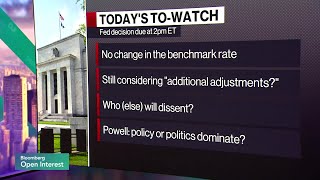
This Bloomberg Markets video, published January 28, 2026,
features Keith Lerner, Thomas Hoenig, James Steel, Stuart Kaiser, Mandeep Singh, Priya Misra, Brent Thill
discussing VT, SPY, XLE, XLB, XLK, SMH, IGV, GLD, SILVER, White metals, IWM, Traditional cyclicals, M&A targets basket, KBE, META, AAPL, UUP, Japanese government bonds (long end), TLT, MSFT.
20 trade ideas extracted by AI with direction and confidence scoring.
Speakers:
Keith Lerner,
Thomas Hoenig,
James Steel,
Stuart Kaiser,
Mandeep Singh,
Priya Misra,
Brent Thill
· Tickers:
VT,
SPY,
XLE,
XLB,
XLK,
SMH,
IGV,
GLD,
SILVER,
White metals,
IWM,
Traditional cyclicals,
M&A targets basket,
KBE,
META,
AAPL,
UUP,
Japanese government bonds (long end),
TLT,
MSFT