US Won't End Iran War Until Enemy is Defeated Says Hegseth (Full Presser)
Speakers
Pete Hegseth
— Secretary of Defense
Jack Keane
— Retired General, US Army / Fox News Analyst
Summary
- The US is executing "Operation Epic Fury," a massive and unrelenting air and naval campaign against Iran, currently in its 10th day.
- The military has struck over 5,000 targets, severely degrading Iran's ballistic missile capabilities (down 90%), drone capabilities (down 83%), and naval fleet (over 50 ships sunk).
- The US is heavily utilizing 2,000 lb GPS-penetrating weapons, sea-launched missiles, and air defense interceptors, indicating a massive drawdown of precision-guided munitions.
- The administration explicitly warned Iran against disrupting the flow of oil through the Strait of Hormuz, threatening overwhelming retaliation if global energy markets are targeted.
- The conflict is described as highly scoped to destroy Iran's nuclear and power projection capabilities, with no intention of endless nation-building.
Ideas
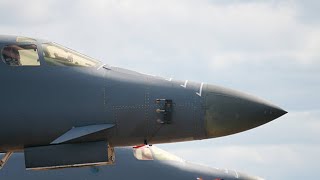
"To date, they've struck more than 5,000 targets. U.S. Strategic command bombers recently dropped dozens of 2,000 lb GPS penetrating weapons... using a combination of artillery, fighters, bombers and sea launch missiles." The sheer volume of ordnance being dropped—over 5,000 targets serviced in just 10 days—means the US military is rapidly depleting its stockpiles of precision-guided munitions (PGMs), bunker busters, Tomahawk missiles, and air defense interceptors. To maintain readiness for other global theaters, the Department of Defense will be forced to issue massive, expedited replenishment contracts to prime defense contractors who manufacture these specific weapons systems. LONG prime defense contractors. The unprecedented expenditure of high-tech munitions guarantees a multi-year backlog of high-margin replenishment orders for the companies that build them. Supply chain bottlenecks (such as shortages in solid rocket motors or critical electronic components) could delay production timelines and revenue recognition.
"If Iran does anything to stop the flow of oil within the Strait of Hormuz, they will be hit by the United States of America 20 times harder than they have been hit thus far." The explicit mention of the Strait of Hormuz highlights the extreme vulnerability of global energy markets in this conflict. Even with US naval escorts and overwhelming air dominance, the geopolitical risk premium on crude oil will remain elevated as long as hostilities continue. If Iran attempts to mine the strait or attack tankers as a desperate last resort, global supply will be temporarily choked. US domestic energy producers will directly benefit from the resulting surge in sustained higher oil prices without bearing the physical risk of Middle Eastern infrastructure damage. LONG US energy producers. They offer a direct hedge against Middle East supply disruptions and will capture the elevated geopolitical risk premium priced into crude. The US military completely secures the Strait without any disruption to tanker traffic, or allied nations coordinate a massive Strategic Petroleum Reserve (SPR) release that artificially suppresses crude prices.
Up Next




This Bloomberg Markets video, published March 10, 2026, features Jack Keane, Pete Hegseth discussing RTX, LMT, GD, XLE, CVX, OXY. 2 trade ideas extracted by AI with direction and confidence scoring.
Speakers: Jack Keane, Pete Hegseth · Tickers: RTX, LMT, GD, XLE, CVX, OXY