Ideas
Gary Peters
Democrat, Michigan (Senate Homeland Security/Armed Services)
7:47
DHS has laid off one-third of its cyber professionals due to funding/mismanagement, right as the US enters a kinetic war with Iran (a sophisticated cyber adversary). The government's internal cyber defense shield is weakened. This forces critical infrastructure and private enterprise to rely more heavily on private-sector cybersecurity solutions to defend against inevitable Iranian retaliatory cyberattacks. Increased threat level + decreased government capacity = bullish demand for private cybersecurity vendors. A swift resolution to the conflict or emergency funding restoring DHS cyber capabilities quickly.
30% of the world's fertilizer supply moves through the Strait of Hormuz, and we are entering "planting season." Disruption in the Strait doesn't just affect oil; it creates a supply shock for agriculture inputs. If supply is choked off during the critical planting window, prices for fertilizer will spike, benefiting North American producers who are not dependent on the Strait. Domestic fertilizer producers (Mosaic, CF Industries, Nutrien) gain pricing power and market share as global supply tightens. If the Strait remains open or if the "planting season" window passes without major disruption.
The Trump administration is drafting regulations to restrict AI chip shipments to *anywhere* in the world without specific US approval (expanding beyond just China). This moves from a targeted geopolitical restriction to a global regulatory bottleneck. This creates friction for sales in Europe and other friendly nations, fundamentally altering the total addressable market (TAM) and velocity of sales for major chipmakers. The Philadelphia Semiconductor Index (SOXX) is already down ~4% on the week; this news creates a structural headwind for high-flying AI names like Nvidia. If the "case-by-case" approval process proves to be a rubber stamp rather than a blockade, the market may have overreacted.
Lockheed Martin and Raytheon stocks dipped on fears of munition stockpile depletion, but Jensen explicitly calls this a "buying opportunity." The sheer volume of strikes (4,000+ in days) and the use of specific munitions (Hellfires, interceptors) necessitates a massive replenishment cycle. The administration is aggressively negotiating new deals to restock. The market is misinterpreting "depleted stockpiles" as a weakness; in reality, it guarantees future revenue/contracts for the prime contractors to rebuild inventory. Supply chain bottlenecks preventing rapid manufacturing of replacement munitions.
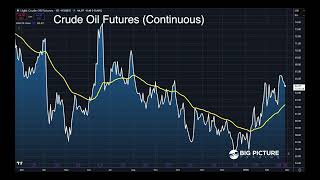
Oil is touching $80/barrel. Bloomberg Economics estimates prices could spike to $100-$108 if the Strait of Hormuz is effectively closed or disrupted for an extended period. While the US Navy is escorting tankers, the insurance costs and physical risks are rising. Any successful Iranian asymmetric attack (drones/mines) on a tanker would trigger the panic premium priced into the $108 forecast. Energy stocks and spot oil prices are the primary hedge against this geopolitical escalation. Rapid de-escalation or successful US naval dominance keeping shipping lanes 100% open.
This Bloomberg Markets video, published March 06, 2026,
features Gary Peters, Romaine Bostick, Ben Jensen, Jennifer Welch
discussing PANW, CRWD, CIBR, NTR, MOS, CF, AMD, SOXX, NVDA, RTX, LMT, USO, XLE.
5 trade ideas extracted by AI with direction and confidence scoring.
Speakers:
Gary Peters,
Romaine Bostick,
Ben Jensen,
Jennifer Welch
· Tickers:
PANW,
CRWD,
CIBR,
NTR,
MOS,
CF,
AMD,
SOXX,
NVDA,
RTX,
LMT,
USO,
XLE