Ideas
Blackstone policy risk may fade.
President Trump's proposal to ban institutional investors from buying single-family homes directly targets Blackstone's large single-family rental exposure, but Blackstone co-founder Steve Schwarzman's ties to Trump as donor and adviser make this likely a short-lived trial balloon. Monitor policy risk around Blackstone.
S&P 500 target 7500 this year.
Expects the S&P 500 to return 8% to 12% with a target of 7500 by year-end, though the path will be volatile because it is a midterm election year. He expects early gains, a mid-year pullback, then a grind higher.
Mega-cap tech earnings growth continues.
Not shying away from mega-cap tech because these companies can continue growing earnings. Unlike 1929, which was leverage-led, or 1999, which was led by companies without earnings, today's leaders have earnings and strong free cash flow. He compares the setup more to the 1950s and 1960s, when productivity gains supported longer bull markets.
Steepening curve favors traditional banks.
Financials should benefit from yield-curve steepening. Traditional banks are especially favored because they can borrow at lower short-term rates and lend at higher long-term rates, improving net interest margins.
Short duration, expect curve steepening.
The front end of the curve has limited room to fall, while the long end should steepen. He expects the 10-year yield around 4.25% to 4.50% and the 30-year around 4.50% to 4.75%, so he is short duration in fixed income and positioned for a steepener.
WTI crude prices to decline.
WTI crude is already trading lower since the Venezuela crisis, and the market expects prices to decline somewhat from prior expectations as Venezuela returns oil to the U.S. and geopolitical supply concerns ease.
Cheaper crude benefits refiners like Valero.
The expected decline in WTI crude benefits refiners such as Valero, whose shares have already risen significantly. Lower feedstock costs support refining margins.
Tech IPOs face weak aftermarket.
The IPO market is open only for a select few scaled companies. Tech IPOs last year underperformed the S&P and many large day-one pops faded, making public listings a challenging path. Most companies and investors will seek liquidity through strategic or financial M&A instead.
Blue Owl redemption risk persists.
Blue Owl Capital sharply increased the redemption limit from 5% to 17% in one private credit fund to meet withdrawal requests, an investor-friendly move versus gating. However, it remains uncertain whether this will reassure investors broadly, and the stock has been under pressure amid private-credit concerns.
Private credit faces retail liquidity risks.
Private credit faces growing pressure as rates decline. There is an inherent liquidity mismatch in selling illiquid 5-7 year private credit investments to retail investors who may not tolerate lockups. Redemption gates are designed to avoid forced asset sales at discounts, but concerns around the asset class remain.
S&P 500 target 7250, cautious optimism.
Cautiously optimistic with a year-end S&P 500 target of 7250, about 4% price upside plus 2% dividends. Fundamentals are healthy, no recession is expected, earnings, margins and sales are above historical averages, and Fed cuts are positive. But valuations are in the 95th percentile and positioning is extremely bullish, making the market vulnerable to a temporary pullback.
Contrarian health care valuations unlock.
Health care is a contrarian sector. It has underperformed three years in a row, never four, and trades at a significant discount. Policy headlines and tariff threats have been walked back, earnings estimates were not revised lower, and many companies have deals with the White House. Bad news is priced in and valuations can unlock as earnings grow.
Defense spending growth supports sector.
Likes the defense and aerospace sector due to rising global weapons and defense-system spending, NATO commitments, and the need to replenish depressed U.S. military armaments. Trump's dividend and buyback threat is overblown because dividends and buybacks are small for the sector; any pullback is a buying opportunity. He is long-term bullish, including on new defense tech.
Favor US equities over developed peers.
Favors the U.S. over other developed equity markets due to a better policy mix, including the One Big Beautiful Bill and Fed cuts, while Europe is on hold and Japan is raising rates at 30-year highs. U.S. companies should have better earnings and more localization. Last year's non-U.S. outperformance was driven mainly by dollar weakness, not superior company performance.
EM Asia benefits from tech shift.
If allocating outside the U.S., look at EM Asia because of technology exposures. It is the next place U.S. big tech companies go for growth.
Single-family rental policy risk rising.
Trump's proposed ban on institutional investors buying single-family homes is politically driven and unlikely to improve affordability, but it creates policy uncertainty that will chill capital formation and make investors think hard about allocating capital to the housing sector. Monitor the regulatory outcome.
DJI ban could boost US drones.
China dominates the drone industry due to industrial policy and trade deals, but a U.S. ban on DJI drones could create a strong U.S. drone market. U.S. manufacturers can build drones but need protection from Chinese market flooding to make economic sense.
This Bloomberg Markets video, published January 08, 2026,
features Meredith Whitney, Kevin Nicholson, Joseph Webster, Ted Smith, Davide Scigliuzzo, Larry Adam, Sean Dobson, Palmer Luckey
discussing BX, SPY, Mega-Cap Technology, XLF, KBE, TLT, WTI, CRAK, VLO, Technology IPOs, OWL, BIZD, XLV, ITA, EFA, EEMA, Single-family rental sector, US drone manufacturers.
17 trade ideas extracted by AI with direction and confidence scoring.
Speakers:
Meredith Whitney,
Kevin Nicholson,
Joseph Webster,
Ted Smith,
Davide Scigliuzzo,
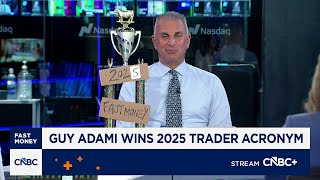
Larry Adam,
Sean Dobson,
Palmer Luckey
· Tickers:
BX,
SPY,
Mega-Cap Technology,
XLF,
KBE,
TLT,
WTI,
CRAK,
VLO,
Technology IPOs,
OWL,
BIZD,
XLV,
ITA,
EFA,
EEMA,
Single-family rental sector,
US drone manufacturers