Ideas
Credit-card rate cap pressures US banks.
The Trump administration's push for a 10% cap on credit card interest rates is a major regulatory threat to large US banks. JPMorgan is reportedly reviewing all options and warns the cap would be bad for consumers and the economy and would force major changes to its card business. Wells Fargo, Citigroup, and other bank stocks have been falling sharply on this policy risk.
Nvidia China H200 noise limits upside.
The US conditionally approved H200 sales to China, but China reportedly will allow H200 purchases only for university and R&D lab use and is using the issue as a bargaining chip. This creates prolonged uncertainty around Nvidia's China business and limits the near-term upside rather than providing a clean catalyst.
Bessent verbal intervention supports won and yen.
Treasury Secretary Bessent made an unusual public statement that won weakness does not match Korea's strong fundamentals and discussed Korean and Japanese currency weakness with officials. The US wants a weaker dollar to support manufacturing reshoring, but excessive KRW and JPY weakness conflicts with that goal, so the statement acts as verbal intervention and helped stabilize both currencies lower against the dollar.
SanDisk gains from NAND/SSD price hikes.
SanDisk is benefiting from tightening NAND/SSD supply and pricing power. A report raised its price target from $380 to $580, the company said it will not expand capacity, and customers are reportedly prepaying for three years of supply, all of which supports higher storage prices and earnings.
KOSPI rally looks overextended, watch pullback.
KOSPI has risen nine consecutive sessions to around 4,723, approaching the speaker's technical targets of 4,800 for a 20% annual gain and 5,000 for 25%. The move is fast enough to warrant caution, and retail investors have been buying inverse ETFs as their top purchase, betting on a pullback, though the speaker thinks any correction may not be steep.
Data-center power shift benefits Korean power equipment.
After Trump pressured Big Tech to bear the electricity and data-center costs created by AI, Microsoft announced an initiative to pay power costs directly and reduce water use. This makes Korean power equipment and nuclear infrastructure companies relative beneficiaries, and LS Electric, Hyundai Electric, Hyosung Heavy Industries, Doosan Enerbility, Hyundai E&C, and KEPCO E&C rose on the news.
Hanwha spin-off unlocks value, cancels treasury shares.
Hanwha announced a human split to reduce its conglomerate discount and address succession issues. The existing company will retain defense, aerospace, shipbuilding, marine, energy, chemical, and financial units, while the new entity will hold machinery/services, tech/life solutions, physical AI, vision, momentum, and Semitech. It will cancel all treasury shares, about 5.9% of shares outstanding, and redeem all preferred shares, eliminating potential dilution and improving governance, which the market rewarded with a 25.3% surge.
Korean holding companies may follow Hanwha restructuring.
Hanwha's restructuring is likely to pressure other Korean holding companies to pursue similar spin-offs or governance improvements to resolve discounts. The market is favoring such moves, and Doosan, HD Hyundai, LS, and SK all rallied alongside Hanwha as investors anticipated similar actions.
Weak biotech drags KOSDAQ lower.
KOSDAQ is weak because biotech is dragging it down. The JPMorgan Healthcare Conference has not produced a major catalyst this year, with only AI healthcare discussion, and biotech stocks typically weaken during earnings season before recovering. Biotech has fallen sharply, making KOSDAQ relatively unattractive.
Memory makers shift to AI server DRAM.
SK hynix is reportedly following Micron in stopping consumer DRAM production to focus on AI server and B2B demand, where supply is already tight. This shift should tighten consumer DRAM supply, pushing up consumer DRAM and finished device prices, and benefits memory producers focused on AI server memory.
Chip tariffs threaten TSMC supply chain.
Trump has floated a 25% tariff on certain advanced computing chips such as Nvidia's H200 and AMD's MI325X made by TSMC and imported into the US. It does not directly hit Korean semiconductors now, but if the policy persists it could create industry-wide noise and pressure the semiconductor supply chain, especially TSMC-made products.
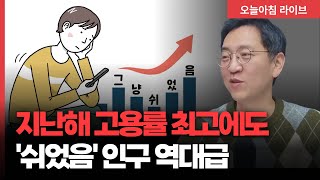
This 3PRO TV (삼프로TV) video, published January 14, 2026,
features Park Byeong-chang
discussing JPM, WFC, C, NVDA, USD/KRW, USD/JPY, SNDK, EWY, 010120.KS, 267260.KS, 298040.KS, 034020.KS, 000720.KS, 052690.KS, 000880.KS, 000150.KS, 267250.KS, 006260.KS, 034730.KS, KOSDAQ, Korean biotech sector, 000660.KS, MU, TSM.
11 trade ideas extracted by AI with direction and confidence scoring.
Speakers:
Park Byeong-chang
· Tickers:
JPM,
WFC,
C,
NVDA,
USD/KRW,
USD/JPY,
SNDK,
EWY,
010120.KS,
267260.KS,
298040.KS,
034020.KS,
000720.KS,
052690.KS,
000880.KS,
000150.KS,
267250.KS,
006260.KS,
034730.KS,
KOSDAQ,
Korean biotech sector,
000660.KS,
MU,
TSM