Food Inflation Set To Surge: Economist Warns How Bad It Could Get | Michael Madowitz
Speakers
David Lin
— Founder & Host, The David Lin Report / ex-Anchor, Kitco News
Michael Madowitz
— Principal Economist, The Roosevelt Institute
Summary
- The US economy entered the current oil shock already showing signs of strain, with flatlining labor market growth, moderate inflation, and downward revisions to recent jobs, GDP, and inflation data.
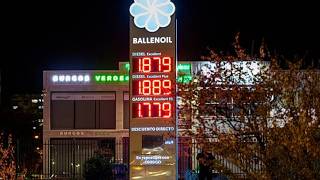
- The Strait of Hormuz closure has caused a severe diesel crisis; diesel prices have risen sharply ($1.34/gallon in a month to ~$5/gallon), which is critical as it powers the trucking industry and agricultural equipment.
- There is a significant lag effect: higher diesel and jet fuel costs will pass through to consumer prices (especially food) over weeks, creating a secondary inflationary wave even if gasoline prices stabilize.
- Food inflation was already a concern pre-crisis (USDA forecasted 2.5-3.7% for 2026), and the shock to fertilizer production (dependent on Gulf natural gas exports) compounds this risk, making the ultimate price spike size and timing uncertain.
- Increased US oil production does not insulate consumers from global price shocks; oil is a global bathtub market, so domestic production doesn't decouple prices. However, the US is partially insulated from the parallel natural gas shock affecting Europe.
- The labor market slowdown in 2025 is attributed partly to restrictive immigration policy, which reduced the supply of young workers, creating downward pressure on growth and upward pressure on inflation.
- There is strong skepticism that "drilling our way out" of energy-driven recessions is effective, as oil shocks contributed to six of the seven pre-2020 recessions.
- Institutional independence is a concern: the firing of the BLS commissioner was a bad move, but the current nominee profile suggests data integrity may be maintained. A longer-term risk is declining survey response rates and underfunding of statistical agencies.
- The Federal Reserve's near-term independence is not in grave doubt, but the nomination process for future chairs lacks transparency, creating future uncertainty.
Ideas
Diesel prices have surged sharply (up $1.34/gal in a month to just under $5/gal) due to the Strait of Hormuz closure. Diesel is the bedrock of the trucking industry and is used in farming. Higher diesel costs directly increase the cost of shipping goods (like food) and operating agricultural machinery. These costs are passed through to consumer prices, but with a lag compared to immediate gasoline price spikes. A sustained diesel price shock will create a second wave of inflation in essential goods like food, making it a critical macro indicator to monitor beyond headline gasoline prices. A swift resolution to the Hormuz blockade could alleviate supply constraints and cause prices to fall.
The speaker notes that while car efficiency has improved, the efficiency of trucks shipping food "hasn't changed a whole lot at all." He explicitly links diesel costs to trucking and food prices. The transportation sector, particularly long-haul trucking, is highly exposed to the current diesel price shock. Unlike consumers who may cut discretionary driving, trucking demand is inelastic in the short term, forcing cost pass-through. Companies and sectors reliant on diesel-powered freight face rising input costs and margin pressure, making the broader transportation sector an area of vulnerability worth watching. A rapid normalization of diesel supply or effective government intervention could mitigate cost pressures.
Up Next




This The David Lin Report video, published March 23, 2026, features Michael Madowitz discussing USO, JETS. 2 trade ideas extracted by AI with direction and confidence scoring.
Speakers: Michael Madowitz · Tickers: USO, JETS