Why Emerging Markets are Finally Outperforming Developed Markets | Robert Koenigsberger | Gramercy
Speakers
Robert Koenigsberger
— CIO & Founder, Gramercy
Max Wiethe
— Co-host, Other People's Money
Summary
- EM central banks acted decisively against inflation post-COVID, unlike DM banks that debated "transitory" nature, leading to a macro convergence where some DMs now look riskier than EMs.
- EM outperformance is driven by a fundamental repricing of relative value and a diversification play away from the US ("anywhere but US"), though this theme is currently on pause due to geopolitical tensions.
- A core criticism: Passive index investing in EM is structurally damaging. Indices force ownership of high-debt, risky countries (e.g., Argentina, Russia/Ukraine pre-war) and create a low-conviction, beta-focused approach that misses alpha.
- EM private credit is presented as structurally superior to DM private credit: senior secured, dollar-denominated loans with uncorrelated collateral, targeting institutional capital without retail liquidity mismatches.
- Alpha in EM public debt comes from a high-conviction, "index-agnostic" approach, actively underwriting both what to own and what to avoid (e.g., avoiding Argentina pre-default, Russia pre-invasion).
- A barbell strategy is advocated: anchor the portfolio with high-conviction yield (blend of public/private), which provides stability and enables opportunistic moves into distressed/special situations (e.g., select China property bonds).
- "Opportunistic/distressed" is defined not by price decline but by asymmetry: buying below modeled restructuring value with a clear catalyst, not simply catching a falling knife.
- Governance (the "G" in ESG) is a key alpha source in EM private credit, where lenders can actively improve borrowers (e.g., pushing for IPO readiness, boards, audited statements), turning "2s or 3s into 8s."
- Successful EM investing requires deep local networks to underwrite "people risk"—assessing a borrower's behavior in past crises—which is as important as financial underwriting.
- Shorting single EM credit names is difficult due to lack of borrow; portfolio hedging is better achieved through put spreads on broad EM indices, treating the cost as "life insurance."
Ideas
The speaker states EM debt indices have "done more damage to emerging market investors than any idiosyncratic event," citing examples where they forced ownership of Argentina pre-default (18% weight) and Russia/Ukraine pre-war. Index construction (often market-cap weighted) over-allocates to the most indebted or largest debt stock countries, conflating size with risk. Mandating benchmark neutrality or low tracking error forces low-conviction ownership and creates vintage risk. AVOID because a passive, index-replicating approach is a "very low conviction approach" that systematically exposes investors to concentrated, predictable risks and misses the alpha from active underwriting and avoidance. An index-led rally in a heavily weighted, risky country could cause short-term underperformance for an active manager avoiding it.
The speaker identifies a select few names (5-10 out of 50+) within the distressed China property sector as presenting asymmetry, where bonds at ~5 cents could have a path to 12-18 cents through restructuring. This is true "opportunistic/distressed" investing: price is far below any plausible restructuring value, creating a call option. Alpha comes from primary research, assessing borrower willingness to restructure, and evaluating remaining viable assets/business lines. WATCH because this is a high-resolution, bottom-up hunt for specific bonds with a clear catalyst (restructuring), not a broad sector call. It requires intensive credit work to identify the few names with a cooperative debtor and executable path. Restructurings fail or are less favorable than modeled. Liquidity is poor. Broader sector or regulatory headwinds prevent recovery.
Up Next

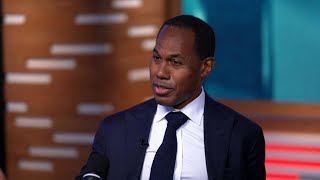



This Monetary Matters video, published April 07, 2026, features Robert Koenigsberger discussing EMB, CHIR. 2 trade ideas extracted by AI with direction and confidence scoring.
Speakers: Robert Koenigsberger · Tickers: EMB, CHIR