Ideas
Commodity surge complicates Fed rate cuts.
Commodity prices are surging early in the year—up about 20% on average and silver up 60-70%—which Roche sees as a nasty inflation wrinkle. It could force the Fed to pause or stay on hold longer than expected, especially if a market-data-focused Fed chair reacts to real-time commodity strength.
Developed and emerging markets outperform US.
Roche is concerned about US equity valuations relative to foreign markets and thinks the non-US outperformance reversal could continue. He would not be surprised if developed international and emerging markets outperform the US over 5-10 years. He views international diversification as a double hedge: it reduces concentration in the Mag Seven/US tech and acts as a weak-dollar/domestic inflation hedge, because foreign assets become more valuable if the dollar declines.
Tilt US portfolio to value and quality.
Roche is not outright bearish on the US but is more cautious and wants a more diversified domestic portfolio. He is tilting toward value and quality—areas that lagged before but are starting to work—to reduce concentration risk and insulate against acute US tech/Mag Seven risks.
Investors should reduce hidden US tech concentration.
Investors likely have more technology exposure than they realize because cap-weighted global indices are structurally overweight the US and, within it, tech, partly because uninvestable Chinese assets are excluded. Roche recommends diversifying away from technology to reduce concentration risk and exposure to the Mag Seven.
Gold is long-term fiat-currency insurance.
Roche views gold and precious metals as fiat-currency insurance and long-duration inflation protection, best owned over 10-40 years rather than traded for the next 6-24 months. After a parabolic move, he warns of price compression and sequence-of-return risk, suggesting overexposed investors trim/diversify, but he sees nothing wrong with owning it as long-term insurance.
Own short-to-intermediate Treasuries for income.
With T-bills around 3.5% and the curve offering roughly 4% around a four-year equilibrium, Roche is comfortable owning bonds in the 0-5 year range, especially the 5-year note. He sees little interest-rate risk there, decent coupon/real-return potential, and views them as good short-horizon diversifiers with near principal certainty.
Long-duration Treasuries have poor risk/reward.
Longer bonds are not as compelling: a 20-year Treasury yields about 4.5% with modified duration near 17, meaning roughly 17% price volatility per 1% rate move. Roche thinks the math is inferior to shorter maturities, especially without a clear need to take that duration risk.
Private credit ETFs have transparency problems.
Roche warns that private-market/private-credit assets do not mark to market daily, so putting them into an ETF wrapper is like jamming a square peg into a round hole. Market makers cannot know underlying value, causing wide spreads and large NAV premiums/discounts, so these products do not deliver the diversification investors expect.
Option income ETF yields are misleading.
Roche is critical of option-income ETFs marketed with 'distribution yield.' He argues much of the payout is not true yield but a capture of future upside, so the yield label is mostly marketing and the products can impair upside.
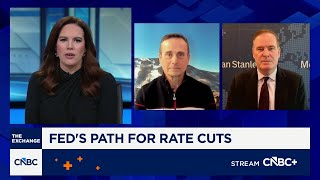
This Wealthion video, published January 29, 2026,
features Cullen Roche
discussing DBC, Developed International Equities, EEM, VTV, US Quality Stocks, XLK, GLD, SHY, 5-year US Treasury notes, TLT, PSLD, Option income ETFs.
9 trade ideas extracted by AI with direction and confidence scoring.
Speakers:
Cullen Roche
· Tickers:
DBC,
Developed International Equities,
EEM,
VTV,
US Quality Stocks,
XLK,
GLD,
SHY,
5-year US Treasury notes,
TLT,
PSLD,
Option income ETFs